Teaching ESL at the high school level is different. You are balancing language development, grade-level expectations, mixed proficiency levels, school requirements, and teenagers who want to be respected – not treated like young children.
That is why this guide to teaching high school ESL focuses on practical strategies secondary teachers can actually use. You will find support for assessing students, planning lessons, building routines, differentiating instruction, and developing reading, writing, listening, and speaking. You will also find ideas for grammar instruction, classroom management, pronunciation, student belonging, and age-appropriate scaffolds that keep expectations high without overwhelming learners.
High school ESL can feel like a lot to manage, especially when students enter your room with very different educational backgrounds and levels of English. You are not alone. With clear routines, thoughtful scaffolds, and consistent opportunities to use language, the classroom becomes more manageable for you and more predictable for students.
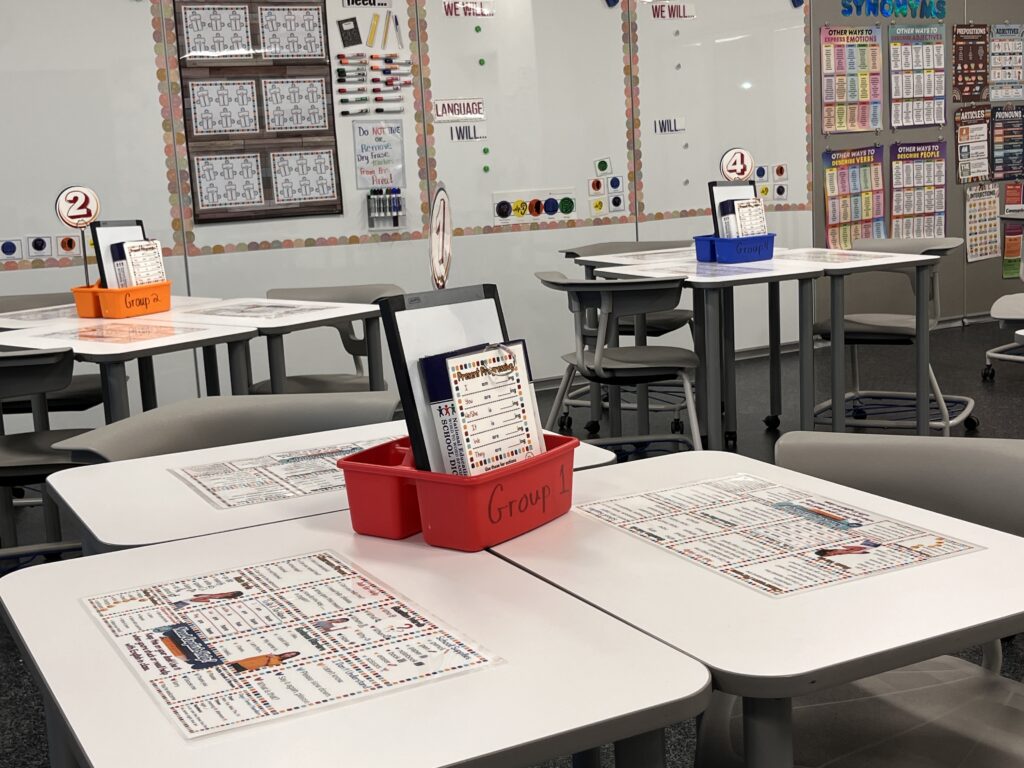
Start Here: Free and Done-for-You ESL Support
If you are planning for a new school year or welcoming a new group of English learners, begin with one immediate need instead of trying to build everything at once.
- If you are welcoming beginners, start with Free ESL Newcomer First Day Mini Kit.
- If you need a low-pressure baseline, read Beginning-of-Year ESL Assessments for High School and add ESL Diagnostic Assessment Bundle.
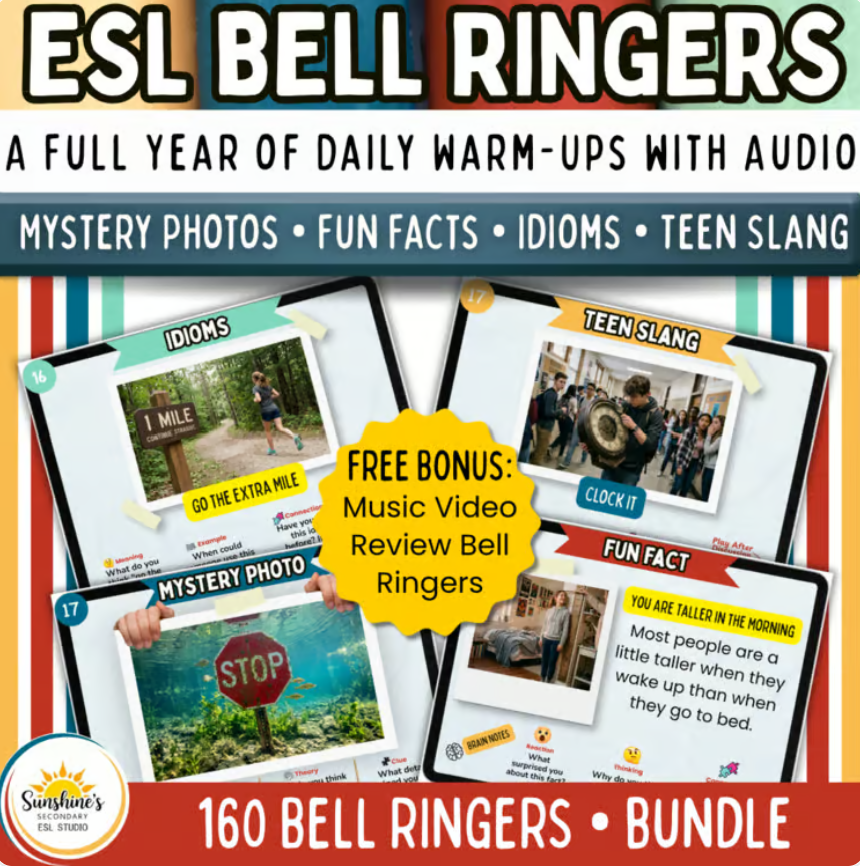
- If you want a predictable daily routine, use Free ESL Bell Ringers Sample or ESL Bell Ringers Mega Bundle.
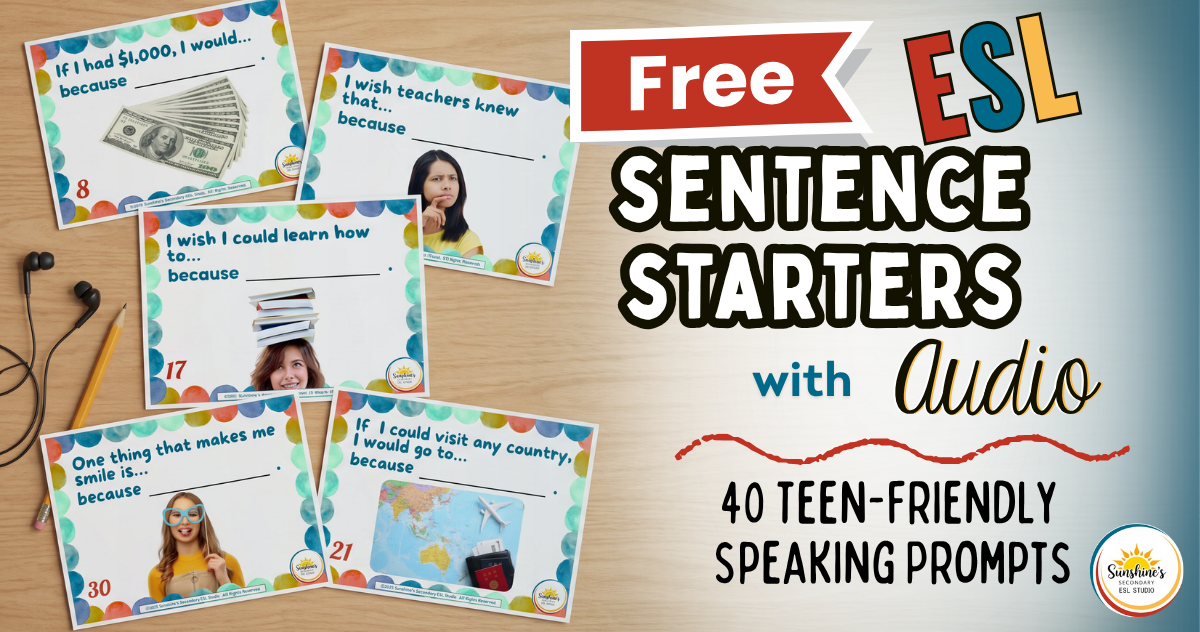
- If speaking confidence is the priority, try Free Teen Talk ESL Conversation Starters or Teen Talk ESL Conversation Bundle A1-B2.
You can also visit Back to School ESL Resources page for newcomer support, first-week routines, bell ringers, desk mats, speaking practice, and ready-to-use secondary ESL materials.
On This Page
- What to do first with a new ESL class
- Understanding high school English learners
- Curriculum planning and language objectives
- Setting up a teen-friendly ESL classroom
- Reading and vocabulary instruction
- Writing instruction
- Listening instruction
- Speaking instruction
- Grammar instruction
- Differentiating mixed-level classes
- Classroom management and routines
- Identity, belonging, and home-language support
- Pronunciation, technology, media literacy, testing, and grading
- Ready-to-use support for tomorrow
What Should You Do First With a New ESL Class?
When a new class begins, it is tempting to jump directly into a full curriculum. However, the first priority is learning who your students are and establishing systems that help them participate successfully.
1. Learn About Students’ Language and Educational Backgrounds
Find out which languages students use, how long they have attended school in the United States, whether they had consistent schooling before arrival, and which subjects feel strongest or most difficult. A student who is new to the country may already have strong literacy and academic skills in another language. Another student may have attended U.S. schools for years but still need intensive academic-language support.
Avoid making decisions based only on how confidently a student speaks in a casual conversation. Social English and academic English develop differently.
2. Use a Low-Pressure Beginning-of-Year Assessment
A beginning-of-year assessment should help you collect useful information without making students feel that they have already failed. Include short samples of speaking, listening, reading, writing, and pronunciation. Observe how independently students begin tasks, what kinds of supports they use, and how comfortable they are asking for clarification.
For a detailed process, read Beginning-of-Year ESL Assessments for High School.
Intermediate ESL Students
Intermediate learners can usually understand familiar English, form basic sentences, and participate in structured conversations. At the same time, they may depend on word banks, sentence frames, visuals, modeled examples, and partner rehearsal.
These students can often participate in grade-level topics when teachers adjust the language demands. They may be able to explain an idea orally but struggle to write it, understand a short video but miss a lecture, or read a passage while needing help with figurative language and academic vocabulary.
Long-Term English Learners
Long-Term English Learners, often called LTELs, have attended U.S. schools for several years but have not yet reached full academic-language proficiency. Many communicate fluently in everyday situations. Their challenges often appear in essays, analysis, formal speaking, complex reading, testing language, and subject-area vocabulary.
This is one reason secondary ESL instruction must go beyond everyday conversation. Students need language for explaining evidence, comparing ideas, defending claims, summarizing information, interpreting texts, and participating in academic discussions.
Social Language and Academic Language
You may hear the terms BICS and CALP in ESL education.
- BICS, or Basic Interpersonal Communication Skills, refers to social language used in everyday interactions.
- CALP, or Cognitive Academic Language Proficiency, refers to the language students need for textbooks, essays, exams, lectures, analysis, and argument.
A student may chat confidently with friends and still struggle to explain a theme, analyze a primary source, or write a supported response. High school ESL instruction should strengthen both social and academic language.
Read Why Rigor in ESL Looks Different for more about maintaining high expectations while changing how students access and demonstrate learning.
Emotional, Cultural, and Motivational Needs
Teenagers are already navigating identity, friendships, expectations, and independence. English learners may also be adjusting to a new school system, an unfamiliar culture, an accent, family changes, or separation from people and places they love.
Many students who seem quiet in core classes become expressive in the ESL classroom because it feels safer. They need support, but they also need dignity. Build a classroom where mistakes are expected, home languages are respected, and students have time to rehearse before sharing publicly.
The posts Culturally Responsive Teaching for ESL Teens, Social-Emotional Learning for ESL Teens, and ELL Goal Setting in High School can help you develop belonging, motivation, and student ownership.
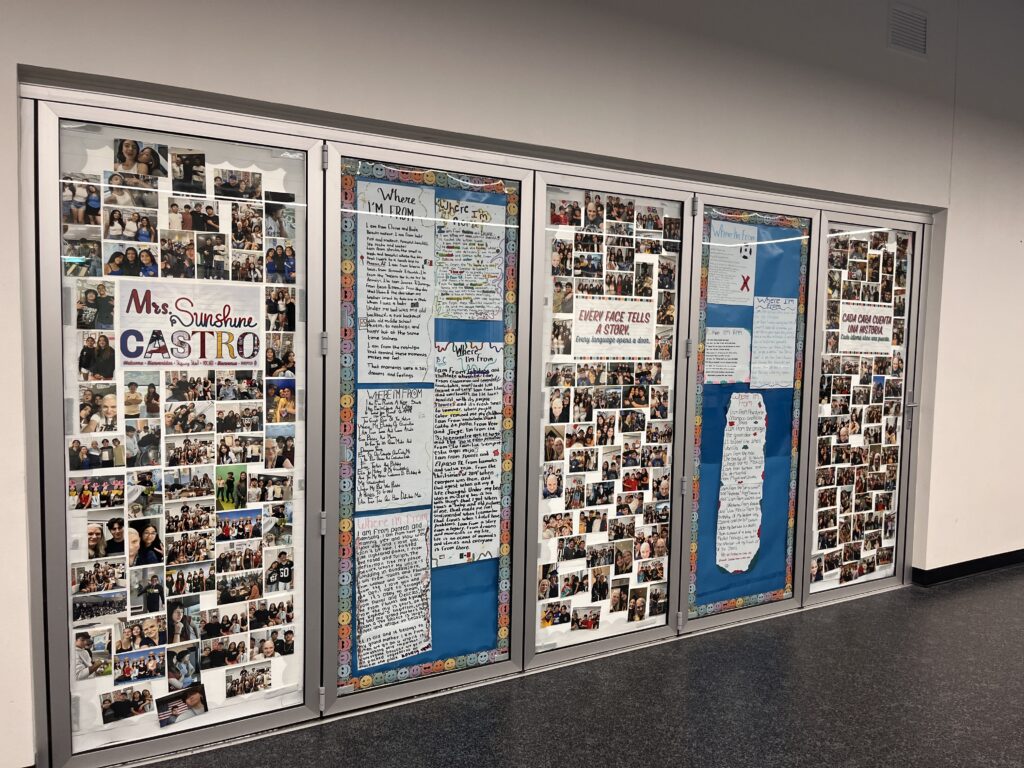
Curriculum Planning in a High School ESL Classroom
District curriculum guides do not always reflect the language needs of English learners. The pacing may be too fast, the selected text may assume too much background knowledge, or the lesson may require vocabulary and language structures students have not yet developed.
The answer is not to remove rigor. The answer is to make rigorous work accessible.
Align With Standards Without Copying the Mainstream Lesson Unchanged
Many states use Common Core standards. In Texas, teachers use TEKS and ELPS. Regardless of the framework, English learners should work toward meaningful grade-level expectations.
When a required lesson is inaccessible, you generally have two options:
- Use the required curriculum while modifying and scaffolding the materials.
- Choose an alternative text or activity that addresses the same standard and language goal.
You may reduce the amount of text, preteach essential vocabulary, add audio, provide visuals, chunk directions, or adjust the expected output. Those changes support access; they do not automatically lower the intellectual demand.
For broader planning ideas, read ESL Teaching Strategies for Teens and Why Rigor in ESL Looks Different.
Plan Content and Language Objectives
An ESL lesson has at least two connected goals:
- What students will learn or understand
- How students will use language to demonstrate that learning
A content objective might ask students to identify a character’s motivation. A language objective might ask students to explain that motivation orally using a sentence frame and one piece of evidence.
Effective language objectives identify the language function, the content, and the support students will use. For examples and planning guidance, read Language Objectives for High School ESL.
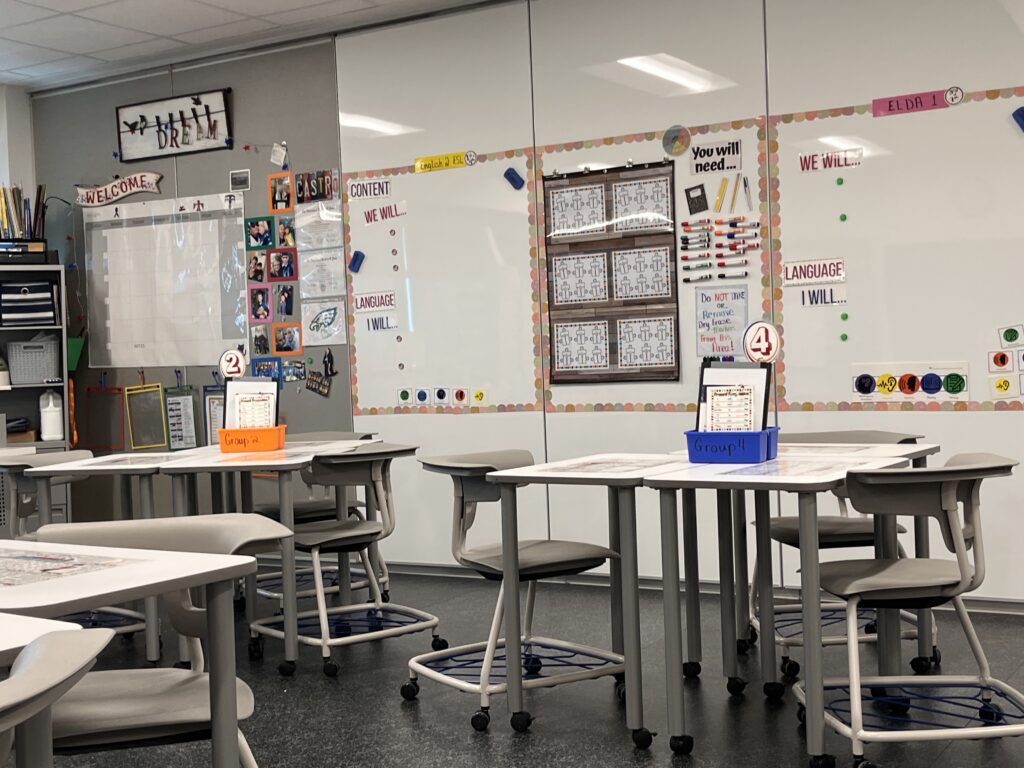
Use SWIRL to Balance Language Practice
A useful planning reminder is SWIRL:
- Speaking
- Writing
- Interacting
- Reading
- Listening
Not every activity must include every domain, but students should regularly use language in multiple ways. For example, students might listen to a short audio, discuss the gist with a partner, read a related passage, and write a supported response.
For help building consistent oral-language practice, read How to Build ESL Speaking Routines and Conversation Starters for ESL Teens.
Build Units Around Students and Meaningful Themes
Whenever possible, connect units to students’ interests, backgrounds, languages, and experiences. Culturally relevant topics can increase engagement, but representation should be more than a holiday or a single special lesson. Students should regularly encounter meaningful voices, experiences, and opportunities to connect content to their lives.
Identity-based work such as ESL Identity Poem Writing Activity can support writing, speaking, classroom community, and student belonging at the same time.
Minimize Teacher Talk and Increase Language Use
Long lectures are difficult for many learners, especially when teachers speak quickly or use unfamiliar idioms. Plan short, focused instruction followed by an activity that requires students to process and use the language.
Helpful options include visuals, task cards, partner practice, graphic organizers, short recordings, quick writes, stations, and structured discussion. Students develop English by doing something with it, not only by hearing an explanation.
Pace for Depth, Not Coverage
Mainstream pacing guides may overwhelm English learners with too many texts and skills at once. Focus on required standards while choosing fewer, more manageable resources. Use adapted texts, summaries, visuals, audio, selected excerpts, chunked readings, and scaffolded versions of complex works.
If you teach novels or classic texts, these posts can help:
- How to Support ESL Students During Novel Studies
- How to Teach Julius Caesar to ESL Students
- The Necklace ESL Reading A1-B2
- Free ESL Reading Sample A1
Setting Up a Teen-Friendly ESL Classroom
A supportive ESL classroom does not need to be perfect or expensive. It should make language, routines, and materials easier to access while still looking appropriate for teenagers.
Arrange Seating for Interaction
When possible, arrange desks so students can work with partners or small groups. Speaking becomes less intimidating when students can rehearse with a few peers before addressing the entire class.
Group seating also makes it easier to share task cards, reference tools, markers, and discussion materials. However, teach clear expectations for noise level, movement, and participation so collaborative seating supports learning rather than distraction.
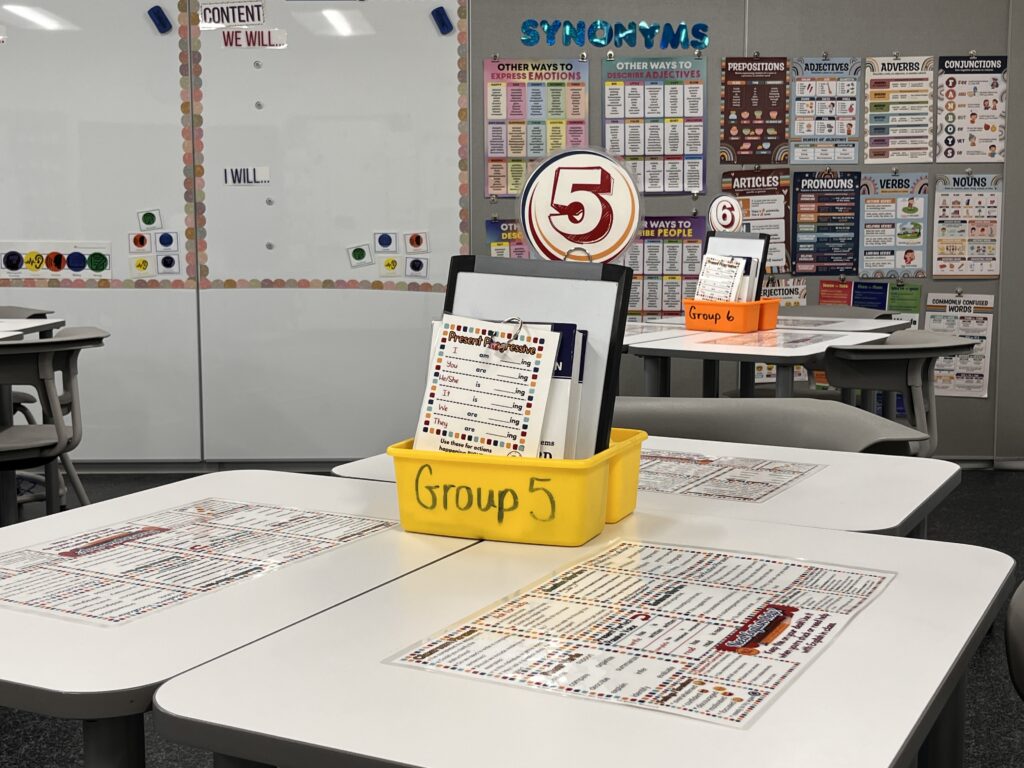
Keep High-Use Materials Accessible
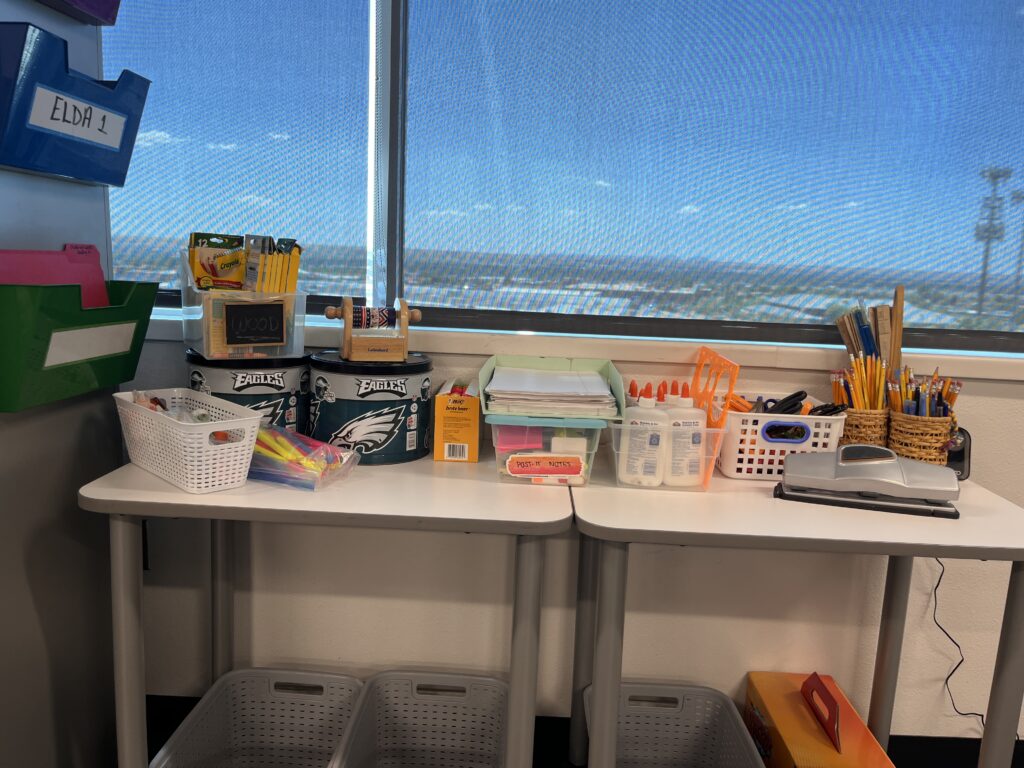
Students should know where to find pencils, paper, glue, scissors, markers, and other frequently used materials. Group caddies or a clearly labeled supply station reduce interruptions and help newcomers participate more independently.
Reading and Vocabulary in the High School ESL Classroom
Reading can be one of the most challenging parts of secondary ESL instruction. Students are expected to read literature, nonfiction, poetry, test passages, primary sources, and academic texts before they have all the vocabulary or background knowledge needed to understand them independently.
English learners can engage with meaningful and complex ideas when the right supports are in place.
Choose Accessible, Age-Appropriate Texts
A teacher once handed me a children’s book for my high school ESL students. The gesture was sincere, but it reflected a common misunderstanding. English learners may need simplified language, visuals, audio, or additional support. They do not need content that makes them feel like small children.
Choose texts that are interesting, culturally inclusive, respectful of students’ ages, and accessible with scaffolds. When students are reading significantly below grade level, read ESL Students Reading Below Grade Level and ESL Reading Comprehension for High School.
Build Essential Vocabulary Before Reading
Before assigning a text, identify the words students truly need for comprehension.
Ask yourself:
- Which everyday words may be unfamiliar to newcomers?
- Which Tier 2 academic words will appear across subjects?
- Which content-specific Tier 3 terms require pictures, diagrams, or short explanations?
- Are there cognates students can connect to another language?
- Are there idioms or figurative expressions that may block comprehension?
Avoid handing students a list of twenty disconnected definitions. Choose words intentionally, use them repeatedly, and give students opportunities to say, read, hear, and write them.
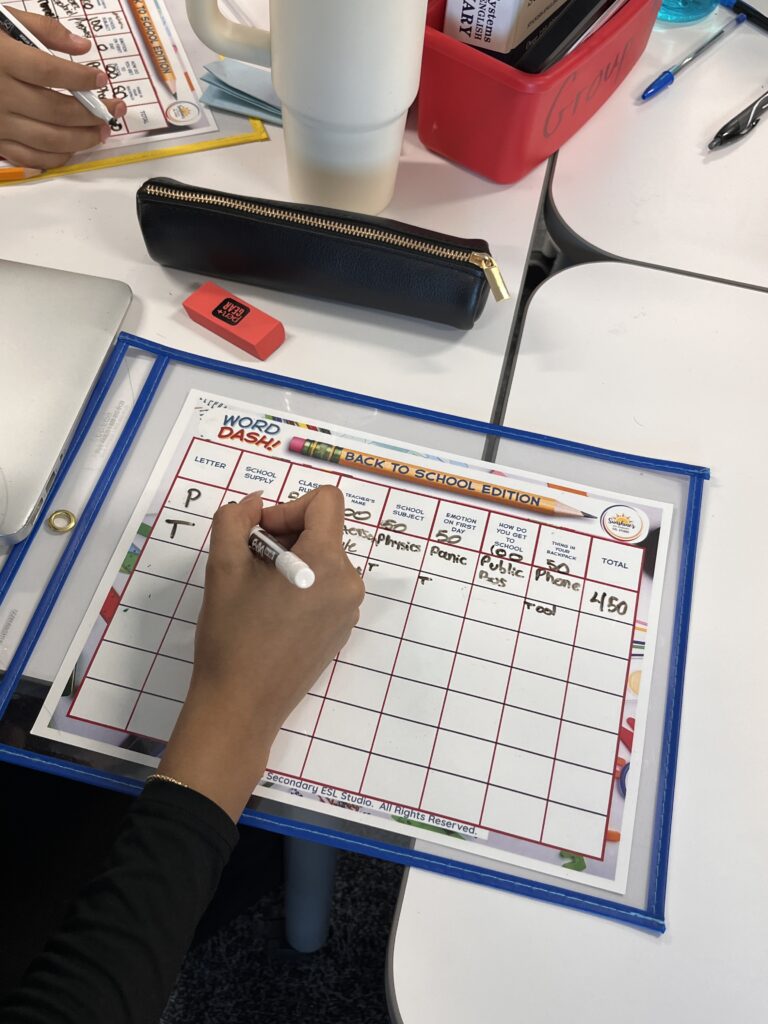
For more ideas, read ESL Vocabulary Activities for High School and Basta / Word Dash ESL Vocabulary Game.
Writing in the High School ESL Classroom
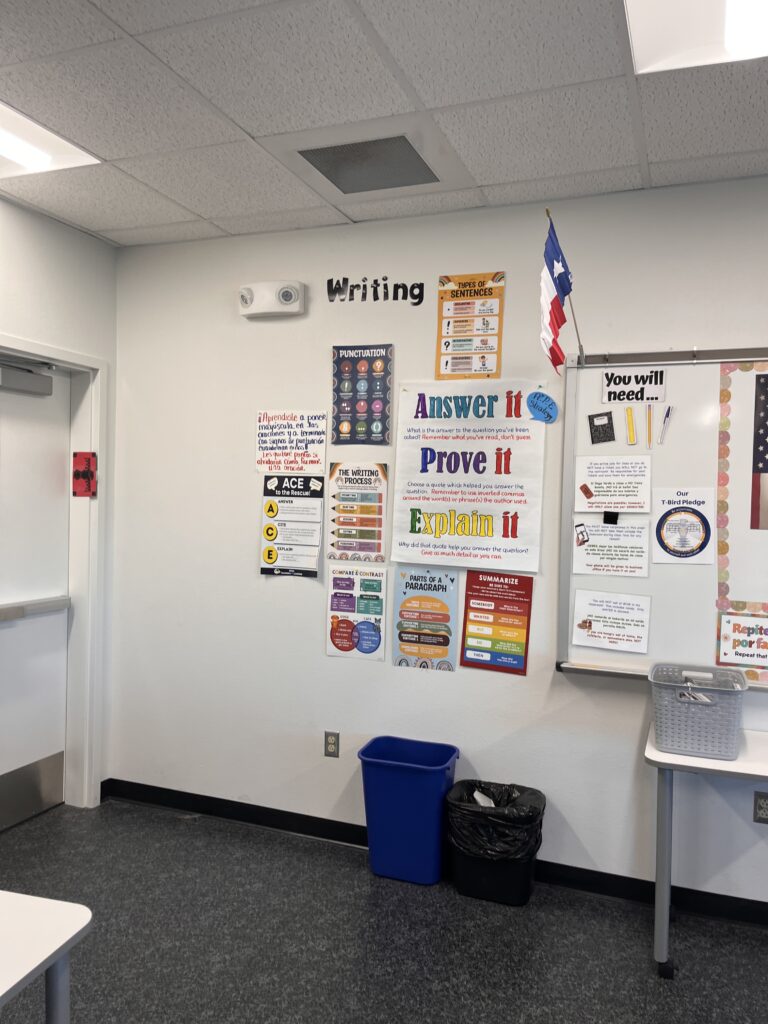
Writing can be intimidating for ESL teenagers. Many students have ideas but do not know how to begin in English. Others worry that every sentence must be correct before they can write anything at all.
The goal is to reduce the barriers to starting while gradually increasing independence, organization, detail, and academic language.
Use Sentence Starters and Modeled Writing
Sentence starters reduce the blank-page problem. They give students an entry point without writing the entire response for them.
Examples include:
· Narrative: “One day, I decided to ___.”
· Argument: “I believe ___ because ___.”
· Informational: “One important reason is ___.”
· Text evidence: “In the text, it says ___.”
· Comparison: “Both ___ and ___, but ___.”
Read Free ESL Sentence Starters for Teens and ESL Writing Support Strategies for more examples.
Teacher modeling is equally important. Write in front of students, think aloud, revise a sentence, add a detail, and show that drafting is not supposed to be perfect.
Move From Personal Writing to Academic Writing
Personal responses can build fluency and confidence before students move into formal analysis. A student might first connect a theme to personal experience and then use that thinking to write about the text.
For structured academic writing, read Argumentative Writing for ESL Students, Teach Letter Writing to ESL Students for State Testing, and TELPAS Writing Practice Grades 9-12.
Use Journals and Bell Ringers for Daily Language Practice
Short daily writing reduces pressure and creates a predictable start to class. Journals and bell ringers can build writing fluency, vocabulary, listening comprehension, speaking confidence, and classroom routines in five to ten focused minutes.
Effective warm-ups may include:
· Journal prompts
· Picture reflections
· Fun facts
· Idioms
· Teen slang
· Short listening tasks
· Vocabulary review
· Sentence starters
· Opinion questions
· Partner discussion prompts
Read ESL Bell Ringers: Daily Warm-Up Activities for implementation ideas.
Listening in the High School ESL Classroom
English learners hear English throughout the school day, but constant exposure does not guarantee comprehension. Teachers may speak quickly, connect words, use idioms, shift topics, or assume background knowledge students do not have.
High school English learners need structured listening practice that teaches them how to listen, not simply a reminder to pay attention.
Give Students a Purpose Before Listening
Before playing audio or video, tell students what to listen for. They might identify the topic, choose the best summary, listen for an opinion, sequence events, or record two details.
Helpful listening routines include:
· Previewing key vocabulary
· Making a prediction
· Listening once for the gist
· Comparing ideas with a partner
· Listening again for details
· Using a graphic organizer or cloze activity
· Replaying a short section rather than the entire recording
For more ideas, read ESL Listening Activities for High School, ESL Listening Worksheet With QR Code, and Cloze Listening Activities for ESL.
Teach the Difference Between Gist and Details
Listening for gist means identifying the overall meaning. Students might answer:
· What is this mostly about?
· Who is speaking?
· What is the main idea or situation?
Listening for details means identifying specific information:
· When did the event happen?
· What reasons did the speaker give?
· What problem does the character face?
A useful sequence is to listen first for the big picture and then listen again for details.
Use Authentic Video With Support
Authentic video exposes students to natural pronunciation, connected speech, real pacing, visual context, and cultural information. However, pressing play is not a complete lesson.
Break videos into short segments. Preview only the vocabulary students need, use a gist question before detailed questions, allow repeated listening, and follow the video with speaking or writing.
Read Authentic Videos for ESL Students in High School for a full classroom process.
Grammar in the High School ESL Classroom
Grammar instruction should help students express meaning. Teaching a concept once and assigning a worksheet is rarely enough. English learners need repeated exposure to grammar across reading, writing, listening, and speaking.
Teach Grammar in Context
You can connect grammar to meaningful language by:
· Highlighting verb tense in a reading
· Editing a short student writing sample together
· Noticing subject-verb agreement during a paragraph lesson
· Using conversation prompts that require a target structure
· Practicing with task cards after a mini-lesson
· Keeping a small reference tool available during independent work
Read How to Teach Grammar to Beginner ESL Students and ESL Grammar Task Cards for practical strategies.
Use Task Cards for Repeated, Flexible Practice
Grammar task cards work well for partner practice, stations, warm-ups, review, fast finishers, and small-group instruction. They provide a smaller amount of focused practice than a long worksheet and are easy to revisit over time.
Task cards can target:
· Subject pronouns
· Be verbs
· Articles
· Verb tenses
· Subject-verb agreement
· Possessive adjectives
· Sentence correction
For a simple starting point, read Free A1 Grammar ESL and Free ESL Progressive Tense Desk Mat.
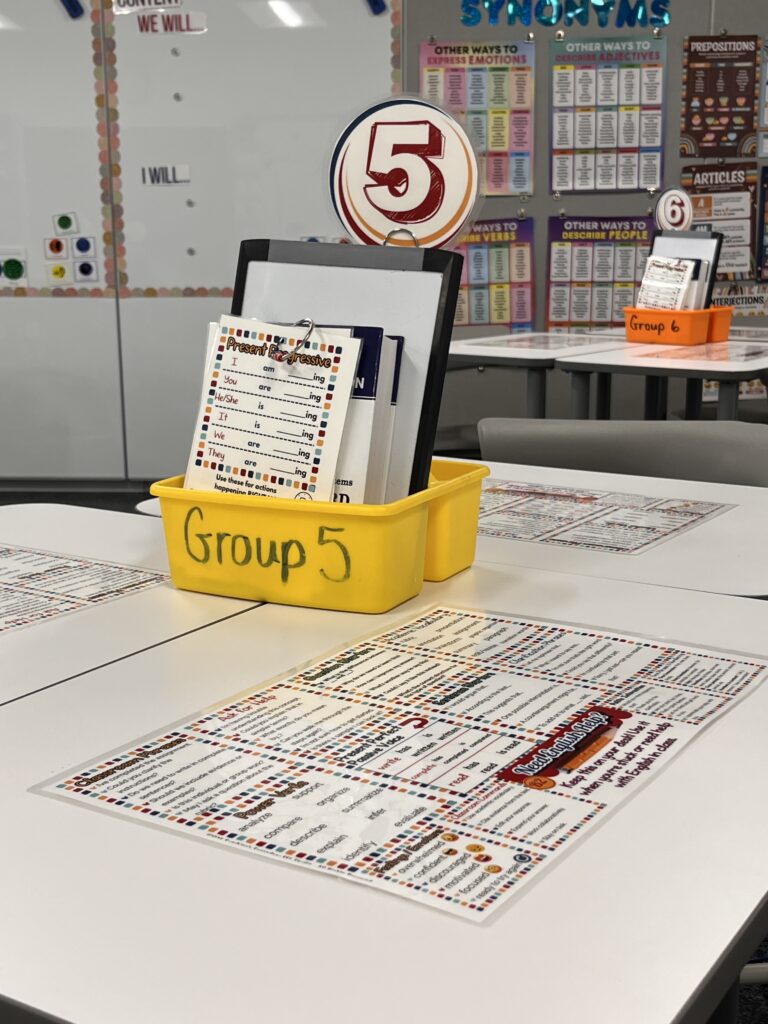
Protect and Reuse Classroom Grammar Tools
- Binder rings for small grammar reference cards
- Laminating pouches for desk mats and reusable supports
- Fine-tip dry-erase markers for reusable grammar practice
Classroom Management for High School ESL Students
Classroom management in ESL is not only about rules. It is about creating a space where students understand what to do, feel safe enough to take language risks, and know how to repair problems when they occur.
If behavior feels overwhelming, begin with structure, clarity, and connection.
Read ESL Classroom Management for High School for a deeper guide.
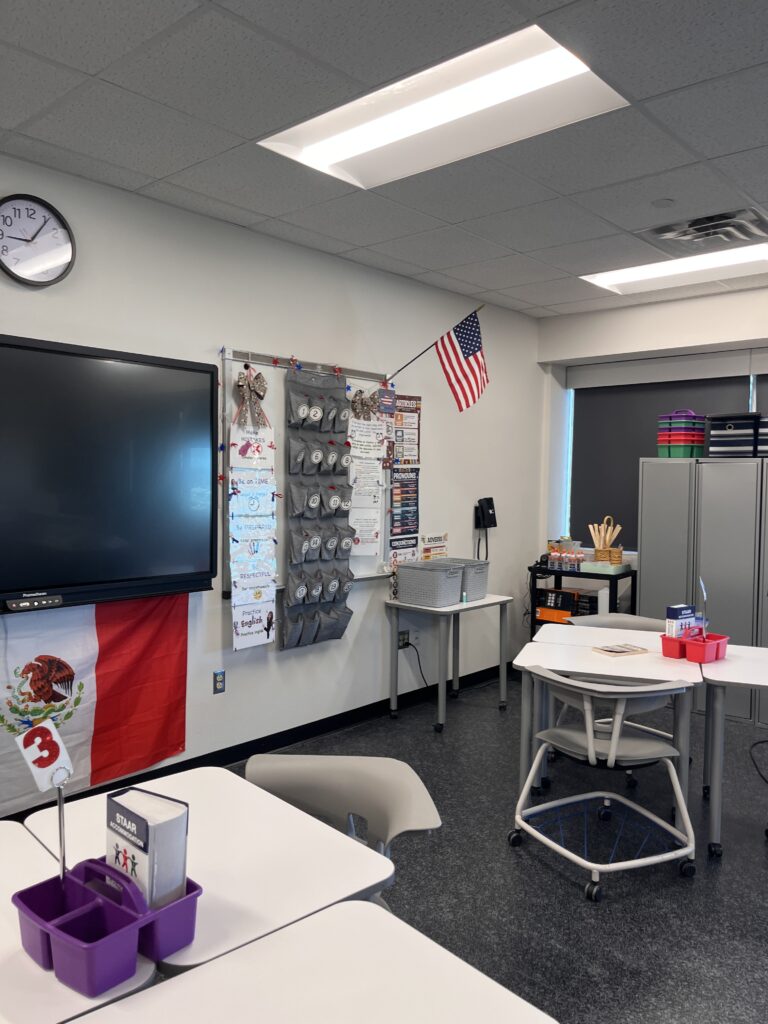
Make Expectations Visual and Explicit
Post expectations in clear, age-appropriate language. Add pictures, gestures, examples, or home-language support when useful. Model routines instead of assuming students understand them.
Teach and practice:
- Entering the room
- Beginning the warm-up
- Getting materials
- Asking for help
- Working with a partner
- Using technology
- Turning in work
- Transitioning between activities
- Packing up and leaving
Read Visual ESL Expectations Posters, ESL Routines Posters, and ESL Commands and Routines Task Cards for visual and language-based support.
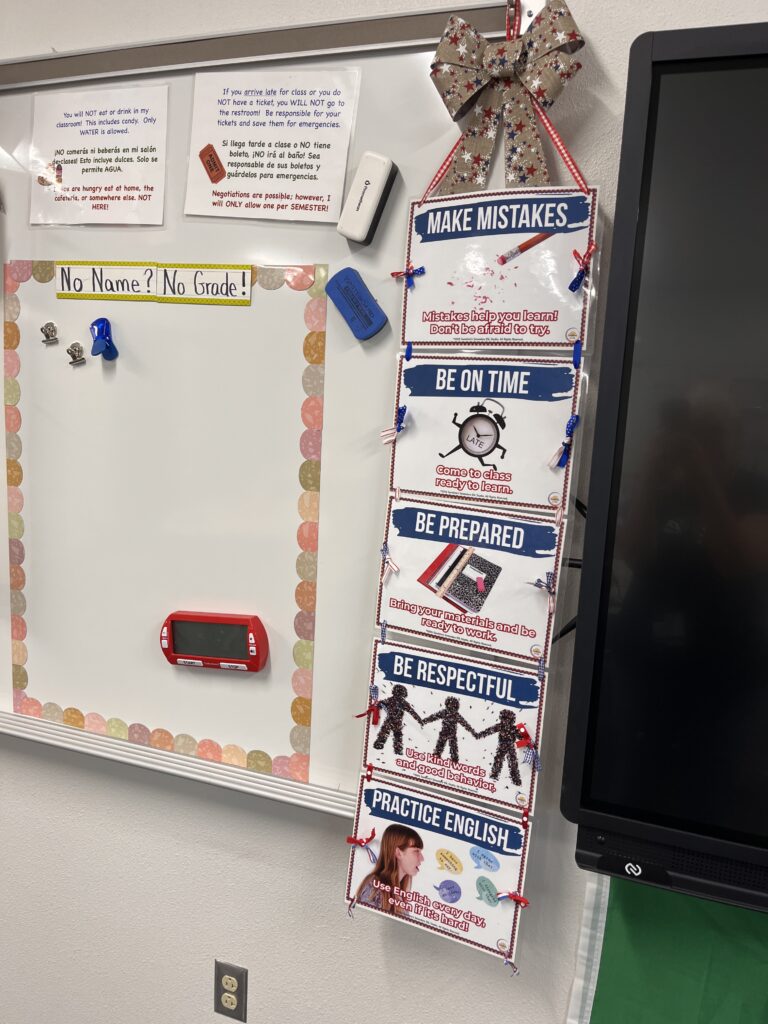
Create Systems That Students Can Follow Independently
Simple systems save instructional time. A no-name board, clearly labeled supply bins, group numbers, and a consistent place for materials can prevent repeated interruptions.
A numbered pocket chart can be used for participation tools, group assignments, classroom jobs, device numbers, or other routines.
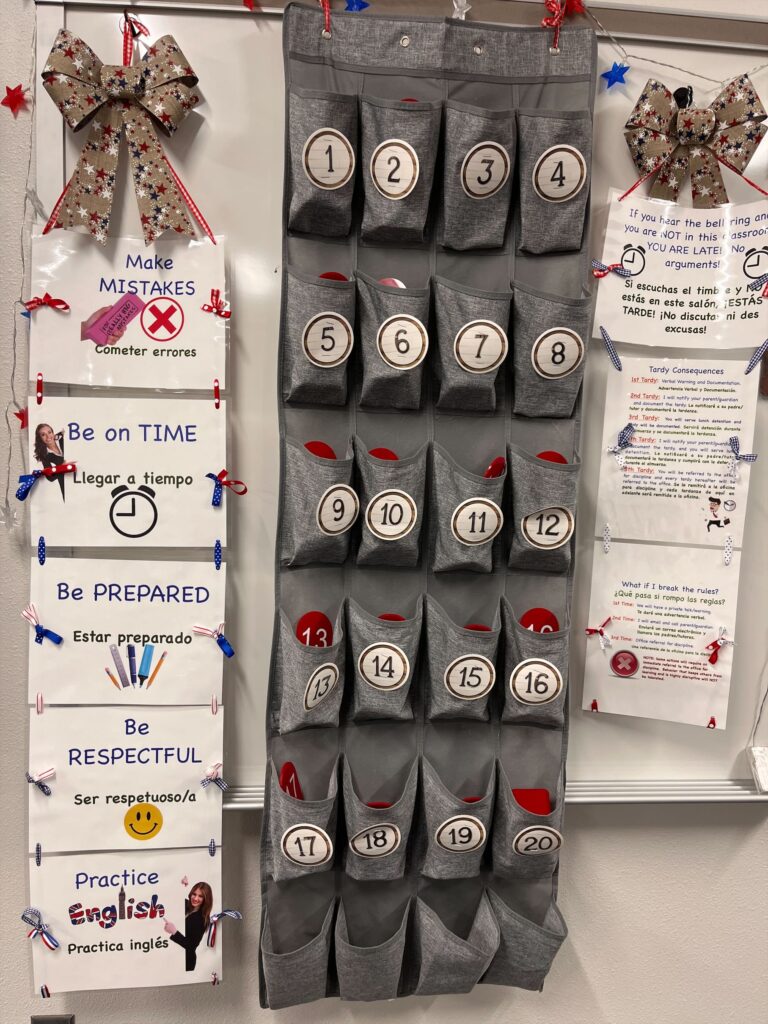
Classroom Management Tools I Use
Use Multilingual Supports
Visual and multilingual supports help students follow directions independently. This is not limited to beginners. Intermediate students may understand the concept but miss a key direction because of unfamiliar vocabulary or processing time.
Useful supports include:
- Visual schedules
- Translated classroom rules
- Picture-based cues
- Bilingual glossaries
- Modeled examples
- Desk mats
- Posted classroom language
If cellphones are a major issue, read Benefits of a Cellphone Ban in Schools.