
Welcoming a newcomer ESL student in high school can feel overwhelming, especially when the student is brand new to English, brand new to the school system, and trying to understand basic classroom routines at the same time.
The first 30 days do not need to be perfect. They need to be predictable, supportive, and focused on survival English, classroom routines, beginner ESL vocabulary, and small moments of communication.
If you teach newcomer ESL high school students, the goal is not to teach everything at once. The goal is to help students feel safe, understand what is happening, and begin using English in ways that matter during the school day.
Start With Safety and Routine
During the first few days, newcomer student support should focus on helping students understand where to go, what to do, and how to ask for help.
Newcomers need simple routines they can repeat every day. This might include entering the classroom, finding their seat, getting materials, responding to a warm-up, asking for a pencil, or showing that they do not understand.
This is where Back to School ESL activities and first week ELL activities matter. They should not be overly complicated. The best first week ESL activities are visual, repetitive, and low-pressure.
You can read more about this in my post on First Day Activities for ELL Students and my First Week Tips for New ESL Teachers.
Focus on Survival English for Newcomer ESL High School Students
Before students can participate in academic tasks, they need classroom survival English.
Helpful phrases include:
I need help.
I don’t understand.
Can you repeat that?
Where is the bathroom?
I need a pencil.
What page?
Can I work with a partner?
These ESL survival phrases help newcomer students function in class before they are ready for longer speaking tasks. Classroom questions for newcomers are especially important because they give students language they can use immediately.
This is also why I like using visual supports, desk mats, and sentence stems during the first month. Students need to see the language again and again until it becomes familiar.
Related post: Survival English Desk Mats for ESL Students
Use Newcomer ESL High School Activities That Are Not Babyish
You’ll also find many of these newcomer supports in my high school ESL classroom ideas, where I share the bilingual visuals, survival English resources, and classroom organization that help new students feel successful from day one.
High school newcomers may be beginners in English, but they are not little kids. That distinction matters.
Beginner ESL activities should be clear and scaffolded, but they should still feel respectful for teens. I try to use real classroom language, school situations, visuals, short speaking tasks, and simple listening practice instead of materials that feel too young.
Good newcomer ESL activities for high school include:
basic classroom vocabulary
school schedule practice
teacher and student questions
simple personal information activities
listening and repeat practice
pointing, matching, labeling, and choosing
short speaking responses with sentence frames
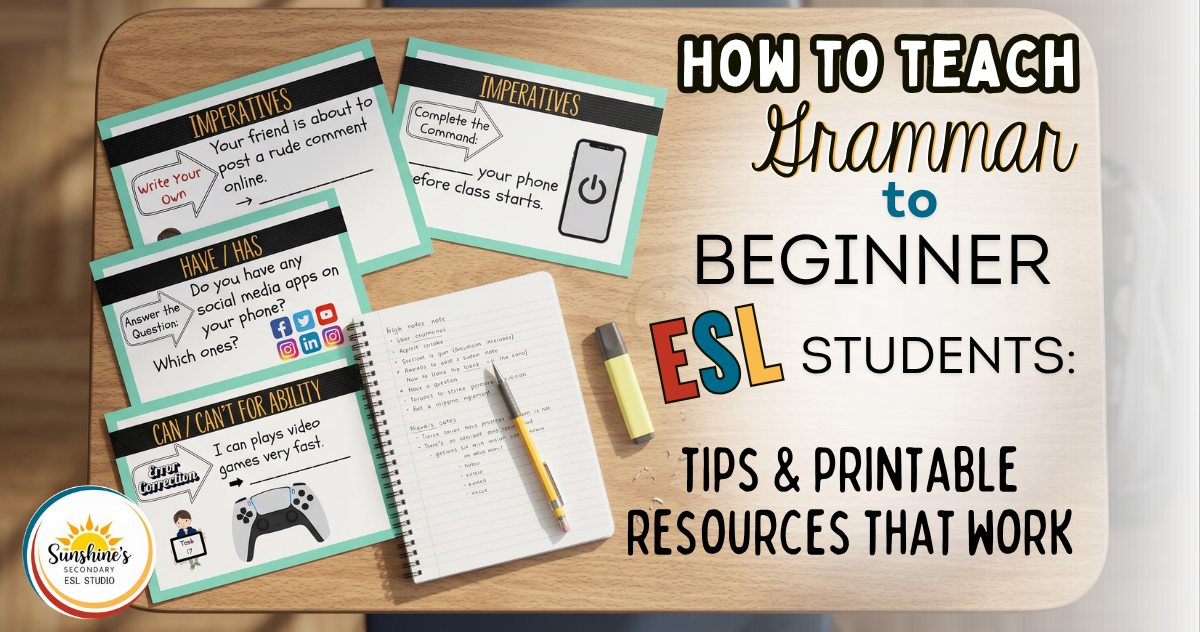
For more support with beginner ESL students, see Beginner ESL in High School and How to Teach Grammar to Beginner ESL Students.
Build Listening and Speaking Slowly
Newcomer listening practice should begin with words and phrases students will actually hear in school. They need to hear classroom directions, common questions, names of supplies, places in the school, and simple teacher language.
Newcomer speaking practice should also stay simple at first. Students may only be ready to repeat, choose from options, answer with one word, or use a sentence frame. That still counts as speaking practice.
Over time, those small responses build confidence.
You may also like these posts:
How to Build ESL Speaking Routines
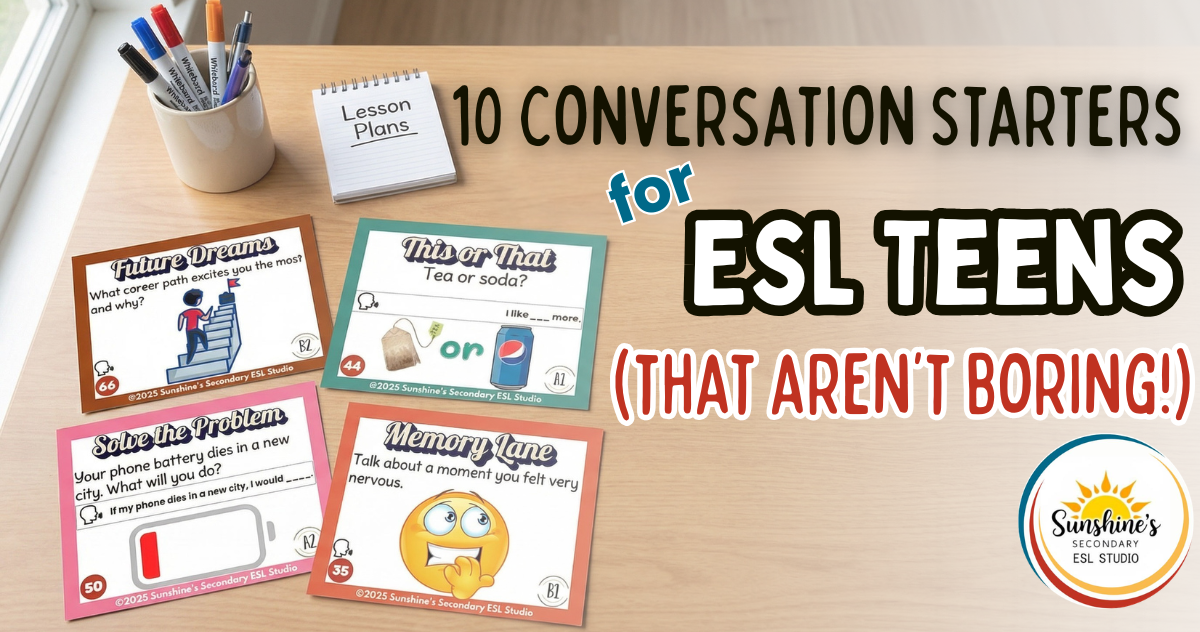
ESL Speaking Activities for Teens
Free ESL Sentence Starters for Teens
Cloze Listening Activities for ESL Students
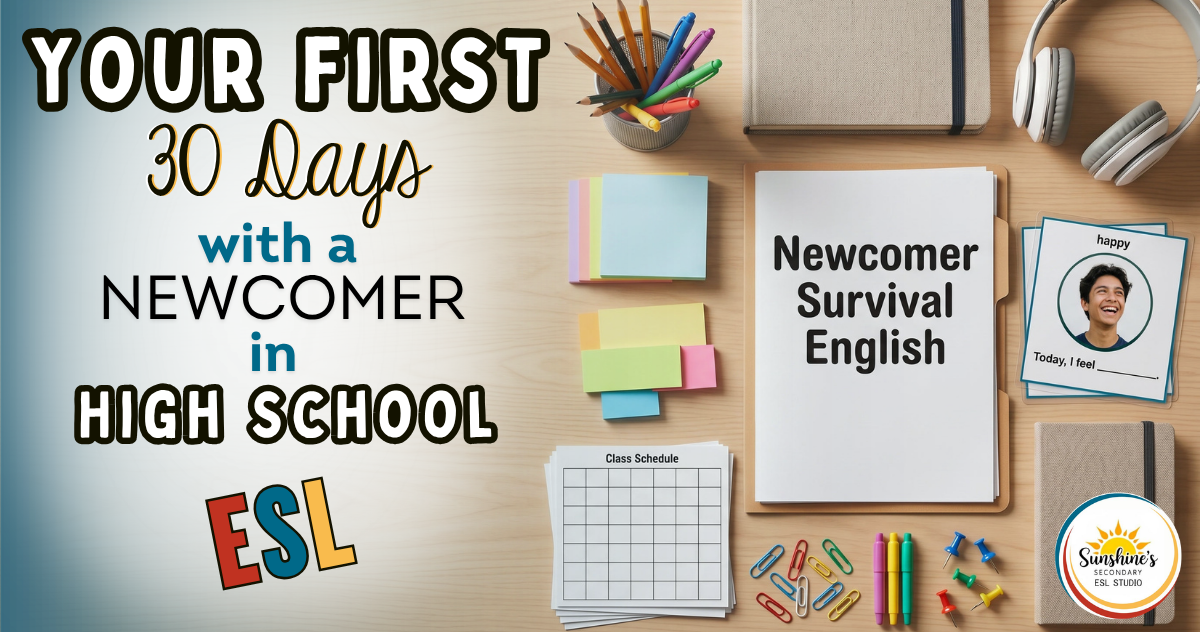
A Simple 30-Day Newcomer ESL High School Plan
Here is a simple way to think about the first month.
Days 1–5: Help the Student Feel Safe
Focus on names, schedules, classroom objects, basic needs, and simple routines. Use visuals, gestures, and yes/no or either/or questions. Keep tasks short.
This is a good time to use a free first day activity or a simple student information packet.
You can try my free resource here:
ESL Newcomer First Day Mini Kit
Days 6–10: Practice Classroom Survival English
Now start repeating the most important classroom questions and survival phrases every day. Students need practice asking for help, finding materials, understanding directions, and responding to basic classroom language.
If you want audio-supported practice, you may like this freebie:
ESL Audio Slides Freebie: Newcomer Vocabulary & Listening Practice
Days 11–20: Add Vocabulary, Listening, and Simple Speaking
Once students understand basic routines, add beginner ESL vocabulary, simple sentence frames, listening practice, and short speaking tasks.
This is when students can begin practicing topics like school supplies, classroom places, feelings, needs, schedules, and basic personal information.
Days 21–30: Build Independence
By the end of the first month, students should begin recognizing daily routines and using classroom language with more confidence.
They may still need lots of support, but they should know how to ask for help, participate in simple activities, and understand the basic flow of class.
This is also a good time to use informal assessments, pronunciation checks, and simple speaking tasks to learn more about the student’s English level.
Related post: Beginning of Year ESL Assessments for High School
Helpful Newcomer ESL Resources for the First 30 Days
During the first month, I like to keep newcomer support focused on four things: survival English, classroom routines, visual support, and simple assessment.
For daily language support, Survival English Desk Mats can help students find classroom questions, sentence stems, and basic phrases without waiting for the teacher every time they get stuck. For routines and expectations, visual ESL Classroom Routines Posters and ESL Classroom Expectations Posters can make the classroom feel more predictable for students who are still learning English.
By the end of the first month, I also like to use a simple ESL Diagnostic Assessment Bundle or pronunciation check to learn more about each student’s speaking, reading, and pronunciation needs before planning next steps.
Ready-to-Use Newcomer ESL Support
f you want a ready-to-use newcomer support system for the first weeks of school, the Secondary ESL Newcomer Launch Bundle is the best place to start. It brings together survival English, classroom routines, beginner vocabulary, and first-week activities for middle school and high school newcomers.
For teachers who want printable student support plus audio practice, the ESL Newcomer Student Packet & Audio Slides Bundle gives students practice with school information, feelings, needs, classroom questions, classroom directions, school supplies, school people, and school places.
Final Thoughts
The first 30 days with a newcomer ESL student in high school are not about rushing into everything. They are about safety, routine, survival English, listening practice, and small wins.
When newcomer students know what to do, how to ask for help, and how to participate in simple ways, they begin to feel more confident.
Start small. Repeat often. Use visuals. Give sentence stems. Build classroom survival English first.
That foundation matters.