
During my first year teaching ESL, my views on native language use in the ESL classroom were heavily influenced by another teacher who told me one of my classroom rules needed to be “English Only.”
At the time, I believed that was what good ESL teachers were supposed to do. The soon-to-be-retired teacher I worked with had a very outdated view that in order for students to learn English, they should not use Spanish at all in the classroom. As a brand-new teacher, I trusted that advice and added the rule.
Looking back now, my entire perspective on native language use in the ESL classroom has completely changed.
It failed almost immediately.
I am bilingual in both English and Spanish, but English is my first and primary language. As a white woman teaching in a predominantly Spanish-speaking ESL classroom full of teenagers in my border city, I could feel that the rule rubbed my students the wrong way. The atmosphere in the room felt tense, disconnected, and uncomfortable.
Honestly, I cried that first year because I could not understand what I was doing wrong.
Then one day, it clicked.
I was not letting my students be themselves.
Over the years, I have realized that language learning is deeply connected to identity, belonging, and emotional safety — especially for multilingual teenagers. That mindset has shaped not only my classroom routines, but also the way I approach Culturally Responsive Teaching for ESL Teens.
Why I Changed My Thinking About Native Language Use in the ESL Classroom
Over the course of 14 years teaching high school ESL, I have learned that students often work through their native language in order to learn English successfully. For many multilingual learners, especially newcomers and beginner English learners, their first language is not a barrier to learning English. It is the bridge that helps them get there.
Beginner ESL students are often silently translating, comparing sentence structures, and connecting new vocabulary to concepts they already understand in their first language. That process is natural. In many ways, it is part of how language acquisition works.
If you teach newcomers or beginner multilingual learners, you may also enjoy reading my post about supporting beginner ESL students in high school.
When students are allowed to strategically use their native language in the ESL classroom, they are often more willing to:
- participate in discussions
- ask questions
- collaborate with peers
- take academic risks
- process difficult concepts
- build confidence in English
I no longer see Spanish as something that needs to be “controlled” in my classroom. Instead, I see it as a tool students naturally use to make sense of new learning.
That does not mean my students avoid English. It means they use what they already know in order to develop a new language.
The Day I Apologized to My Students
I remember going into class one day and apologizing to my students in Spanish.
I explained that I thought the real issue was that I was not allowing them to feel comfortable being themselves in my classroom. I wanted them to know I respected both their language and their identity.
That conversation changed everything.
The environment became warmer. Students participated more. They trusted me more. I also noticed that students became far more willing to speak English once they no longer felt embarrassed about making mistakes. For many multilingual learners, confidence has to come before fluency.
Too often, ESL students stay silent because they are afraid of speaking imperfect English. Once that fear started disappearing, participation increased naturally.
Building speaking confidence is something I now intentionally focus on through structured classroom routines and collaborative activities. I talk more about that in my posts about ESL Speaking Confidence Activities and How to Build ESL Speaking Routines.
What Translanguaging Looks Like in My Classroom
There is a misconception that allowing native language use in the ESL classroom means students never practice English. That is not what happens in my classroom at all.
My students still produce work in English. They still speak English throughout class. They still build academic vocabulary and practice language structures.
However, I allow students to use their native language strategically during the learning process.
For example, I allow:
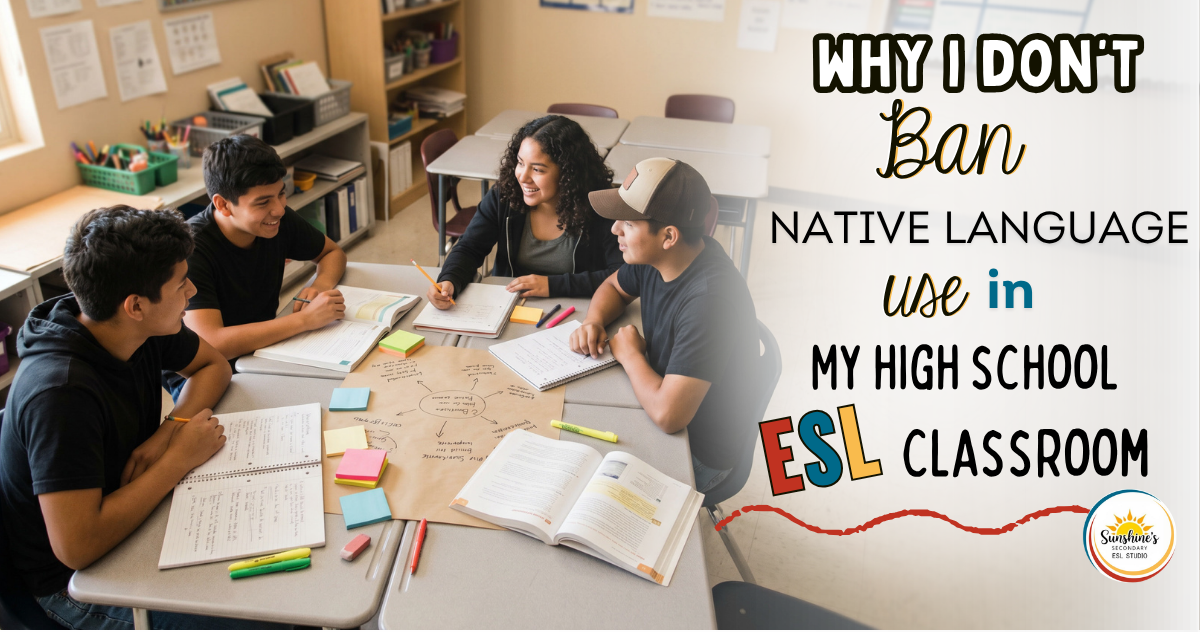
- brainstorming in Spanish
- peer discussions in Spanish
- annotations in Spanish
- quick clarifications in Spanish
- vocabulary connections between languages
The reason is simple: some academic skills require quick thinking and deep processing. Students should not be blocked from showing understanding simply because they are still developing English proficiency.
When students brainstorm ideas in their native language first, they are often able to produce stronger final work in English. This is especially true during writing activities. Many ESL students need time to process ideas in their strongest language before transferring those thoughts into English.
That is one reason I rely heavily on scaffolds like sentence frames, graphic organizers, and structured writing supports. If you use similar strategies, you may enjoy my posts about ESL Writing Support Strategies and Free ESL Sentence Starters for Teens.
Many of the speaking activities and discussion routines I create for my students are intentionally designed to lower language anxiety while still encouraging English production. Structured supports, visuals, sentence starters, and collaborative activities help students participate without feeling overwhelmed.
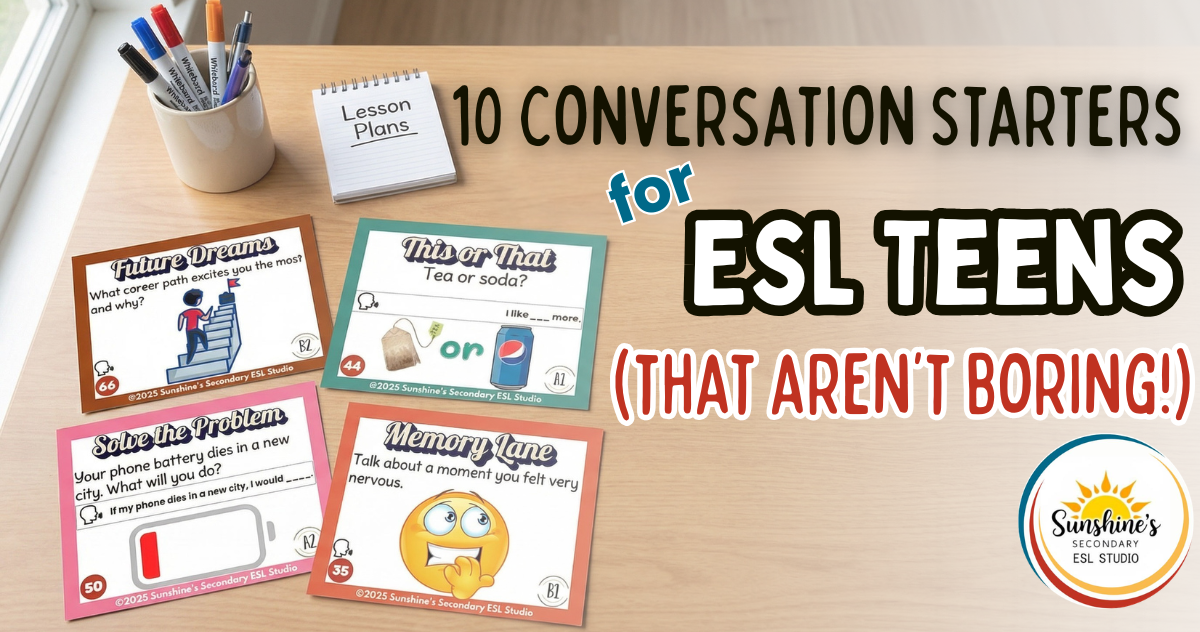
Some of my favorite classroom activities include Conversation Starters for ESL Teens, Beginner ESL Speaking Activity, and ESL Emotion Speaking Prompt because they encourage communication without putting students on the spot.
“Do You Dream in English or Spanish?”
One of the conversations I have with my students every year is about language and comfort.
I ask them:
“Do you dream in English or Spanish?”
Without hesitation, they usually answer:
“Pos, en Español.”
Then I explain something important to them.
If Spanish is the language their brain naturally processes emotions, memories, and complex thoughts in, then it makes sense that difficult academic tasks may also begin there.
Their native language becomes the blueprint for what they eventually produce in English.
That idea immediately makes sense to my students.
They understand that they can begin from a place of comfort and familiarity while still growing in English.
What I Still Expect From My Students
Allowing native language use in the ESL classroom does not mean there are no expectations.
My classroom is not a free-for-all where students completely avoid English.
The goal is always English growth.
Students understand that:
- the final product will usually be in English
- they are expected to practice English regularly
- mistakes are part of language learning
- perfect English is not required to participate
That last part is especially important.
I care far more about students communicating ideas, taking risks, and engaging with content than producing perfect grammar every second of class. Language develops through use, not fear.
Over time, I have become more intentional about using translanguaging strategies in my secondary ESL classroom rather than treating students’ native language as something that needs to be eliminated.
I also think this connects closely to the idea that rigor in ESL classrooms often looks different than it does in mainstream classrooms. Multilingual learners can absolutely engage in rigorous thinking while still relying on supports and scaffolds. I share more thoughts about that in my post on Why Rigor in ESL Looks Different.
Why I No Longer Believe in “English Only” for ESL
For some students, an “English Only” rule may seem motivating. For many others, especially teenagers navigating identity, culture, and language development all at once, it can feel isolating.
My students are already doing something incredibly difficult every single day. They are learning academic content while simultaneously learning a new language.
I no longer believe forced silence helps that process.
What helps is:
- trust
- connection
- scaffolding
- collaboration
- confidence
- feeling safe enough to try
Over the years, I have also created many of my own ESL resources focused on scaffolding, speaking confidence, beginner support, and collaborative learning because I wanted materials that reflected the realities of multilingual classrooms instead of unrealistic “English only” expectations.
Whether I am creating speaking activities, grammar resources, discussion prompts, or beginner supports, my goal is always the same: helping multilingual students feel successful enough to participate.
If you want to explore some of the ESL resources I use and create for secondary multilingual learners, you can also browse my Teachers Pay Teachers store: Sunshine’s Secondary ESL Studio.
Because when students feel safe enough to be themselves, they are much more willing to take the risks required to learn a new language.
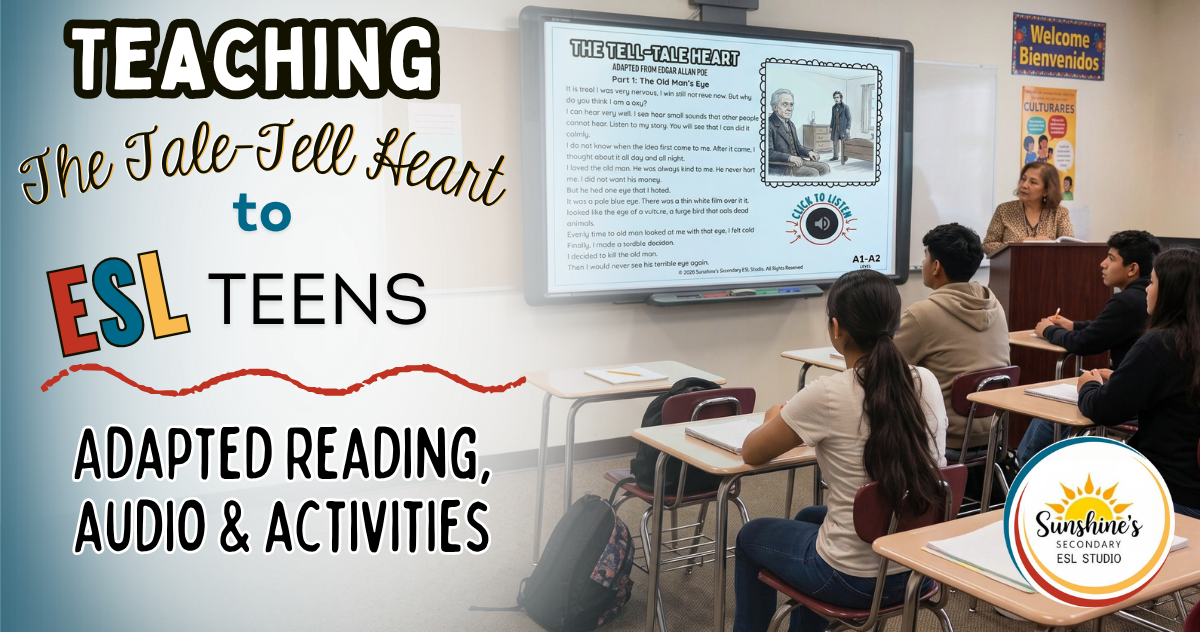
Teaching The Tell-Tale Heart to ESL Teens: Adapted Reading, Audio & Activities
The Monkey’s Paw ESL: How to Teach the Classic Short Story to English Learners
Beginning-of-Year ESL Assessments for High School Students