
ESL Reading and Writing Strategies for High School Classrooms
Teaching multilingual learners in secondary classrooms requires thoughtful planning, patience, and strong ESL reading and writing strategies. High school ESL teachers are often expected to teach literature, nonfiction, writing skills, and academic standards while also supporting students who are still developing English language proficiency.
That can feel overwhelming, especially when students are asked to read Poe, Shakespeare, poetry, short stories, informational texts, or grade-level nonfiction before they have the vocabulary and background knowledge they need.
The good news is that secondary English learners can engage with challenging texts when the right scaffolds are in place. Effective ESL reading and writing strategies help students build confidence, understand complex ideas, and develop the academic language they need for long-term success.
If you work with students who are still building foundational literacy skills, you may also find support in my post about ESL students reading below grade level.
Supporting Reading Development in ESL Classrooms
Strong reading instruction for multilingual learners starts with making the text more accessible without removing the thinking. Students still need meaningful, age-appropriate content, but they also need support with vocabulary, background knowledge, sentence structure, and comprehension.
Some of the most effective ESL reading strategies include:
- Pre-teaching key vocabulary
- Activating background knowledge before reading
- Chunking complex texts into manageable sections
- Using visuals and graphic organizers
- Providing guided comprehension questions
- Pairing reading with discussion and writing
- Choosing culturally relevant or high-interest texts
For example, KWL charts for ESL students can help students connect what they already know to a new topic before they begin reading. ESL graphic organizers for literature can also help students track characters, setting, conflict, theme, and evidence as they read.
When students have tools that organize their thinking, they are less likely to feel overwhelmed by unfamiliar language.
Building Reading Comprehension with Scaffolded Texts
Reading comprehension improves when students have repeated opportunities to interact with text in structured ways. This might include previewing vocabulary, reading in chunks, answering text-dependent questions, discussing key ideas, and writing short responses.
For high school ESL students, scaffolded reading does not mean simplifying everything. It means giving students access points so they can participate in grade-level thinking.
You can explore more ideas in my post on ESL reading comprehension for high school. If you are teaching short stories or literature, resources like The Necklace ESL reading activity can show how classic texts can be adapted and scaffolded for multilingual learners.
Teachers can also build engagement with meaningful nonfiction and culturally connected texts. For example, ESL biography reading passages can help students build background knowledge while practicing reading, writing, vocabulary, and discussion skills.
Building Strong ESL Writing Skills
Writing can feel intimidating for English learners, especially when they are asked to express complex ideas in a new language. Students may understand the content but struggle to organize their thoughts, choose academic vocabulary, or form complete sentences in English.
Strong ESL writing strategies often include:
- Sentence frames and sentence starters
- Structured paragraph outlines
- Modeled examples of academic writing
- Word banks and transition lists
- Peer collaboration and revision
- Graphic organizers for planning
- Short, frequent writing opportunities
For additional support, you may want to explore my post on ESL writing support strategies. If your students need help with test-style writing, TELPAS writing practice for grades 9–12 can also support academic writing development for secondary English learners.
Writing becomes more accessible when students are not expected to start from a blank page. Sentence frames, models, and guided practice give students the structure they need to express stronger ideas.
Teaching Argumentative and Academic Writing
High school ESL students need practice writing about real topics, using evidence, and explaining their thinking. Argumentative writing can be especially challenging because students must understand the topic, take a position, organize reasons, and use academic language.
Scaffolded argumentative writing can include:
- Short reading passages
- Vocabulary previews
- Opinion sentence stems
- Evidence sentence frames
- Paragraph outlines
- Model responses
- Guided revision
If you are teaching opinion or argumentative writing, my post on argumentative writing for ESL students shares ways to make this type of writing more approachable for multilingual learners.
Teaching Literature to ESL Students
Teaching literature in an ESL classroom is absolutely possible when the right supports are in place. Students can analyze theme, character, conflict, figurative language, and author’s purpose when teachers provide vocabulary support, visuals, chunked reading, and structured response opportunities.
For example, poetry and historical texts can become much more accessible when students have background knowledge and guided reading support. You may find helpful ideas in my post on Langston Hughes “I, Too” ESL activities or in my guide for teaching the Holocaust to ESL teens.
The goal is not to water down literature. The goal is to help students access the text, talk about the text, and write about the text with confidence.
Connect Reading and Writing with Speaking and Listening
Although this page focuses on ESL reading and writing strategies, literacy grows stronger when students also have opportunities to speak and listen. Before students write about a topic, they often benefit from discussing it with a partner or group. Before students read a complex text, they may need to hear key vocabulary, listen to background information, or practice saying important words aloud.
Reading, writing, speaking, and listening should work together in a strong ESL classroom.
If you are also looking for communication routines, visit my ESL Speaking and Listening page.
ESL Reading and Writing Resources for Teachers
This page is designed to help busy secondary teachers find practical ESL reading and writing resources that work in real classrooms.
Here you will find support for:
- Graphic organizers
- Sentence frames
- Adapted reading materials
- Informational texts
- Literary analysis
- Vocabulary development
- Structured writing practice
- Classroom-tested ESL lesson ideas
These resources are designed for middle and high school multilingual learners who need age-appropriate support, not babyish materials.
If you need something you can use right away, you can also browse my Free ESL Resources for classroom-ready tools for secondary English learners.
Shop ESL Reading and Writing Resources
If you need ready-to-use materials, my TpT store includes reading and writing resources for secondary ESL students. Helpful categories to explore include:
- ESL Reading Activities
- ESL Writing Activities
- Cultural & Seasonal ESL Resources
- Teacher Favorites
- Free ESL Resources
- STAAR Test Prep for ESL / ELL Students
Whether you are teaching literature, informational text, short constructed responses, argumentative writing, or vocabulary development, strong ESL reading and writing strategies can help students access challenging content while continuing to grow as English readers and writers.
Final Thoughts
Effective ESL reading and writing strategies make literacy instruction more accessible, engaging, and empowering for multilingual learners. When students are given the right scaffolds, they can read meaningful texts, write stronger responses, and participate more confidently in academic learning.
This site was created to support busy secondary ESL teachers who want practical strategies they can use immediately in their classrooms. Take some time to explore the resources and ideas throughout the site, and start with the supports that best match your students’ current needs.
New to Teaching ESL Teens?
Read the Ultimate Guide to Teaching ESL Teens & Tweens
This guide includes advice, best practices, and some resources that can help support your ELL teens.
Guide to Teaching ESL TeensA Must-Have Freebie
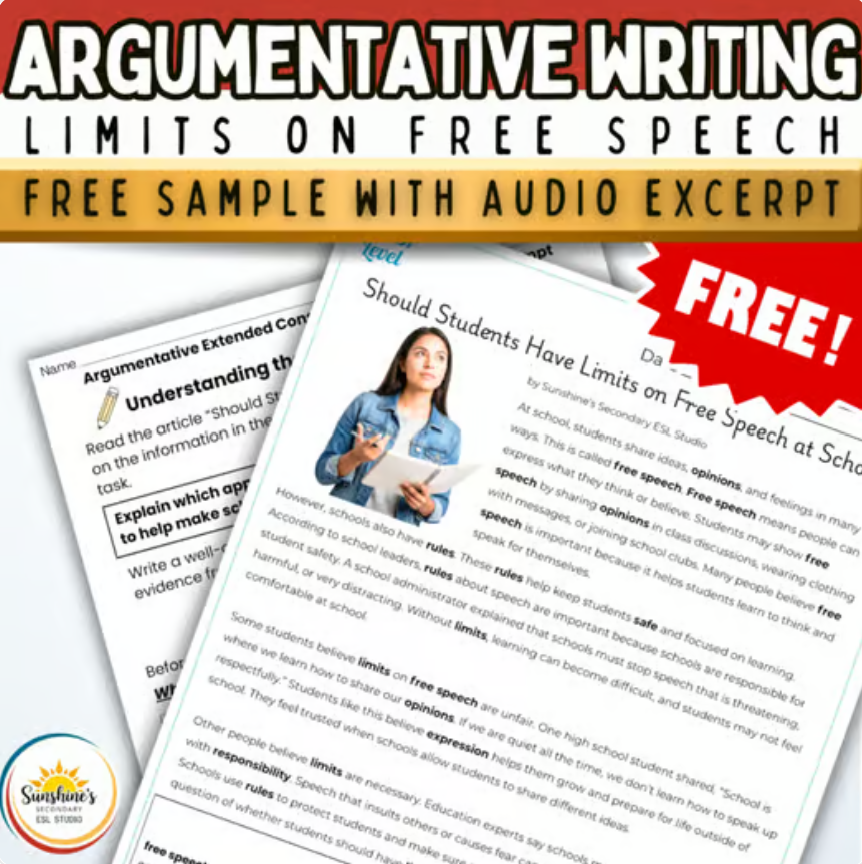
Help students practice reading, listening, and argumentative writing with a free ESL sample that includes an article, writing prompt, and audio excerpt.
A Featured Best-Seller
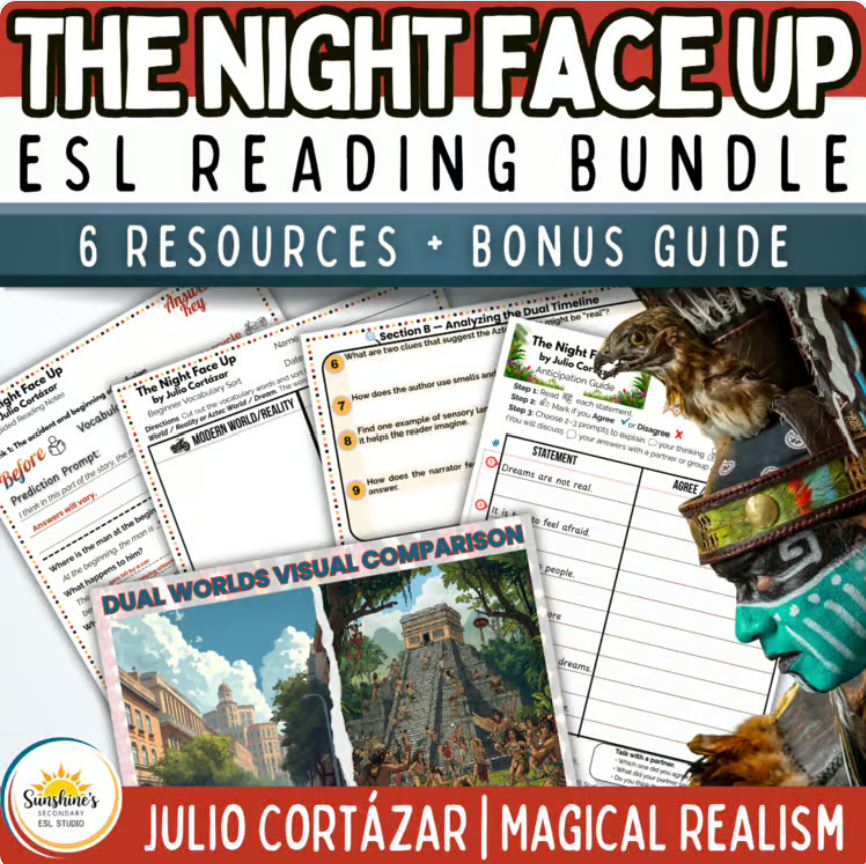
Support literary analysis with scaffolded ESL reading activities for The Night Face Up, including comprehension questions, vocabulary, visual comparison, and magical realism support.
A Seasonal Bundle
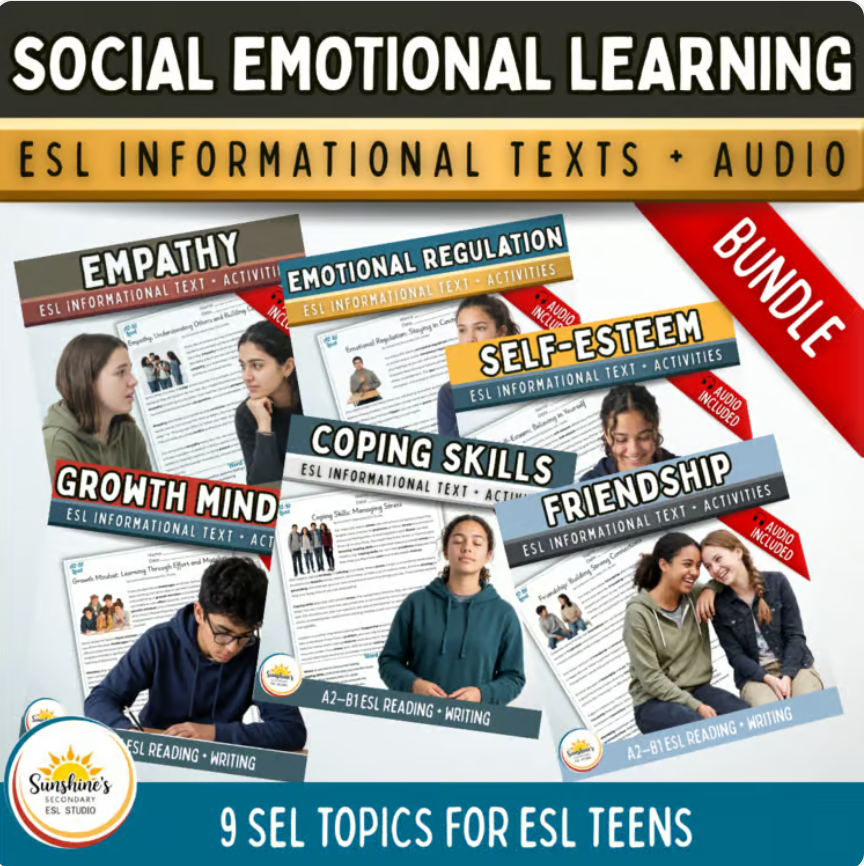
Support reading, writing, and classroom community with SEL informational texts and audio on empathy, friendship, coping skills, and growth mindset.
A Yearlong Must-Have
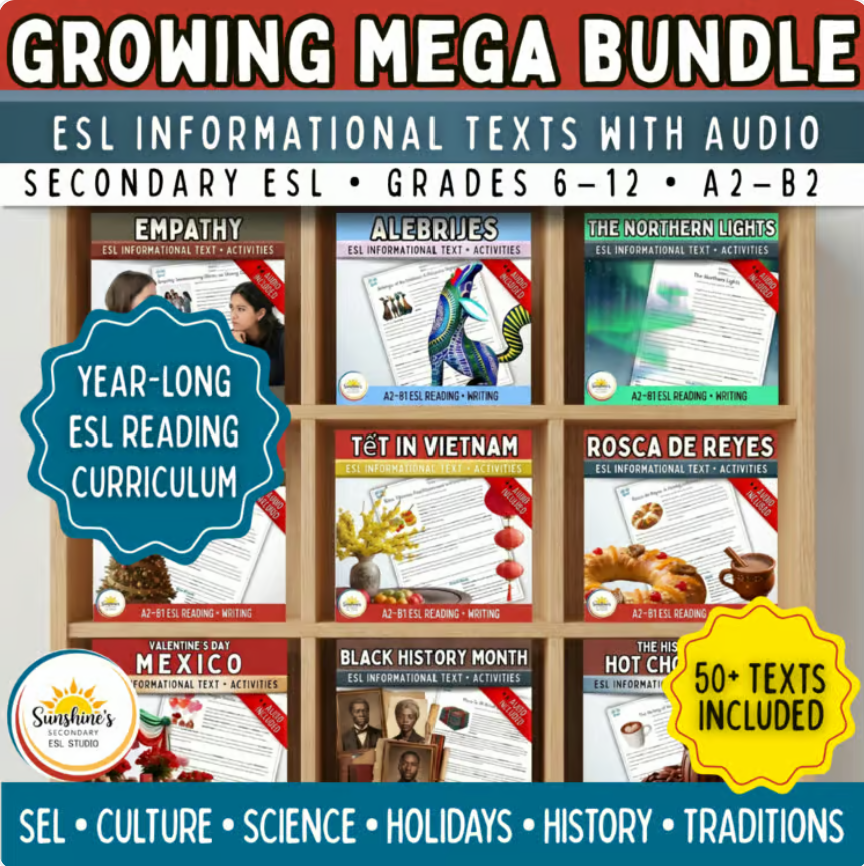
Build a yearlong ESL reading routine with informational texts, audio, and activities covering SEL, culture, science, holidays, history, and traditions.

Sunshine Castro M.Ed.
High School ESL Teacher & Curriculum Creator
Join me for practical strategies and resources for teaching ESL teens.