
Getting beginner students to speak in English can feel like one of the hardest parts of teaching ESL.
They want to participate—but between limited vocabulary, fear of making mistakes, and just not knowing what to say, many students shut down before they even try.
That’s why having the right beginner ESL speaking activity can completely change your classroom.
One of my go-to strategies?
A simple but powerful game: Would You Rather?
Why “Would You Rather?” Works for Beginner ESL Students
Not all speaking activities work well for beginners—but this one checks every box.
Students don’t have to come up with ideas from scratch. Instead, they choose between two options and explain their thinking. That structure makes speaking feel manageable.
This beginner ESL speaking activity helps students:
- Practice making choices in English
- Build confidence with simple sentence structures
- Use real language in a low-pressure way
- Participate—even with limited vocabulary
If you’re working with students who are hesitant to speak, this pairs really well with strategies from: ESL Speaking Confidence Activities
How to Use This Beginner ESL Speaking Activity in Class
You don’t need complicated planning to make this work. Here are a few easy ways to use it:
1. Warm-Up Activity
Start class with one question:
“Would you rather have a pet lion or a pet snake?”
Model your answer:
“I would rather have a lion because it is strong.”
Simple modeling makes a big difference—especially for beginners.
You can also support students with sentence frames like the ones here: Free ESL Sentence Starters for Teens
2. Partner Speaking Practice
Give each pair a question card and a few minutes to discuss.
This creates structured interaction without putting students on the spot in front of the whole class.
If you’re building routines, this connects well with: How to Build ESL Speaking Routines
3. Whole-Class Movement Activity
Have students move to different sides of the room based on their answer.
Then ask:
- “Why did you choose this?”
- “Who agrees?”
This keeps energy high while reinforcing speaking.
4. Quick Speaking Assessment
This beginner ESL speaking activity also works as an informal check for understanding.
Listen for:
- Complete sentences
- Use of “because”
- Basic vocabulary
Why Beginner Students Respond So Well to This Activity
The biggest win here is confidence.
There’s no “right” answer—just a choice. That removes pressure and helps lower anxiety, especially for students who are still building basic language skills.
If you’re working with newcomers, you might also find this helpful: Beginner ESL High School
What Makes a Good Beginner ESL Speaking Activity?
If you’re choosing activities for A1 learners, keep this in mind:
- Clear structure
- Limited language demand
- Built-in support (sentence starters, visuals)
- Opportunities for repetition
“Would You Rather?” naturally includes all of these.
Try It for Free
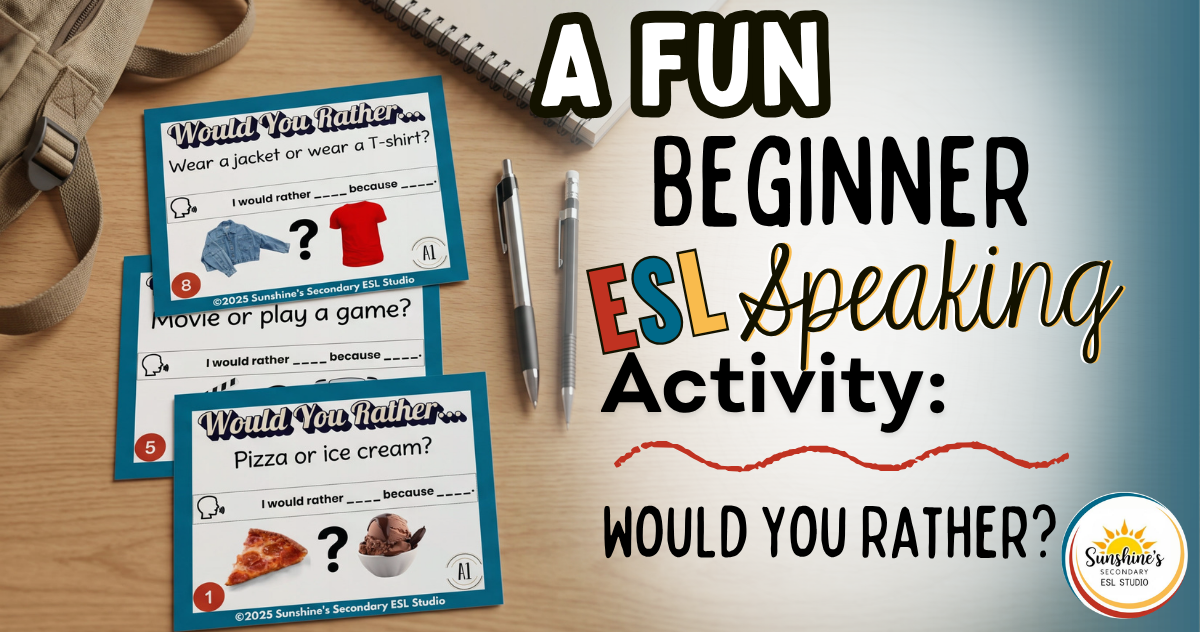
If you want ready-to-use questions, I’ve created a set of beginner-friendly Free Would You Rather? conversation cards designed specifically for ESL students.
Each card includes:
- A simple question
- Sentence starters
- Visual support
They’re easy to print and use right away—no prep needed.
👉 Grab the free sample here on TpT: Free Teen Talk ESL Conversation Cards | A1 “Would You Rather?”
Final Thought
Getting beginner ESL students to speak doesn’t require complicated lessons.
Sometimes, the best approach is giving them a simple structure, a clear choice, and a reason to respond.
That’s exactly what makes this beginner ESL speaking activity work.