
When teachers think about state test writing prep, argumentative essays usually get all the attention. But ESL letter writing activities are one of the most overlooked ways to help multilingual learners build real-world communication skills.
From state writing assessments to English language proficiency exams across the United States, secondary ESL students are often expected to write clearly for a specific audience and purpose. Whether students are preparing for STAAR, TELPAS, WIDA ACCESS, ELPAC, NYSESLAT, or classroom-based writing tasks, they need practice organizing ideas, using appropriate tone, and communicating effectively in writing.
That’s why teaching personal and formal letter writing matters so much. These activities help students practice audience awareness, organization, sentence structure, and authentic communication skills in a meaningful way.
If you’re looking for engaging ESL letter writing activities for middle school or high school students, here are a few strategies that have worked well in my classroom.
Why ESL Letter Writing Activities Matter
Letter writing gives students something many writing assignments do not: a real audience and a clear purpose. For multilingual learners, this can make writing feel more authentic and less intimidating.
When students understand who they are writing to and why they are writing, they are often more motivated to communicate clearly. Personal and formal letter writing also naturally reinforces important language skills like sentence structure, tone, organization, and supporting details.
These are the same communication skills students use across many state assessments and English proficiency exams:
- Writing clearly for an audience
- Organizing ideas logically
- Supporting opinions and requests
- Using appropriate tone
- Expanding sentences with details
- Explaining experiences and ideas
Because of this, ESL letter writing activities become much more than simple grammar practice. They help students build confidence using English in practical, academic, and real-world situations.
If your students struggle with writing confidence, you may also find these ESL writing support strategies helpful.
ESL Letter Writing Activities for Secondary Students
One of the biggest challenges for multilingual learners is understanding the difference between informal and formal communication. Many students are comfortable texting friends, but writing a formal letter to a principal, counselor, employer, or teacher requires a completely different tone and structure.
Teaching this difference explicitly can make a huge impact.
Compare Personal vs. Formal Writing
I like to start with anchor charts or side-by-side examples that compare:
- Greetings
- Tone
- Vocabulary choices
- Closing statements
- Overall structure
Seeing both formats together helps students notice the differences quickly.
For students who need additional scaffolds, sentence starters and guided writing supports can make these activities much more approachable. I regularly use supports like these free ESL sentence starters for teens during writing practice.
Use Teen-Friendly Sample Letters
Students engage more when the writing feels realistic and age-appropriate. I recommend using sample letters based on situations teens actually care about, such as:
- Asking for help
- Writing to a friend
- Requesting schedule changes
- Thanking a teacher
- Explaining a problem
- Applying for a club or activity
High-interest prompts make ESL letter writing activities feel more meaningful and less like test prep.
If you are trying to build overall communication confidence in your classroom, you may also enjoy these conversation starters for ESL teens and ESL speaking confidence activities.
Add Audio Support
Audio-supported ESL letter writing activities can be especially helpful for newcomers and intermediate learners. Hearing letters read aloud helps students build fluency, notice sentence rhythm, and better understand tone.
Listening support can also reduce anxiety for students who are still developing reading confidence.
If you use listening supports regularly in your classroom, you may also like these ESL listening activities for high school students and cloze listening activities for ESL students.
Scaffold the Writing Process
Many multilingual learners struggle with writing because they are expected to generate ideas, organize thoughts, and produce correct English all at the same time.
Scaffolds can make a huge difference.
Some supports that work well include:
- Sentence starters
- Graphic organizers
- Color coding
- Guided outlines
- Vocabulary banks
- Modeled examples
- Collaborative writing practice
For mixed proficiency classrooms, differentiation is also important. Activities that work for advanced multilingual learners may overwhelm newcomers without proper support.
If you teach multiple proficiency levels, you might also enjoy these ideas for differentiating ESL instruction from A1 to B2 levels and supporting beginner ESL students in high school.
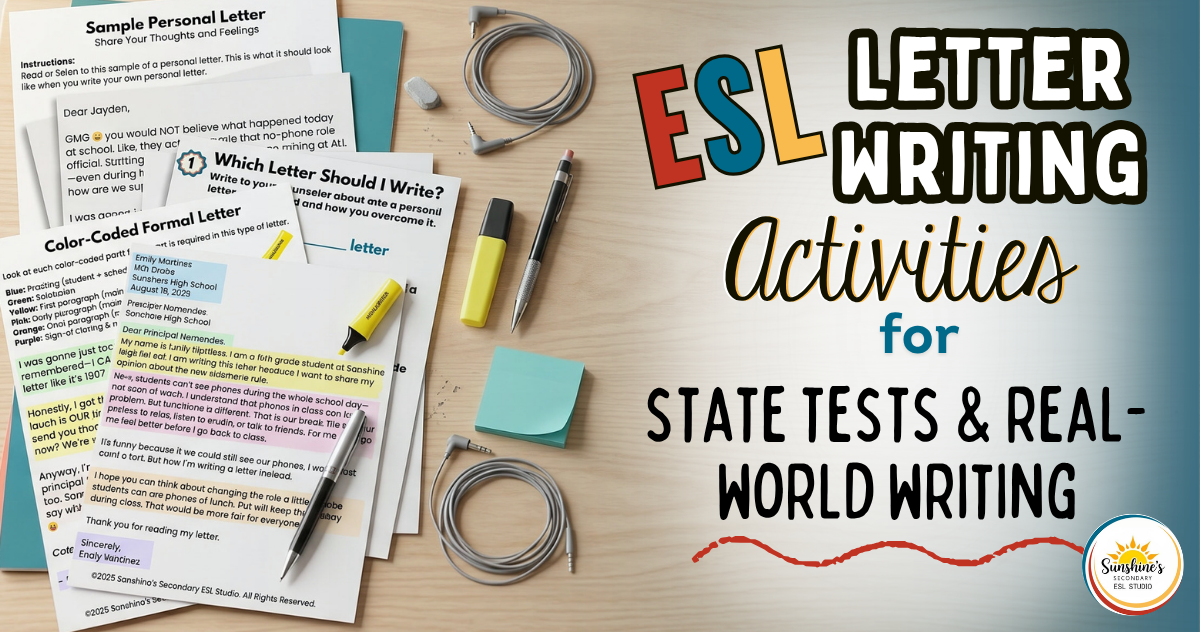
Ready-to-Use ESL Letter Writing Activities with Audio Support
If you want a structured, ready-to-use resource for teaching personal and formal writing, I created a lesson specifically for secondary ESL students.
Letter Writing for ESL Teens: Personal & Formal with Audio
This resource includes:
- 2 teen-friendly sample letters
- MP3 audio recordings
- Visual reference pages
- Color-coded examples
- Printable prompts and writing pages
- Google Slides and PowerPoint versions with embedded audio
- A full lesson plan and answer key
These ESL letter writing activities work especially well for:
- State writing test preparation
- English language proficiency classes
- Writing intervention
- Newcomer support
- Small group instruction
- Back-to-school writing units
The audio support and visual scaffolds are especially helpful for students who need additional language support while building writing confidence.
You can also pair this lesson with:
- sentence starter activities
- ESL listening activities
- graphic organizers
- writing scaffold lessons
- speaking and discussion activities
If your students are also working on broader academic writing skills, you may enjoy these related posts:
- Argumentative Writing for ESL Students
- ESL Reading Comprehension for High School Students
- How to Support ESL Students During Novel Studies
- ESL Graphic Organizers for Literature
Final Thoughts
Letter writing may seem old-fashioned in a world of text messages and voice memos, but it still teaches some of the most important communication skills our ESL students need.
Whether students are writing an email to a teacher, a formal request to a principal, or a response on a state assessment, they need practice organizing ideas clearly and writing for a specific audience.
Strong ESL letter writing activities help multilingual learners develop confidence, structure, and authentic communication skills that transfer far beyond the classroom and far beyond the test itself.
If you are looking for more ideas for secondary ESL instruction, you can also explore my posts about ESL test prep for high school students, how to build ESL speaking routines, and media literacy activities for ESL teens.