
Teaching ESL classroom commands and routines is one of the first challenges you’ll face—especially with newcomer students. If students don’t understand directions like “Take out your notebook” or “Turn to page 10,” everything slows down quickly.
This is especially true during the first few weeks with newcomer students. They need survival English, classroom routines, visuals, sentence stems, and repeated practice before they can fully participate in academic tasks. That’s why I like starting with functional classroom language before moving into heavier grammar instruction.
The good news? You don’t need long grammar lessons to teach this.
In fact, the most effective way to teach classroom commands and routines is by embedding them into simple, structured activities that students actually use. In this post, I’ll show you exactly how I teach ESL classroom routines using engaging strategies that work with teens from day one.
1. Teach Imperatives Through Real Classroom Actions
Let’s be honest—teaching imperatives (“Sit down.” “Open your book.”) can get dry fast if we rely on rule charts.
Instead of starting with grammar explanations, I jump straight into real classroom language in action.
Students work with short, practical commands like:
- “Stand up and turn to page 10.”
- “Clean your desk.”
- “Don’t write yet.”
Then they:
- match the command to a picture
- act it out with a partner
- fix small errors
They’re learning sentence structure without getting stuck in grammar terminology.
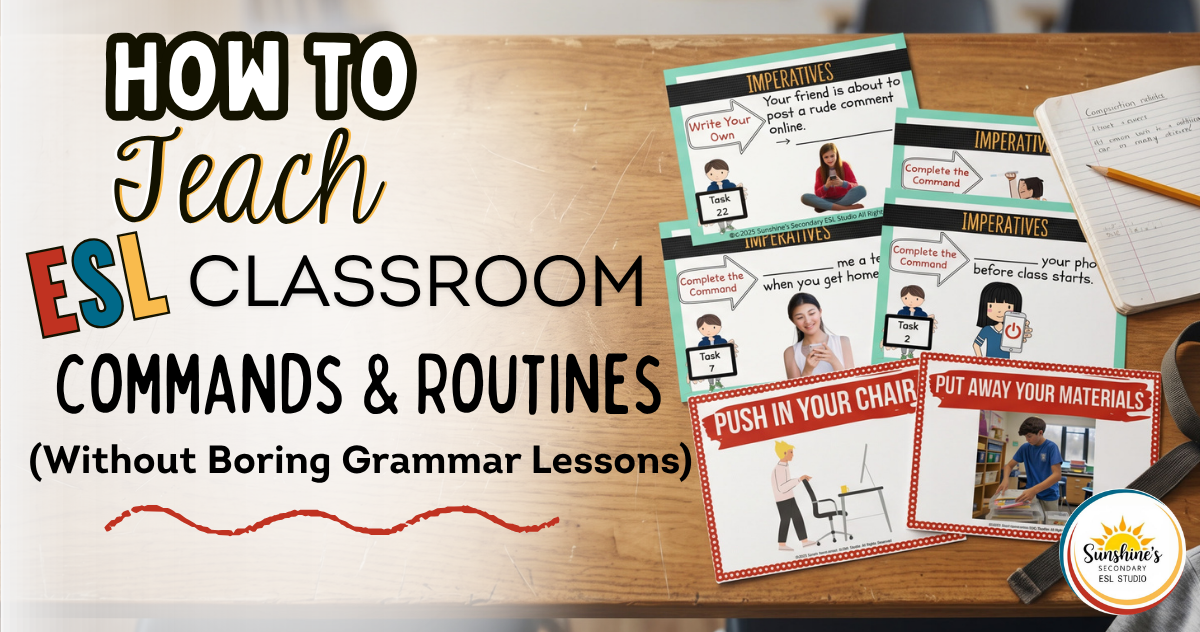
If you want a ready-to-use version of this, I use a set of imperatives and classroom commands task cards that give students lots of quick, structured practice with real directions. They’re designed specifically for ESL teens and work well for stations, warm-ups, or partner activities.
One of the easiest ways to structure this kind of practice is with activities like task cards, which let students interact with the language instead of just reading it.
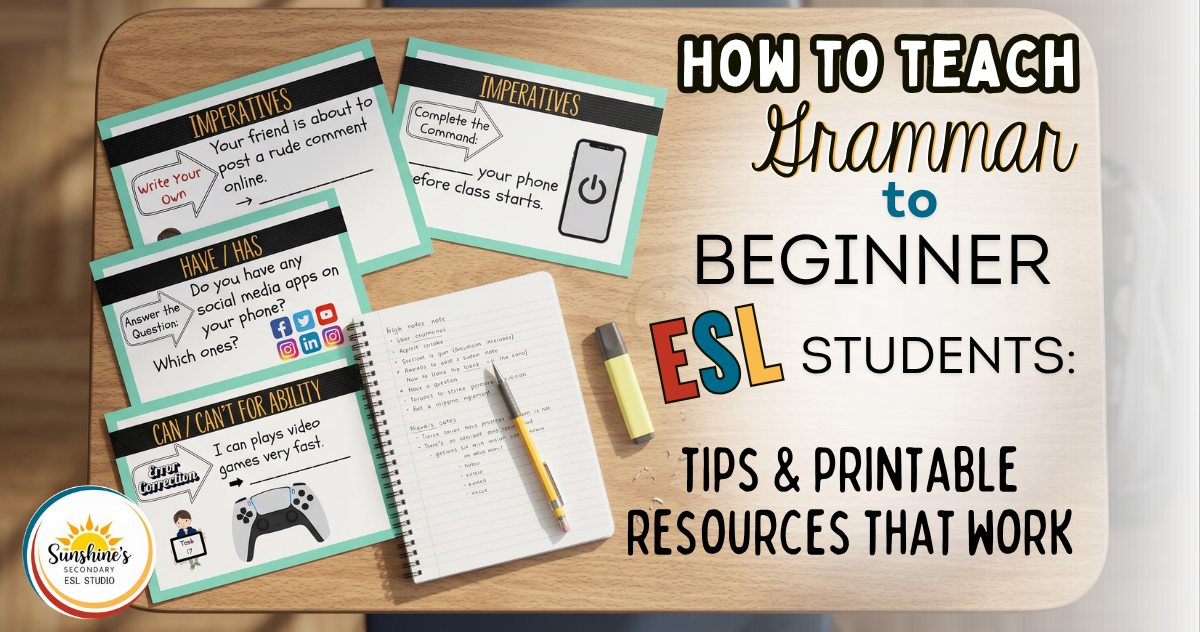
If you’re working with beginners or newcomers, this approach pairs really well with the strategies I share in my post on how to teach grammar to beginner ESL students.
For teachers who are setting up newcomer support from day one, my Secondary ESL Newcomer Launch Bundle brings together first-weeks activities, survival English, classroom routines, and scaffolded practice for older English learners. It’s designed to help newcomers understand the classroom, communicate basic needs, and feel more confident during those first critical weeks.
2. Build Classroom Routines Into Daily Practice
Once students recognize basic commands, the next step is making those routines automatic.
Instead of treating routines as something separate, I build them directly into daily warm-ups using quick, structured activities.
Daily warm-ups are also a simple way to make routines predictable. When students know exactly what to do when they enter the room, you save time, reduce confusion, and create a calmer start to class. For this reason, bell ringers can be especially helpful in secondary ESL classrooms because they give students a consistent entry routine while still building language skills.
If you want a ready-to-use system for daily warm-ups, my ESL Bell Ringers Mega Bundle includes 160 teen-friendly warm-ups with audio support. These work well for starting class, building listening and speaking routines, and giving students predictable practice throughout the year.
For example, students might:
- translate commands into their first language to build understanding
- rewrite informal commands into more formal classroom language
- choose the correct command from similar options
This reinforces both meaning and structure at the same time.
If you want these routines already organized for the first weeks of school, my Back to School ESL Bundle includes classroom routines, procedures, and community-building activities designed specifically for secondary English learners. It’s a helpful way to introduce expectations, practice classroom language, and build confidence without relying on long explanations or babyish materials.
Over time, you’ll notice a shift. When you say something like “Pass your paper forward,” students respond immediately—not because they memorized it, but because they’ve practiced it in context.
This kind of routine-building also connects closely to classroom management. If you want to go deeper into that, I break it down in my post on ESL classroom management strategies for high school.
3. Turn Commands Into Speaking and Listening Practice
Once students are familiar with the language, this is where things really start to click.
Instead of stopping at recognition, I extend the same activities into speaking and listening practice.
Here are a few simple ways to do that:
- Partner A reads a command while Partner B acts it out
- Students sort commands by tone (strong vs. polite) and explain why
- You read a command aloud, and students respond physically or visually
Now students aren’t just reading commands—they’re:
- listening for meaning
- interpreting tone
- responding in real time
That’s where real language development happens.
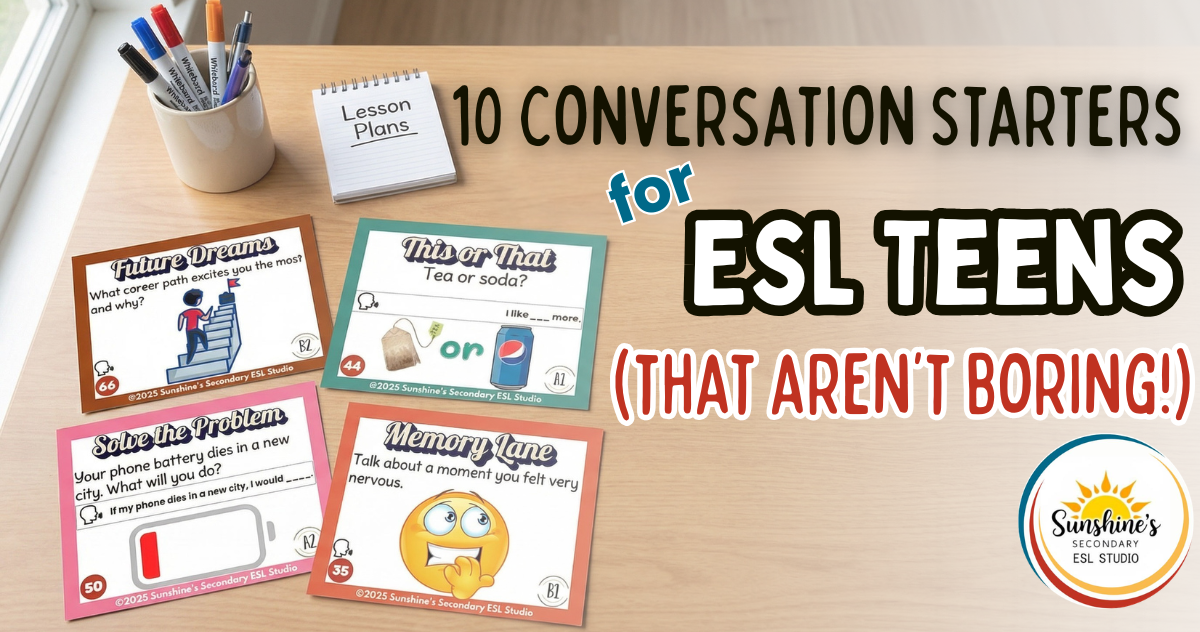
These types of activities also work really well when you have structured prompts ready to go. I often use conversation-style or task-based cards so students can practice giving and responding to directions in a more interactive way.
If you want more structured ways to build this kind of confidence, I share additional ideas in my post on how to build ESL speaking routines.
Common Mistakes When Teaching ESL Commands and Routines
Even strong lessons can fall flat if we miss a few key things. Here are some common pitfalls to watch for:
- Teaching commands without context
Students need to see and use the language—not just read it. - Overloading vocabulary too quickly
Focus on high-frequency classroom language first. - Skipping listening and response practice
Students need to hear commands and react to them, not just recognize them on paper.
Avoiding these makes a huge difference in how quickly students gain confidence.
Why ESL Classroom Commands and Routines Matter
When students understand classroom routines, everything else becomes easier.
They can:
- follow directions independently
- participate more confidently
- focus on learning instead of decoding instructions
For multilingual learners—especially newcomers—this kind of functional language is just as important as academic content.
A Simple Way to Get Started
If you’re looking for a low-prep way to teach ESL classroom commands and routines, start with structured, repeatable activities that give students multiple ways to interact with the language.
Tools like task cards can make this process more engaging by turning practice into something active instead of passive.
If you want to see how this works in your own classroom, you can start with one simple set of activities and build from there. Even small changes in how you introduce routines can make a big impact on student confidence.
Final Thoughts
If you’re looking for a simple, low-prep way to teach ESL classroom commands and routines, having structured activities ready to go can make a huge difference.
I use a mix of:
- grammar task cards for commands and imperatives
- routine-based classroom language activities
- and speaking-focused practice for real interaction
You can explore these ready-to-use ESL resources for the first weeks of school:
👉 Secondary ESL Newcomer Launch Bundle – First Weeks Survival English Activities
👉 Back to School ESL Bundle – Classroom Routines, Procedures & Community Building
👉 ESL Bell Ringers Mega Bundle – 160 Daily Warm-Ups for Teens with Audio
These resources are designed for middle and high school English learners, with teen-friendly activities that support routines, confidence, speaking, listening, and classroom participation from the start of the year.