
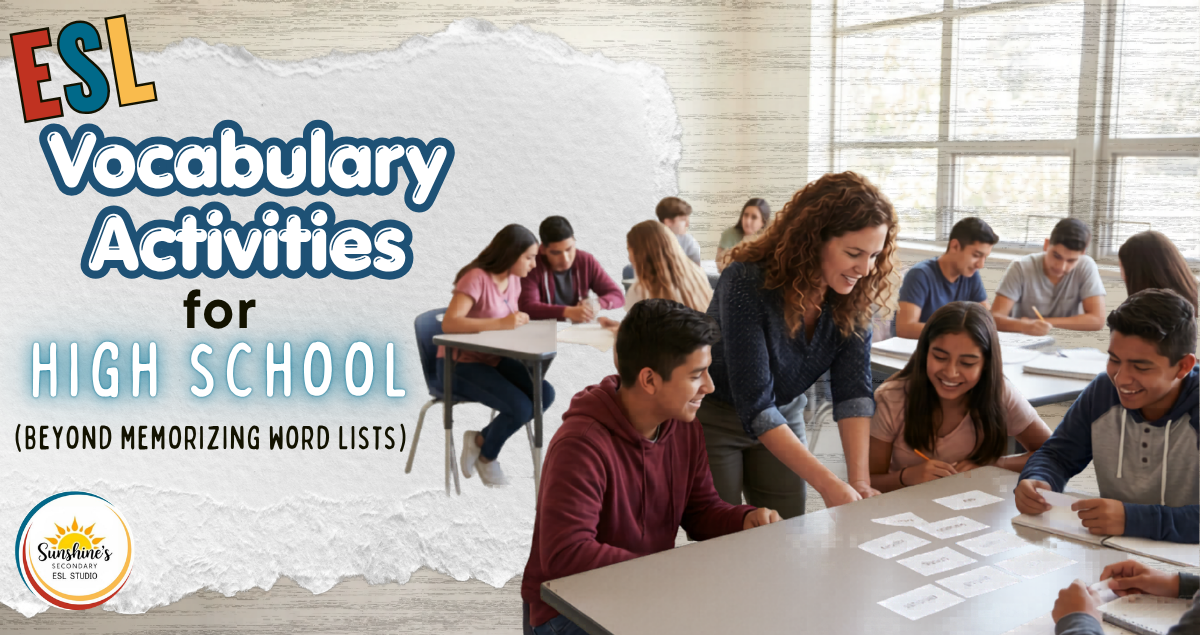
There’s a moment every teacher recognizes when using ESL vocabulary activities high school students are expected to learn from: you introduce a list of words, students copy them down, maybe complete a worksheet… and by the next week, most of those words are gone.
That’s the frustrating part of vocabulary instruction. It feels like students are learning, but it doesn’t always translate into real language use. High school English learners need more than memorization—they need interaction, repetition, and meaningful use.
Let’s look at what actually helps vocabulary stick.
Why Vocabulary Lists Alone Don’t Work
Vocabulary lists aren’t useless—but on their own, they’re not enough.
Most traditional approaches focus on recognition:
- Matching words to definitions
- Filling in blanks
- Memorizing for a quiz
The issue is that students can often recognize a word without being able to use it. They might pick the correct answer on a test but freeze when asked to include that same word in a sentence or conversation.
This becomes even more noticeable when students are working on reading and writing tasks. If you’ve ever seen students struggle to apply vocabulary during comprehension or writing, it connects directly to this gap between recognition and usage—something I talk more about in my post on
🖋️ https://sunshinecastro.com/esl-reading-comprehension-high-school/
Language doesn’t develop through exposure alone. Students need to process words in different ways—seeing them, hearing them, saying them, and using them in context.
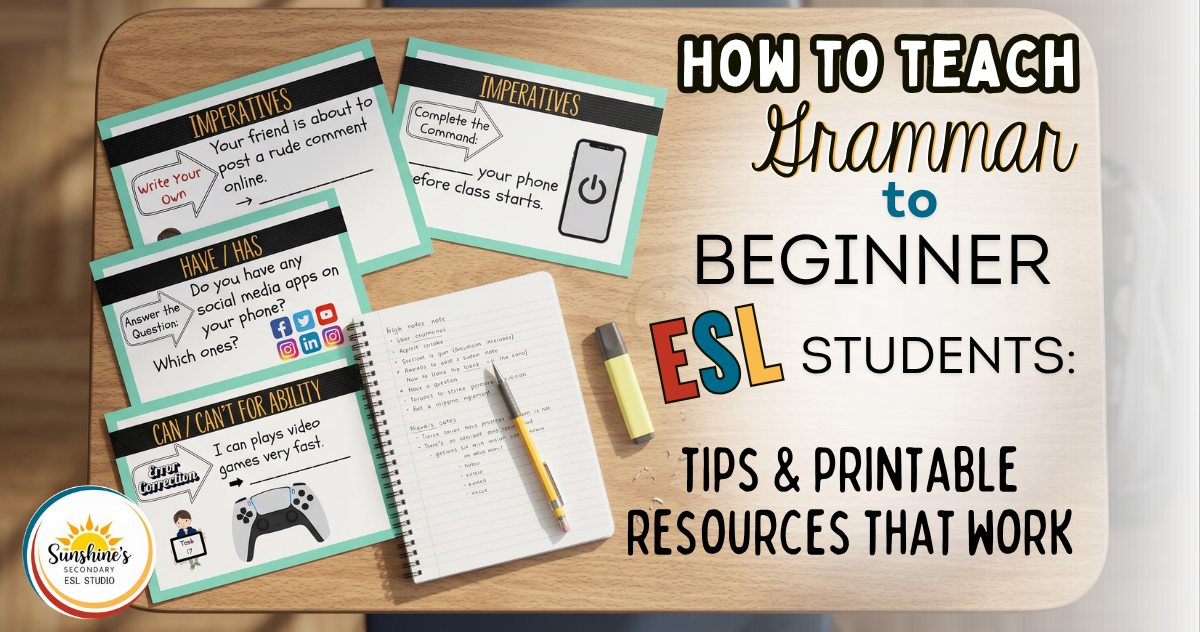
If you’re looking for a simple way to move beyond basic lists, I’ve had a lot of success using structured activities that guide students into actually using vocabulary instead of just recognizing it—especially with task-based formats. 🛍️structured vocabulary and grammar task cards
What Makes ESL Vocabulary Activities High School Students Benefit From
If vocabulary isn’t sticking, it’s usually because students aren’t interacting with the words deeply enough. Strong ESL vocabulary activities high school teachers rely on shift the focus from memorization to application.
This also connects closely to differentiation. If your class includes a mix of proficiency levels (which most of ours do), the way students interact with vocabulary needs to be flexible. If you’re navigating that challenge, this pairs really well with strategies from
🖋️ https://sunshinecastro.com/differentiate-esl-instruction-high-school/
1. Context Before Definitions
Instead of starting with a definition, give students something to figure out.
This could be:
- A short paragraph with the word embedded
- A quick scenario students can relate to
- A sentence with clear context clues
When students try to determine meaning first, they engage in critical thinking. Even if their guesses aren’t perfect, the process helps them build stronger connections to the word.
This approach also aligns really well with culturally responsive teaching—connecting vocabulary to students’ experiences makes it more meaningful. If that’s something you’re focusing on, you might like this:
🖋️ https://sunshinecastro.com/culturally-responsive-teaching-esl-teens/
2. Interaction With Words
Students need multiple ways to work with vocabulary beyond writing definitions.
Effective ESL vocabulary strategies create opportunities for students to:
- Compare words with similar meanings
- Decide which word fits best in a situation
- Explain their thinking to a partner
- Justify choices using context
Sometimes students need a little structure to get started with speaking, especially at lower proficiency levels. Giving them clear prompts or conversation supports can make a big difference in how willing they are to participate. 🛍️conversation cards for ESL teens
If speaking is an area your students struggle with (which is very common), building vocabulary into structured conversations makes a huge difference. I go deeper into that here:
🖋️ https://sunshinecastro.com/how-to-build-esl-speaking-routines/
That small shift—from defining to using—is what builds real language confidence.
3. Repetition That Feels Purposeful
Repetition is essential—but it has to feel intentional, not repetitive in a boring way.
Instead of repeating the same task, revisit vocabulary through different formats:
- Discussion one day
- Writing the next
- A quick speaking activity later
Even something as simple as adding wait time during vocabulary discussions can improve how deeply students process language. If you haven’t tried that yet, this is a great read:
🖋️ https://sunshinecastro.com/wait-time-strategies-esl-classroom/
ESL Vocabulary Activities High School Students Will Actually Use
These activities go beyond memorization and give students a reason to use vocabulary in meaningful ways.
❧ Vocabulary Sorts
Sorting activities push students to think about relationships between words instead of seeing them as isolated terms.
You might ask students to sort words by:
- Positive vs. negative connotation
- Level of intensity
- Academic vs. conversational use
This pairs really well with graphic organizers, especially for visual learners. If you want to build that out further, you might like:
🖋️ https://sunshinecastro.com/esl-graphic-organizers-literature/
If you don’t have time to create these from scratch, having ready-to-use sorting activities can make this kind of deeper thinking much easier to implement consistently. 🛍️ printable vocabulary sorting and grammar activities
❧ Structured Speaking with Target Words
One of the biggest challenges is getting students to actually use new vocabulary when speaking.
A simple structure helps:
- Give a discussion question
- Require students to use 2–3 vocabulary words
- Provide sentence support if needed
If your students need more scaffolding to get started, these sentence starters can make a big difference:
🖋️ https://sunshinecastro.com/free-esl-sentence-starters-for-teens/
I’ve found that turning this into a game or challenge makes students much more willing to participate—especially when there’s a clear goal or time pressure involved. 🛍️ fast-paced ESL vocabulary game
❧ Scenario-Based Vocabulary Practice
Instead of disconnected sentences, present short, relatable situations.
Students naturally choose vocabulary that fits, rather than forcing a word into an unrelated sentence.
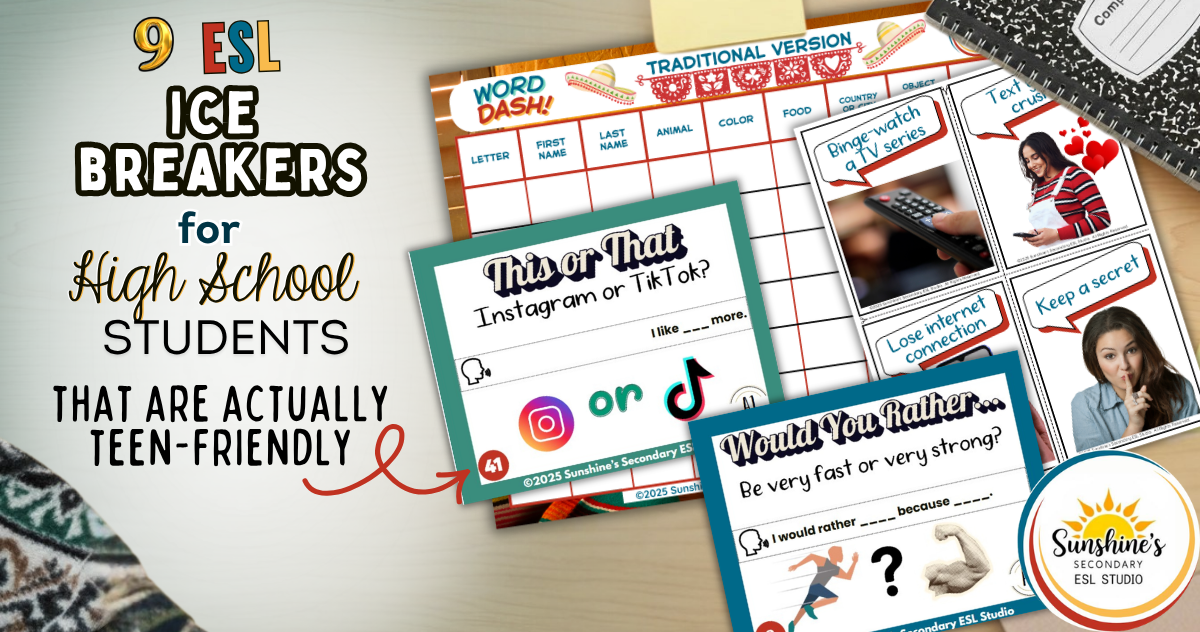
If you want to take this even further, you can turn vocabulary into a game-based activity. One of my favorites for this is inspired by ¡Basta!, where students have to quickly generate words in categories:
🖋️ https://sunshinecastro.com/basta-esl-vocabulary-game/
Activities that feel real or a little dramatic tend to get the best engagement. When students feel like they’re solving something or reacting to a situation, vocabulary use becomes much more natural. 🛍️ ESL logic puzzles and mystery activities
❧ Word Ranking
Ranking words helps students understand subtle differences in meaning.
Give a group of related words and ask students to:
- Order them from weakest to strongest
- Discuss how the meaning changes
- Provide examples
This kind of nuance becomes especially important in writing—especially if students are preparing for state tests or structured writing tasks. If that’s part of your focus, this connects well:
🖋️ https://sunshinecastro.com/telpas-writing-practice-grades-9-12/
This kind of activity also pairs really well with academic vocabulary instruction, where students need to understand subtle differences in tone and meaning. 🛍️ intermediate and advanced ESL vocabulary activities
❧ Quick Writes with Vocabulary Targets
Quick writes are one of the easiest ways to move vocabulary into writing.
Give a short prompt and require a few target words. Keep it low-pressure and focused on usage.
If writing support is something your students need overall, you might also want to explore:
🖋️ https://sunshinecastro.com/esl-writing-support-strategies/
❧ Acting It Out
Even high school students benefit from movement-based activities.
Acting out vocabulary:
- Builds comprehension
- Reduces reliance on translation
- Makes learning more memorable
If you want a structured version of this, charades works really well with ESL teens:
🖋️ https://sunshinecastro.com/charades-game-for-esl-high-school-students/
Adding a structured format to this—like timed rounds or team competition—can make it even more engaging for high school students. 🛍️ ESL charades speaking game
How to Help Vocabulary Stick Over Time
Vocabulary won’t stick if it only shows up once.
Revisit Words Consistently
Bring vocabulary back into:
- Bell ringers
- Warm-ups
- Exit tickets
Even quick review routines can make a big difference in retention.
Having something students can quickly reference throughout the week also helps reinforce vocabulary without needing to reteach it every time. 🛍️ ESL desk mats for daily vocabulary support
Use Vocabulary Across Skills
Vocabulary shouldn’t live in isolation.
Use it during:
- Reading discussions
- Writing tasks
- Speaking activities
If you’re trying to build a more balanced approach across all language domains, this post ties in really well:
🖋️ https://sunshinecastro.com/esl-listening-activities-high-school/
Keep Vocabulary Visible
Word walls and visual supports still work—but only if they’re used regularly.
For newer teachers or those resetting routines, having clear classroom systems in place makes vocabulary use much smoother. This might help:
🖋️ https://sunshinecastro.com/esl-classroom-management-high-school/
Keep It Practical
You don’t need to change everything at once.
Start with one small shift:
- Replace one worksheet
- Add one speaking opportunity
- Reuse vocabulary across multiple days
Even small changes can lead to big improvements over time.
💡 Want Ready-to-Use ESL Vocabulary Activities?
If you’re looking to save time and still give your students meaningful vocabulary practice, you can find all of the activities I use in my classroom here:
🛍️ Sunshine’s Secondary ESL Studio
Final Thoughts
Vocabulary instruction isn’t about how many words students can memorize—it’s about how many words they can actually use.
The most effective ESL vocabulary activities high school teachers rely on are the ones that:
- Encourage thinking
- Promote interaction
- Build confidence
And when students start using vocabulary naturally—in conversations, in writing, and across different contexts—that’s when you know it’s working.
Teaching The Tell-Tale Heart to ESL Teens: Adapted Reading, Audio & Activities
The Monkey’s Paw ESL: How to Teach the Classic Short Story to English Learners
Beginning-of-Year ESL Assessments for High School Students