
When you teach multilingual learners, one thing becomes clear pretty quickly: students need consistency, clarity, and routines they can actually understand. That’s exactly why I rely on visual ESL expectations posters in my high school classroom.
In secondary ESL classrooms, students are often learning far more than just English. They’re adjusting to a new school system, new social expectations, unfamiliar routines, and sometimes an entirely new culture. Even confident students can feel overwhelmed during the first few weeks of school.
For newcomer students, this adjustment can feel even more intense. They need clear visuals, survival English, classroom routines, and repeated practice with basic expectations before they can fully participate in academic tasks. That’s why I like to introduce visual supports early and pair them with simple, functional language students can use right away.
That’s why visual supports matter so much.
Instead of constantly repeating directions or correcting routines verbally, I use visual reminders throughout the room to reinforce expectations in a way that feels supportive rather than punitive. For language learners, visuals reduce confusion and help students feel more independent from Day 1.
If you’re teaching newcomers, beginners, or mixed-level ESL classes, visual classroom supports can completely change the atmosphere of your room.
Why Visuals Work So Well for ESL Students
There’s a reason visuals are such an important part of sheltered instruction and SIOP strategies. Students process images faster than text, and visuals help reduce the cognitive load that comes with learning in a second language.
For many ESL teens, hearing a verbal reminder like “participate appropriately” or “practice academic language” may not fully register, especially during fast-paced classroom moments. But pairing those expectations with visuals and concise language makes them much easier to understand and remember.
Visual supports can also:
- reduce anxiety for newcomers
- improve classroom independence
- reinforce routines without constant teacher repetition
- support students with lower English proficiency
- help students remember expectations across class periods
I’ve noticed that when expectations stay visible, students rely on them more naturally over time. Instead of stopping instruction to redirect behavior repeatedly, I can simply point to a poster or reference a visual routine.
And honestly? That saves my voice and my energy.
Teenagers Still Need Structure
One mistake I see sometimes in secondary classrooms is assuming that older students no longer need visual support.
They absolutely do.
The difference is that teenagers want visuals that feel age-appropriate. High school students don’t usually respond well to elementary-style décor or overly childish classroom management systems. They want structure that feels respectful and clear.
That’s why I prefer bold, clean visuals with realistic language and modern designs. I want my classroom to feel supportive without feeling babyish.
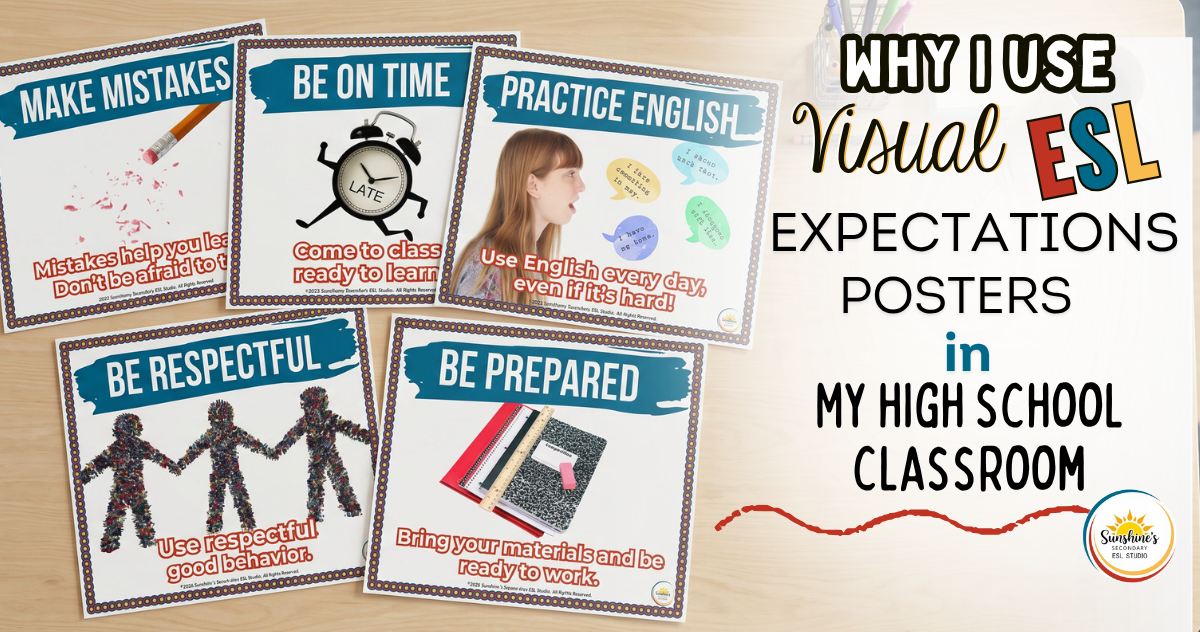
One of my favorite posters in my room says:
“Make Mistakes.”
Underneath it is a reminder that mistakes help us learn and grow in language learning.
That simple message changes the tone of the classroom. It gives students permission to participate even when their English isn’t perfect. Over time, students begin taking more risks with speaking and writing because they know perfection is not the expectation.
That mindset shift matters enormously in ESL classrooms.
If you’re looking for more ways to build confidence in your classroom, you might also enjoy my blog post about supporting student participation with speaking routines: How to Build ESL Speaking Routines
Visual Expectations Help Classroom Management
Want to see these expectations posters displayed in a real classroom? Visit my high school ESL classroom setup to see how I use visual supports to reinforce routines and build student independence throughout the school year.
One unexpected benefit of visual ESL expectations posters is that they improve classroom management without making the room feel overly strict.
Instead of constantly correcting students verbally, expectations become part of the classroom environment itself.
Students begin to internalize routines like:
- entering quietly
- bringing materials
- practicing English
- respecting classmates
- participating appropriately
- asking for help
This is especially important in mixed-level ESL classrooms where students may enter throughout the year with very different educational backgrounds.
Visual expectations create predictability, and predictability helps students feel safe.
That same predictability matters at the beginning of class, too. When students know what to do as soon as they enter the room, the whole class starts more calmly. For that reason, I like pairing visual expectations with consistent daily warm-ups.
If you want a ready-to-use warm-up system, my ESL Bell Ringers Mega Bundle includes 160 teen-friendly daily warm-ups with audio support. These work well for building a predictable start to class while giving students consistent listening, speaking, vocabulary, and writing practice.
I’ve also found that visuals help students who may not yet feel comfortable asking questions in English. When routines are posted clearly around the room, students can follow along more independently without needing constant clarification.
For teachers looking to strengthen routines and classroom systems, my post about secondary ESL classroom management strategies pairs really well with this topic: ESL Classroom Management for High School Teachers
My Favorite Ways to Use Visual Supports in ESL
Over the years, I’ve started using visuals for much more than classroom expectations.
Some of my favorite visual supports include:
- conversation sentence stems
- grammar desk mats
- classroom commands
- speaking prompts
- routine posters
- anchor charts
- visual vocabulary supports
- step-by-step assignment directions
Many ESL students benefit from having language physically visible around them throughout the day.
That’s one reason I also love using desk mats with beginner and intermediate learners. Students can quickly reference common sentence structures, question stems, and survival English without interrupting instruction.
If you use visual supports heavily in your classroom, you may also like these related posts:
- Editable ESL Desk Mats for Back to School
- Survival English Desk Mats for ESL Students
- ESL Commands and Routines Task Cards
Using Visual Expectations During the First Week of School
The first week of school can feel chaotic in any classroom, but ESL classrooms often come with additional layers:
- new arrivals
- interrupted education backgrounds
- varying English proficiency levels
- culture shock
- schedule confusion
- social anxiety
That’s why I introduce visual expectations immediately during the first week.
I don’t just hang the posters and ignore them. We actively discuss them, reference them, and revisit them during routines and activities.
Students need repeated exposure to classroom expectations in ways that are understandable and non-threatening.
If you are planning for brand-new English learners, my Secondary ESL Newcomer Launch Bundle includes first-weeks activities, survival English, classroom routines, and scaffolded supports to help newcomers understand what to do, what to say, and how to begin participating with confidence.
I’ve found that combining visual expectations with speaking activities and collaborative routines helps students settle into the classroom much faster.
If you want these routines, procedures, expectations, and community-building activities already organized for the first weeks of school, my Back to School ESL Bundle gives secondary ESL teachers a ready-to-use system for starting the year with structure and confidence.
If you’re planning for the beginning of the school year, these posts may also help:
- First Week Tips for New ESL Teachers
- First Week ESL Slides for Secondary Students
- ESL Routines Posters for Teens
The Visual ESL Expectations Posters I Use
After years of trying different classroom management approaches, I eventually created my own set of visual ESL expectations posters designed specifically for secondary ESL students.
The set includes visual reminders for:
- Be Respectful
- Be Prepared
- Be On Time
- Practice English
- Make Mistakes
I designed them to feel bold, modern, and age-appropriate for middle school and high school multilingual learners. They are easy to read from across the room and work well as part of a larger visual classroom setup.
👉 ESL Classroom Expectations Posters | Routines & Procedures for Teens
These posters work especially well during the first few weeks of school because they help students see the expectations, practice the routines, and understand what your classroom should feel like from the beginning.
Build a Full Back-to-School ESL System
Visual expectations posters are a strong starting point. However, they work even better when they are part of a larger system of routines, classroom language, and daily practice.
If you are planning your full back-to-school setup, these resources can help:
Newcomer supports help brand-new English learners understand the classroom from the beginning.
👉 Secondary ESL Newcomer Launch Bundle
Classroom routines, procedures, and community-building activities help you start the year with structure.
👉 Back to School ESL Bundle
Daily warm-ups give students a predictable way to begin class and practice language consistently.
👉 ESL Bell Ringers Mega Bundle
Together, these supports help create a classroom environment that feels structured, supportive, and welcoming from day one.
Final Thoughts
Visual ESL expectations posters may seem like a small classroom addition, but they can make a huge difference in creating a supportive learning environment for multilingual learners.
Clear visuals help students feel more confident, reduce confusion, reinforce routines, and create consistency throughout the school year.
Most importantly, they help classrooms feel welcoming.
And for ESL students who are navigating a new language every single day, that feeling matters more than we sometimes realize.