
ESL Speaking and Listening Activities for High School Students
In many classrooms, teachers focus heavily on reading and writing instruction. However, ESL speaking and listening skills are just as essential—especially for high school English learners who need to communicate confidently in real-world situations.
Strong ESL speaking and listening activities help students practice language in authentic ways. When students regularly speak and hear English through structured classroom routines, they develop stronger fluency, better vocabulary, clearer pronunciation, and more confidence participating in academic discussions.
While reading and writing remain important, communication skills grow fastest when students have frequent opportunities to speak and listen during every lesson. If you are looking for literacy support too, you may also want to explore my ESL Reading and Writing resources.
Why ESL Speaking and Listening Matter
Building consistent opportunities for ESL speaking and listening practice helps students:
- Increase overall English fluency
- Expand and reinforce vocabulary
- Improve pronunciation and clarity
- Build confidence in real-time conversations
- Develop stronger listening comprehension skills
- Participate more successfully in academic discussions
These skills support both everyday communication and long-term academic success.
But what does effective ESL speaking and listening instruction actually look like in a high school classroom?
It starts with one important mindset:
An ESL classroom should never be a quiet classroom.
When students are not encouraged to actively speak English, they often fall back on their native languages. Native language use can be a powerful support for comprehension, but teachers also need to create structured opportunities for students to practice speaking and listening in English throughout the lesson.
A Common Problem: Calling on Individual Students
Many teachers ask questions aloud and then call on one student to respond. For English learners, this can create unnecessary stress.
Students may hesitate because they:
- Did not fully understand the question
- Are unsure how to answer in English
- Need more processing time
- Feel nervous speaking in front of the class
Instead of relying only on individual responses, structured peer interaction often leads to stronger participation and more meaningful language practice.
ESL Speaking Strategy: Scaffolded Group Talk
One effective way to support ESL speaking and listening development is through scaffolded group discussion.
Try this routine:
- Project the question clearly on the board.
- Read the question slowly while facing the class.
- Rephrase the question using simpler language or sentence stems.
- Give students time to discuss the question in pairs or small groups.
- Let students know they will need to answer in English.
- After a few minutes, randomly call on a group to share.
This structure lowers anxiety while still giving students real opportunities to practice speaking English.
For more help building predictable oral language routines, you might also enjoy how to build ESL speaking routines.
Supporting ESL Listening Skills
Strong ESL speaking and listening instruction also requires intentional listening practice.
Students benefit from both:
- Live modeling, where they can see the teacher’s mouth, facial expressions, and gestures
- Recorded audio, which helps students practice understanding different voices, accents, and speaking speeds
One simple but powerful listening strategy is dictation. During dictation activities, students write what they hear, which helps develop auditory decoding, grammar recognition, spelling accuracy, and listening attention.
Listening practice can also be integrated through:
- Cloze listening exercises
- Short audio stories
- Songs or podcasts
- QR code listening tasks
- AI-generated audio tools
- Daily warm-ups with audio
You can explore more ideas in my posts about ESL listening activities for high school, cloze listening activities for ESL students, and ESL listening worksheets with QR codes.
Build Confidence with ESL Speaking Activities
Many English learners understand far more English than they feel comfortable speaking. Structured speaking activities help bridge that gap.
Some effective ESL speaking activities for high school students include:
- Conversation starters
- Partner discussions
- Role-play scenarios
- Vocabulary games
- Small-group debates
- Picture prompts
- Opinion prompts
- Sentence frame discussions
These activities work best when students have enough support to know what to say, but enough freedom to express their own ideas.
If you’re looking for more ready-to-use ideas, check out conversation starters for ESL teens, B2 ESL speaking activities for teens, and ESL speaking confidence activities.
Pronunciation Also Supports Speaking Confidence
Pronunciation is another important part of ESL speaking and listening instruction. Students do not need to sound like native speakers, but they do need practice saying high-frequency words clearly enough to be understood.
Pronunciation routines can help students notice English sounds, practice word stress, and build confidence reading or speaking aloud. For more support, visit my post on teaching ESL high school pronunciation.
Pair Speaking and Listening with Reading and Writing
Although this page focuses on ESL speaking and listening, these skills grow even stronger when they are paired with literacy instruction.
Students often need sentence frames, short reading passages, vocabulary support, and structured writing practice before they feel confident speaking about academic topics. That is why strong ESL instruction connects speaking, listening, reading, and writing instead of teaching them as completely separate skills.
To explore literacy strategies for secondary English learners, visit my ESL Reading and Writing page.
Looking for Free ESL Speaking and Listening Resources?
If you want something you can use right away, start with my Free ESL Resources. You’ll find teen-friendly tools that support speaking, listening, writing, vocabulary, and classroom routines for secondary English learners.
Shop ESL Speaking and Listening Resources
If you need ready-to-use classroom materials, my TpT store includes resources that support ESL speaking and listening through conversation cards, audio-supported activities, bell ringers, pronunciation practice, discussion prompts, and classroom routines.
Helpful TpT categories to explore include:
- ESL Speaking & Listening
- ESL Listening Activities with Audio
- Free ESL Resources
- Teacher Favorites
- Back to School for ESL Teens
- ESL Games & Critical Thinking
Whether you are building daily speaking routines, adding listening practice with audio, or helping students feel more confident in conversations, ESL speaking and listening activities can make your classroom more active, supportive, and student-centered.
New to Teaching ESL Teens?
Read the Ultimate Guide to Teaching ESL Teens & Tweens
This guide includes advice, best practices, and some resources that can help support your ELL teens.
Guide to Teaching ESL TeensA Speaking Freebie
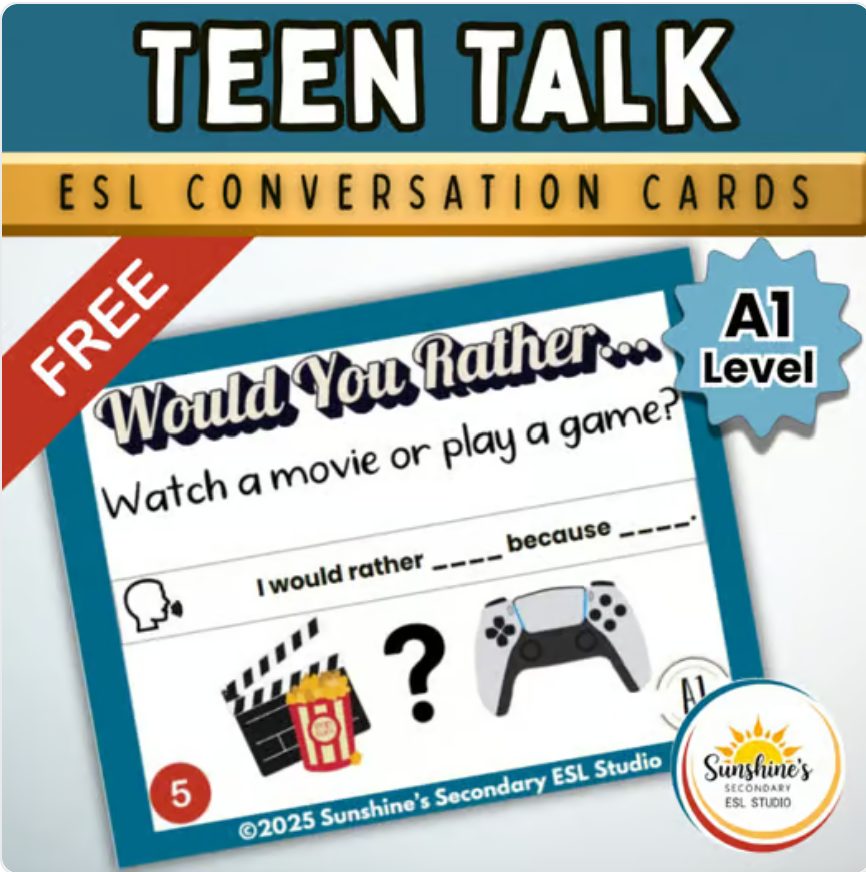
Help beginner ESL students start speaking with confidence using free teen-friendly conversation cards with sentence frames and visual support.
A Featured Best-Seller
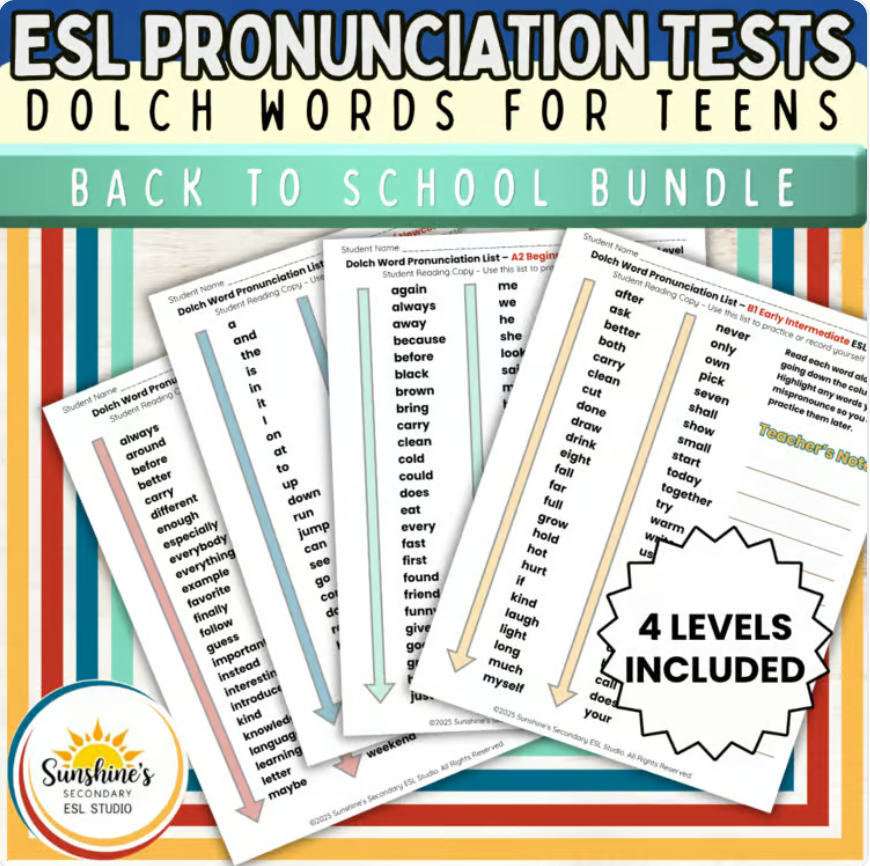
Support speaking confidence with a best-selling pronunciation bundle that helps teen English learners practice high-frequency words and track growth over time.
A Seasonal Bundle
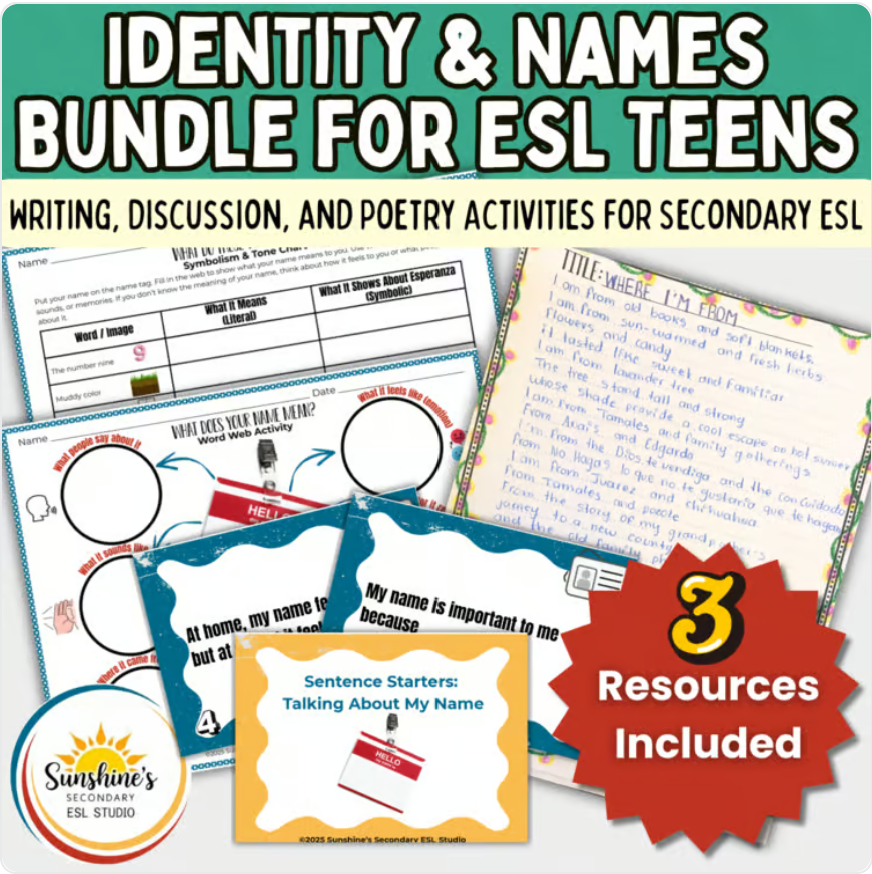
Build classroom community with structured speaking, writing, and poetry activities that help ESL teens share their names, identity, and experiences.
A Yearlong Must-Have

Build a consistent speaking and listening routine with a full year of ESL bell ringers featuring audio, mystery photos, fun facts, idioms, and teen slang.

Sunshine Castro M.Ed.
High School ESL Teacher & Curriculum Creator
Join me for practical strategies and resources for teaching ESL teens.