
Every secondary ESL teacher needs a reliable set of ESL sub plans ready to go. It does not matter if it is the beginning of the year, cold and flu season, testing season, or one of those random mornings when life happens and you suddenly realize you are not making it to school.
And if you teach high school ESL, you already know the truth:
Leaving work for a substitute is not always simple.
Your students may be at very different English proficiency levels. Some may need visuals, audio support, and sentence frames. Others may be ready for more independent reading, writing, and discussion. A generic worksheet from the copy room usually does not meet those needs.
That is why having no-prep ESL sub plans ready ahead of time can make such a big difference. When the materials are structured, accessible, and student-friendly, your substitute does not need to be an ESL specialist to keep the class moving.
Why ESL Sub Plans Matter in Secondary Classrooms
We have all had those days when the office emails and asks, “Do you have work for your students today?”
And sometimes, the honest answer is almost no.
Life happens. Emergencies happen. Meetings happen. Illness happens. Technology problems happen. Testing schedules change. Assemblies interrupt your normal routine.
In those moments, strong ESL sub plans become your safety net.
Instead of scrambling to pull together random assignments, you can leave work that still supports reading, vocabulary, listening, and writing. Even better, your students know what to do because the format feels familiar.
For secondary ESL students, that predictability matters. A substitute day can already feel different from the normal routine, so the assignment itself should not be confusing. Clear directions, leveled texts, audio support, and simple response tasks can help students stay productive even when you are not there.
If you are also working on building stronger classroom systems in general, my post on ESL classroom management in high school has more ideas for creating routines that help students know what to expect.
The Best ESL Sub Plans Are Easy for Students and Subs
The best ESL sub plans do not require a long explanation from the substitute. They should be simple enough for students to begin independently but meaningful enough that the work still supports language growth.
That is why I like using structured reading activities for sub days.
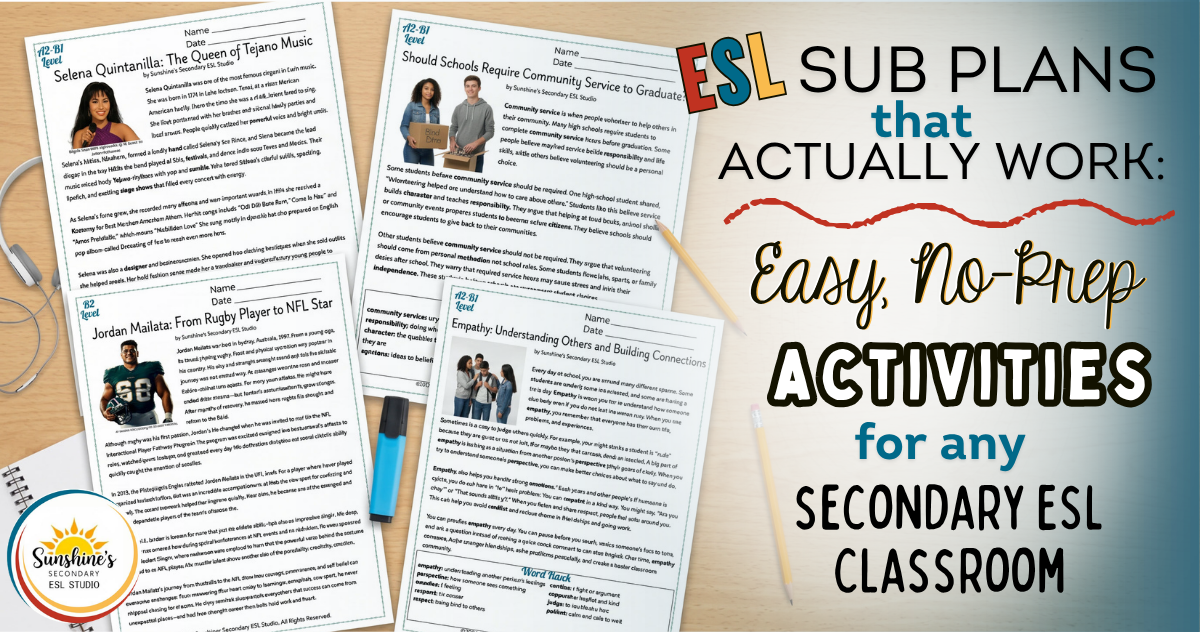
A strong ESL sub plan might include:
- a short informational text
- audio support
- vocabulary or context clues practice
- comprehension questions
- a short constructed response
- a clear early finisher option
This type of lesson gives students a predictable routine. They read, listen, annotate, answer questions, and write. The substitute does not have to teach a brand-new skill from scratch, and students are not left with busywork.
This also works well because reading passages can connect to almost any time of year. You do not have to wait for a holiday or season to use them.
Use Leveled Informational Texts for Year-Round ESL Sub Plans
One of the easiest ways to build dependable ESL sub plans is to keep leveled informational texts on hand.
Informational texts work well for sub days because they are flexible. You can choose topics that match the season, your current unit, student interests, or important themes you want students to explore.
For example, instead of only saving winter or holiday readings for sub days, you can build a folder with topics that work all year:
- biographies
- social-emotional learning topics
- school rules and responsibilities
- history and culture
- media literacy
- teen-friendly current issues
- food and traditions
- identity and community
- goal-setting and reflection
This makes your sub plan folder useful in November, February, April, or anytime you need a backup lesson.
If you want to build a stronger reading routine with your students, you may also like my post on ESL reading comprehension in high school. It connects well with the kind of structured reading practice that makes sub plans easier to manage.
Why Leveled Passages Help Mixed-Proficiency ESL Classes
If you teach secondary ESL, your classes are probably not one-size-fits-all.
You may have:
- A1 or A2 students who need shorter sentences, visuals, and more support
- B1 students who can handle more detail but still need scaffolding
- B2 students who are ready for longer texts and more complex thinking
Trying to leave one assignment for all of those students can be frustrating. It may overwhelm newcomers while feeling too easy for higher-level students.
That is where leveled passages make ESL sub plans much easier.
When students work with the same topic at different levels, everyone can participate without needing a completely separate lesson. The substitute can give students the version they need, while you still keep the assignment organized and manageable.
This connects closely to differentiation. If you want more ideas for supporting multiple proficiency levels in one classroom, my post on how to differentiate ESL instruction in high school gives more examples of what that can look like in real classrooms.
Audio Support Makes ESL Sub Plans Even Stronger
Audio is one of the most helpful features to include in ESL sub plans.
When students can listen while they read, they get support with pronunciation, fluency, pacing, and comprehension. This is especially helpful on sub days because the substitute may not feel comfortable reading the passage aloud or supporting multilingual learners with pronunciation.
Audio gives students another way into the text.
It also makes the lesson feel more independent. Students can scan a QR code, listen with earbuds, and complete the reading task without waiting for the substitute to lead everything.
If audio is something you want to use more often, I wrote more about this in my post on ESL listening worksheets with QR codes. It pairs really well with the idea of creating sub plans that students can complete with minimal teacher support.
ESL Sub Plans Are Not Just for Absences
One of the best parts of building a strong ESL sub folder is that you can use it for more than teacher absences.
Ready-to-go ESL sub plans can also help when:
- students finish early
- technology crashes
- you need a quiet independent work day
- you are pulled into a meeting
- testing schedules interrupt your lesson
- an assembly shortens your class period
- you need a meaningful activity between units
- you want emergency plans for your department folder
This is why I like having a mix of seasonal and non-seasonal resources. Seasonal texts are great when the timing fits, but year-round informational texts give you more flexibility.
A reading about winter traditions might be perfect in December, but a biography, SEL topic, or school responsibility passage can work almost any time.
What to Keep in Your ESL Sub Plan Folder
A strong ESL sub plan folder can be physical, digital, or both.
Here are a few things I like to keep ready:
- 2–3 leveled informational texts
- audio links or QR codes
- printed copies for emergencies
- a short note for the substitute
- a roster and seating chart
- simple directions students can follow independently
- early finisher tasks
- answer keys
- extra blank paper or lined response sheets
The goal is not to create something complicated. The goal is to make the day easier for everyone.
Your substitute should know what to pass out, what students should complete, and what to collect. Your students should know how to begin without needing a long explanation.
Year-Round Topics That Work Well for ESL Sub Plans
If you want to build an ESL sub plan folder that works beyond winter, start with topics that are flexible and high-interest.
Here are a few strong options.
Biographies
Biographies are great for ESL sub plans because they are naturally engaging and easy to connect to reading, writing, and discussion. Students can learn about real people while practicing comprehension, vocabulary, and written response skills.
My ESL Biography Reading Bundle for Teens is a strong option for year-round sub plans because biographies can fit almost any month or unit. They also work well when you want students to practice reading about important people without needing a lot of background knowledge first.
You can also read more about how I use biographies in my post on ESL biography reading passages.
Social-Emotional Learning Topics
SEL topics are another great choice for sub days because students can connect personally to the content. Topics like emotions, confidence, choices, stress, goals, and relationships give students meaningful reading practice while also supporting classroom culture.
My SEL Informational Text Bundle with Audio works well for ESL sub plans because the topics are teen-friendly and useful throughout the year.
If you are thinking about how SEL fits into secondary ESL, my post on social emotional learning for ESL teens gives more ideas for making it meaningful without making it feel babyish.
Rights, Rules, and Responsibilities
Another strong year-round option is reading and writing about rules, rights, and responsibilities. These topics work especially well in secondary classrooms because students can connect them to school, community, decision-making, and argumentative writing.
My Rights, Rules & Responsibility ESL Argumentative Writing Bundle can work well when you want students to read, think, and write about real-world issues in a structured way.
This type of resource is especially helpful when you want a sub plan that feels more rigorous than a basic worksheet but is still organized enough for independent work.
If writing support is an area you are working on, you may also like my post on ESL writing support strategies.
Seasonal and Cultural Informational Texts
Seasonal texts still have a place in your ESL sub plan folder. The key is not relying on them as your only option.
Winter, holidays, cultural celebrations, and heritage months can all be useful when the timing fits. For example, a text about Veterans Day, Black History Month, Hispanic Heritage Month, or winter traditions can make a great sub plan during the right part of the school year.
You might use:
- ESL Veterans Day reading activities in November
- Black History Month ESL activities in February
- Hispanic Heritage Month ESL lesson ideas in September or October
- Halloween vs. Día de los Muertos ESL lesson ideas in the fall
These topics are engaging, but they should be part of a larger sub plan system that also includes evergreen readings.
How to Make ESL Sub Plans Feel Like Real Learning
The biggest mistake with sub plans is treating them like throwaway work.
Students can usually tell when an assignment is just there to keep them busy. ESL students especially benefit from work that feels familiar, purposeful, and connected to skills they are already practicing.
To make ESL sub plans feel more meaningful, choose activities that include:
- reading practice
- listening support
- vocabulary development
- comprehension checks
- short writing responses
- opportunities for students to explain their thinking
This keeps the work aligned with what students actually need. It also helps you feel better about being absent because students are still practicing important language skills.
If you want to keep your expectations clear even when you are out, my post on ESL routines and procedures may also be helpful.
Final Thoughts: Build ESL Sub Plans Before You Need Them
The best time to create ESL sub plans is before you are sick, overwhelmed, or rushing to email the office at 6:30 in the morning.
A strong sub plan folder gives you peace of mind. It helps your substitute feel more confident. Most importantly, it gives your multilingual learners work that is accessible, structured, and meaningful.
Seasonal readings are helpful, but they should not be the whole plan. When you build a folder with year-round informational texts, biographies, SEL readings, writing tasks, and a few seasonal options, you create a system you can use again and again.
Your future self will thank you.
And honestly, so will your substitute.