
Dear New ESL Teacher, if you’re searching for first week ESL teacher tips for high school, take a deep breath—you’re exactly where you need to be.
Whether you’re fresh out of certification, transitioning from general education, or stepping into your very first ESL classroom, the first week can feel overwhelming in a way no one fully prepares you for.
Because it’s not just about lesson plans.
You’re building trust with students from different countries, different languages, and very different educational experiences—all at once.
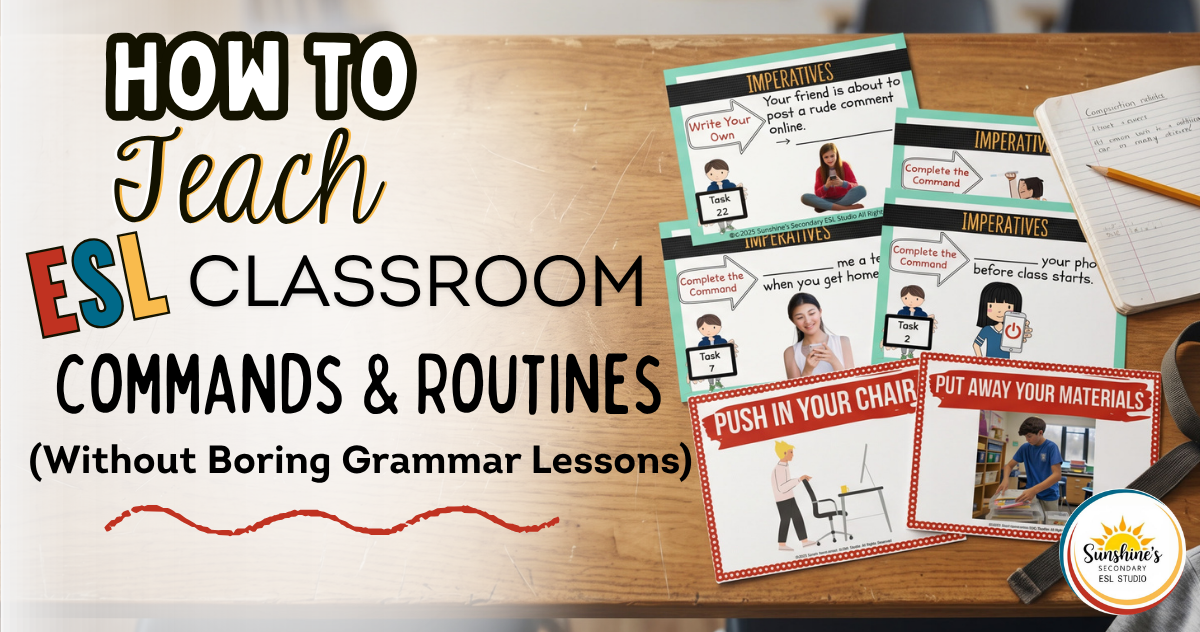
This is especially true when you have newcomer students who are learning the school system, classroom routines, survival English, and social expectations at the same time. During those first few days, clear visuals, simple routines, and functional classroom language can make a huge difference.
And in that process, it’s completely normal to make a few missteps.
Every ESL teacher has been there.
The good news? A strong start doesn’t come from being perfect—it comes from being intentional.
If you’re completely new to teaching ESL at the secondary level, you might also find it helpful to read more about what teaching ESL in high school really looks like in practice.
These first week ESL teacher tips for high school teachers will help you avoid the most common mistakes and create a classroom environment where students feel safe, supported, and ready to learn.
If you are planning specifically for brand-new English learners, my Secondary ESL Newcomer Launch Bundle includes first-weeks activities, survival English, classroom routines, and scaffolded supports to help newcomers understand what to do, what to say, and how to begin participating with confidence.
1. Don’t Go Too Strict… or Too Relaxed
One of the biggest first-week struggles is finding the right balance.
Some teachers come in overly strict, trying to establish control. Others go too relaxed, hoping to build quick rapport.
Neither one works long-term.
What to do instead:
Be warm and structured.
Set clear expectations from day one, but let your personality show in small, genuine ways. High school ESL students don’t need perfection—they need consistency and a teacher they can trust.
This becomes even more important when you’re thinking about long-term classroom systems, not just the first week.
If you want help setting up those first-week systems, my Back to School ESL Bundle includes classroom routines, procedures, community-building activities, and visual supports designed specifically for secondary English learners. It gives you a structured starting point so you are not trying to create everything from scratch during the busiest week of the year.
2. Build Personal and Cultural Connections Immediately
If students don’t feel seen, they won’t engage. And in an ESL classroom, that often shows up as silence.
The first week is your opportunity to set the tone.
What to do instead:
- Learn and correctly pronounce student names
- Ask about their backgrounds, interests, and goals
- Bring in visuals, music, or references that reflect their cultures
This is a core part of culturally responsive teaching, especially with ESL teens.
These small moves create immediate buy-in and show students that who they are matters in your classroom.
3. Don’t Enforce an English-Only Policy
This one surprises a lot of new teachers.
While immersion sounds ideal, strict English-only classrooms can actually increase anxiety—especially in the first week.
What to do instead:
Encourage English use, but allow students to:
- brainstorm in their home language
- clarify ideas with peers
- use translation tools when needed
If you’re trying to figure out how to balance English use with support, this connects closely to the idea of translanguaging in the secondary ESL classroom.
Students learn faster when they feel safe, not restricted.
If you’re figuring out how technology fits into your ESL classroom, this is something I break down more in my post about teaching ESL students in the age of AI.
4. Slow Down Your Speech (More Than You Think You Need To)
Even experienced teachers forget this at the beginning of the year.
When you’re nervous or trying to cover a lot, your speech speeds up—and students lose access to meaning.
What to do instead:
- Pause between directions
- Repeat key information
- Use gestures and visuals
Clarity matters more than pace—especially in the first week.
5. Always Face the Class When Speaking
It sounds simple, but it makes a huge difference.
Talking while writing on the board or looking at your screen removes essential visual cues that ESL students rely on.
What to do instead:
Face your students when speaking.
Your facial expressions, gestures, and eye contact are part of the instruction—not extra.
6. Simplify Your Language (Without Watering It Down)
There’s a difference between simplifying language and lowering expectations.
In the first week, even small misunderstandings can cause students to shut down.
What to do instead:
- Use clear, direct vocabulary
- Model responses often
- Rephrase instead of repeating the same wording
If you’re teaching beginners, this becomes even more critical when planning grammar and language instruction.
You’re not making things easier—you’re making them accessible.
7. Don’t Lower the Rigor
It’s tempting to fill the first week with easy or “safe” activities.
But ESL students are capable of grade-level thinking—they just need support to get there.
What to do instead:
Use meaningful, age-appropriate content with scaffolds like:
- sentence stems
- visuals
- guided notes
- structured discussions
If you’re unsure what rigor looks like in an ESL classroom, it’s not always what people expect.
The goal is access, not avoidance.
8. Give More Wait Time Than Feels Comfortable
Silence can feel awkward—but in an ESL classroom, it’s necessary.
Students are processing, translating, organizing thoughts, and building a response—all at once.
What to do instead:
Ask a question… and wait.
Then take it a step further:
- let students discuss in pairs or small groups first
- allow use of their home language during processing
- provide sentence frames for support
This is something I go deeper into when talking about wait time strategies in ESL classrooms.
When students have time to prepare, participation increases dramatically.
If you need ready-to-use supports, sentence starters can make a huge difference during this stage.
9. Avoid Long Teacher Talk
If your first few days are lecture-heavy, students will check out—fast.
Even highly motivated learners struggle to stay engaged when language input isn’t interactive.
What to do instead:
Break instruction into short chunks and build in:
- partner discussions
- sorting activities
- visuals or drawing tasks
- small group work
Students learn language by using it, not just hearing it.
One simple way to reduce teacher talk is to begin class with a predictable student-centered warm-up. Daily bell ringers give students something clear to do right away, which helps you start class with structure instead of a long explanation.
If you want a ready-to-use warm-up system, my ESL Bell Ringers Mega Bundle includes 160 teen-friendly daily warm-ups with audio support for listening, speaking, vocabulary, and writing practice.
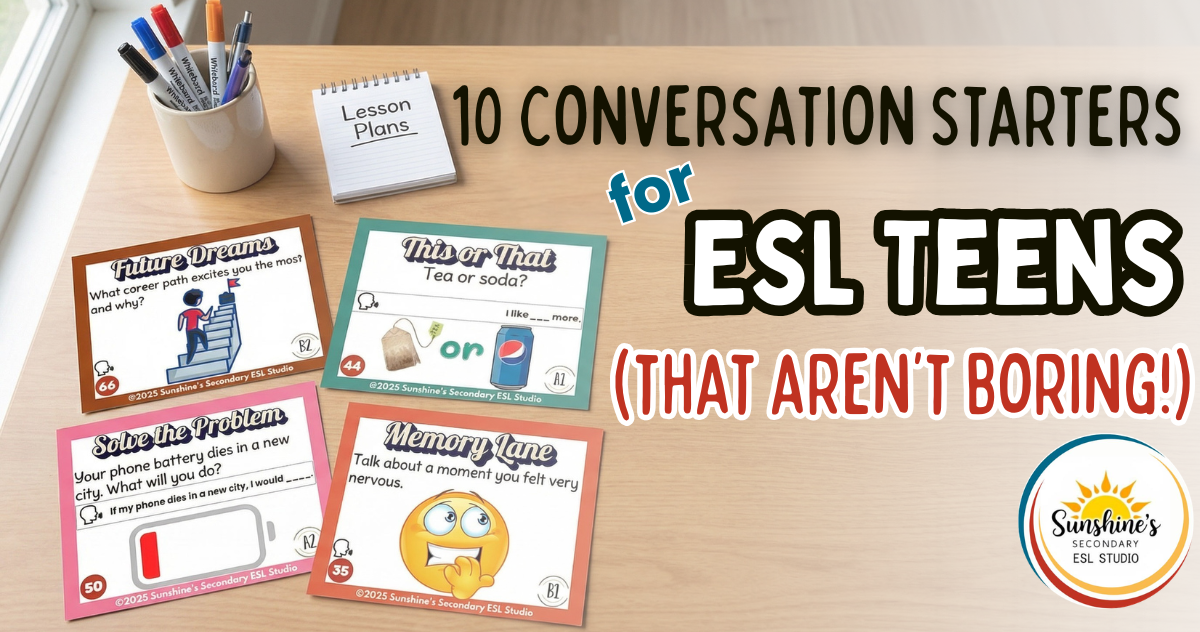
If you’re looking for simple ways to make your first week more interactive, structured speaking activities can make a huge difference. Conversation starters, partner prompts, and guided speaking activities help students participate right away without feeling overwhelmed.
10. Be Intentional About Seating
As you’re preparing your classroom for the new school year, you may also enjoy touring my high school ESL classroom ideas. I share real photos and practical organization strategies that have worked well with secondary English learners.
Seating can either support your classroom—or quietly work against it.
Rows can feel isolating, but random groups can create stress if students aren’t comfortable.
What to do instead:
Think strategically:
- group beginners together for comfort
- structure roles in mixed-level groups
- avoid putting pressure on higher-level students to “teach” others
The goal is participation—not pressure.
Ready-to-Use Supports for the First Week of ESL
These first week ESL teacher tips are easier to follow when you already have routines, visuals, and student-friendly supports ready to go.
If you are planning your first week, these resources can help:
Newcomer supports help brand-new English learners understand the classroom from the beginning.
👉 Secondary ESL Newcomer Launch Bundle
Classroom routines, procedures, and community-building activities help you start the year with structure.
👉 Back to School ESL Bundle
Daily warm-ups give students a predictable way to begin class and practice language consistently.
👉 ESL Bell Ringers Mega Bundle
You do not need to have everything perfect during the first week. However, having a few strong systems in place can help you feel calmer and help your students feel more secure.
Final Thoughts
Here’s the truth no one says out loud:
Your first week doesn’t have to be perfect.
It just needs to be intentional.
If you focus on building trust, creating structure, and making your classroom feel safe, everything else will start to fall into place.
And if you’re continuing to build your ESL teaching toolkit, you can explore more strategies, ideas, and classroom-tested approaches throughout my ESL teacher blog.
And if you come back to these first week ESL teacher tips for high school, you’ll have a solid foundation to reset whenever things feel overwhelming.
If you’re looking for ready-to-use activities, structured routines, and low-prep resources designed specifically for secondary ESL students, you can explore everything inside my TPT store.
You don’t have to figure it all out on your own.
And your students?
They’re already better off because you showed up.