Start Outside the Classroom: Build Belonging Before Students Enter
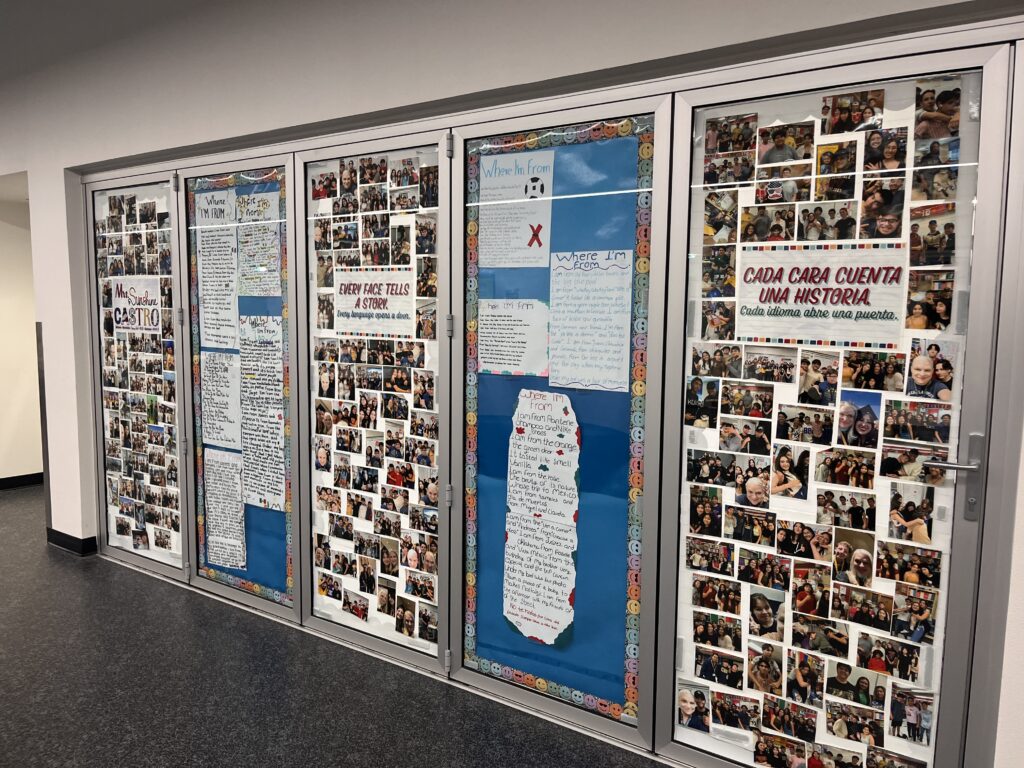
This display connects to the kind of community-building students do in my ESL identity poem writing activity.
It is also one practical way to apply culturally responsive teaching with ESL teens without without reducing culture to flags or holidays.
Teachers who would like structured name, culture, speaking and poetry activities can explore my Identity Activities for Teens bundle.
Plan Group Seating for Speaking and Mixed-Level Support
Arrange Group Seating for Speaking and Support
One of the most practical high school ESL classroom ideas is arranging desks so students can easily work with a partner or small group. I usually place students in groups because so much language development happens through conversation, rehearsal, and peer interaction.
I do not use the same grouping system for every lesson. Sometimes I group students by similar proficiency levels so I can give each group a task with the right amount of support. Other times, I create mixed-level groups so students can hear different language models and help one another. However, I am careful not to make one more advanced student the permanent translator or helper for everyone else. All students need opportunities to speak, think, and take responsibility for their own learning.
The group arrangement also makes partner speaking activities easier to begin without moving furniture or losing instructional time. I can circulate between tables, listen to conversations, provide feedback, and quickly notice which students need additional support.
Each table has frequently used supplies and visual language references within reach. This helps students work more independently and reduces interruptions when they need a pencil, a sentence starter, or another classroom tool.
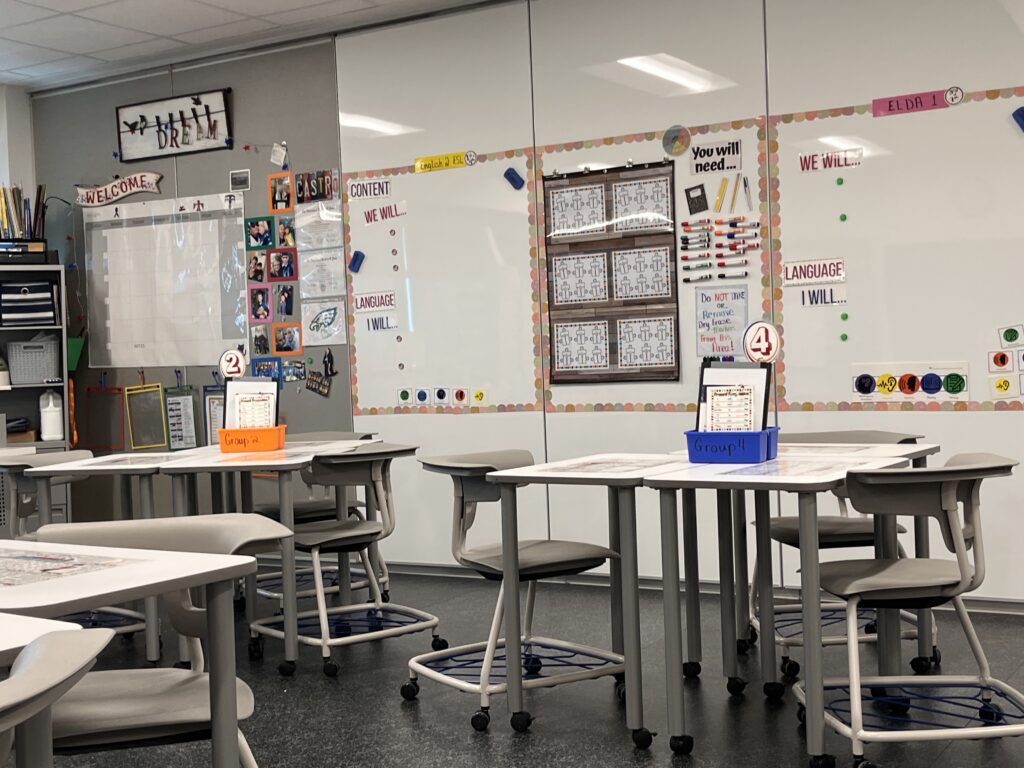
I adjust grouping, response expectations, and table supports when differentiating ESL instruction from A1 to B2.
This arrangement also makes it easier to build predictable ESL speaking routines because students already know where and with whom they will rehearse.
One of the most useful items at each table is a supply caddy with a small dry-erase board. It keeps shared materials organized while giving students a reusable space for vocabulary practice, quick responses, partner work, and informal checks for understanding. I also use table-number sign holders and binder rings to keep group materials easy to identify and access.
Give Students Language Support at Every Table
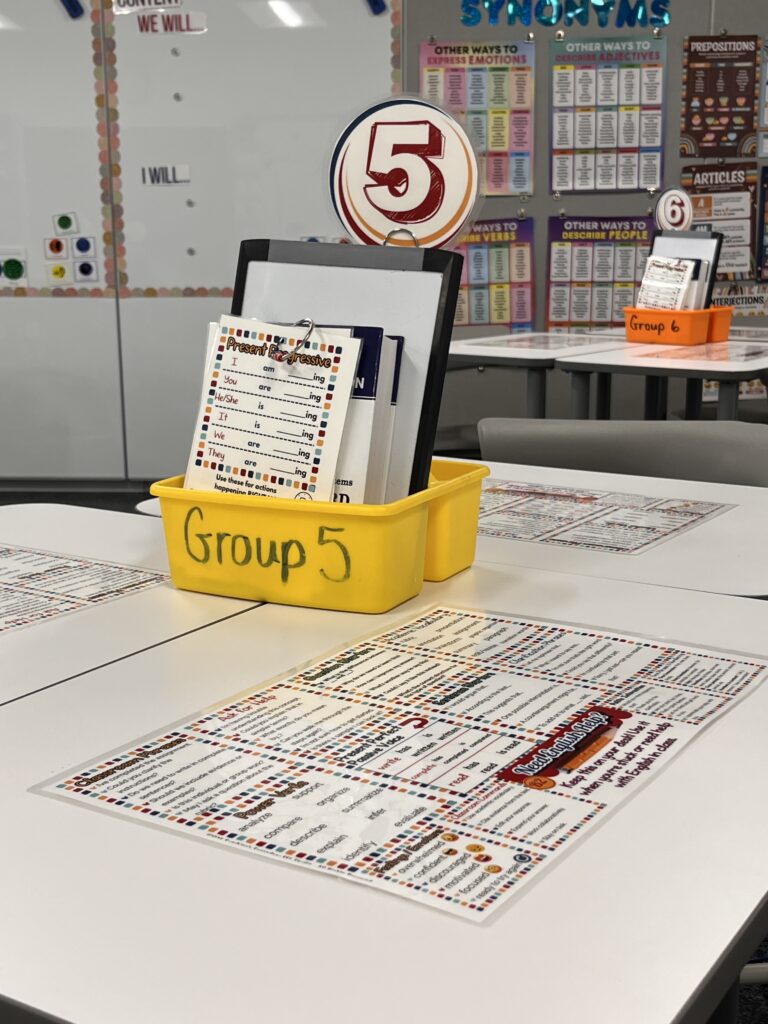
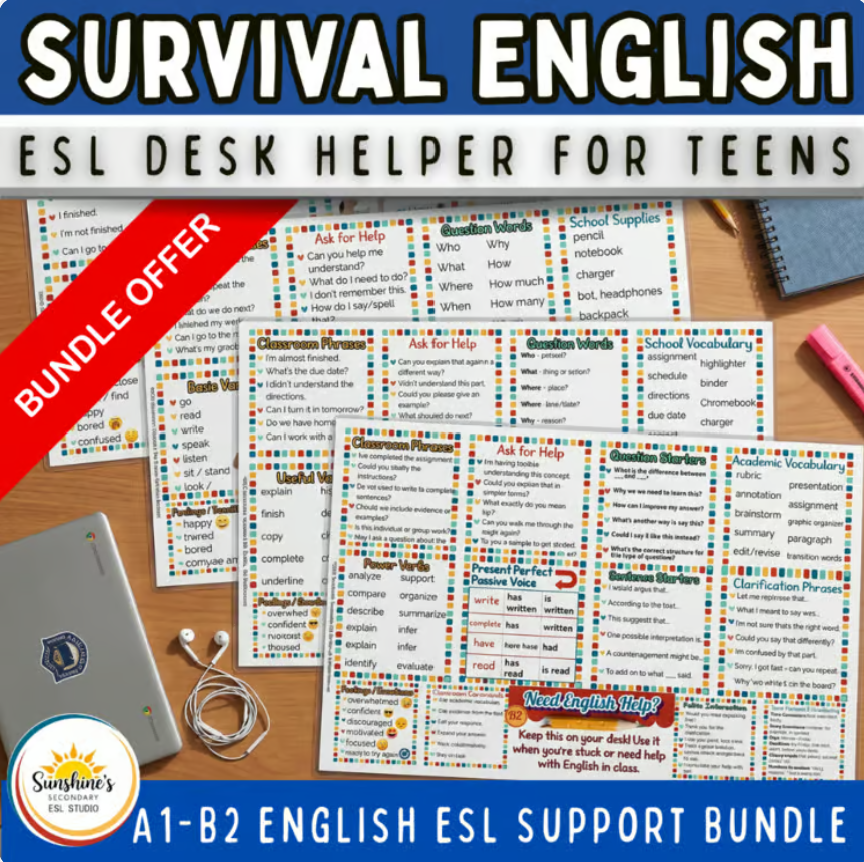
I explain how I differentiate these supports in my guide to survival English desk mats for secondary ESL students.
Make Content and Language Objectives Easy to See
One of my favorite high school ESL classroom ideas is giving content and language objectives a permanent place on my whiteboard where students know exactly where to find them every day. Instead of rewriting headings or searching for space, I use color-coded magnetic sentence strips to quickly update the objectives for each lesson. Keeping them in the same location helps students become familiar with the routine and encourages them to refer back to the objectives throughout the class period.
I separate the content objective from the language objective because they answer two different questions: What are we learning? and How will we use English to show our learning? This helps students understand both the academic goal and the language they will need to be successful.
I also try to keep this area of my whiteboard uncluttered so the objectives remain easy to find and read. Small icons for reading, writing, listening, and speaking provide an additional visual cue, especially for newcomers and beginning English learners.
Throughout the lesson, I intentionally refer back to the objectives so students can monitor their progress and understand how each activity connects to the overall learning goal.
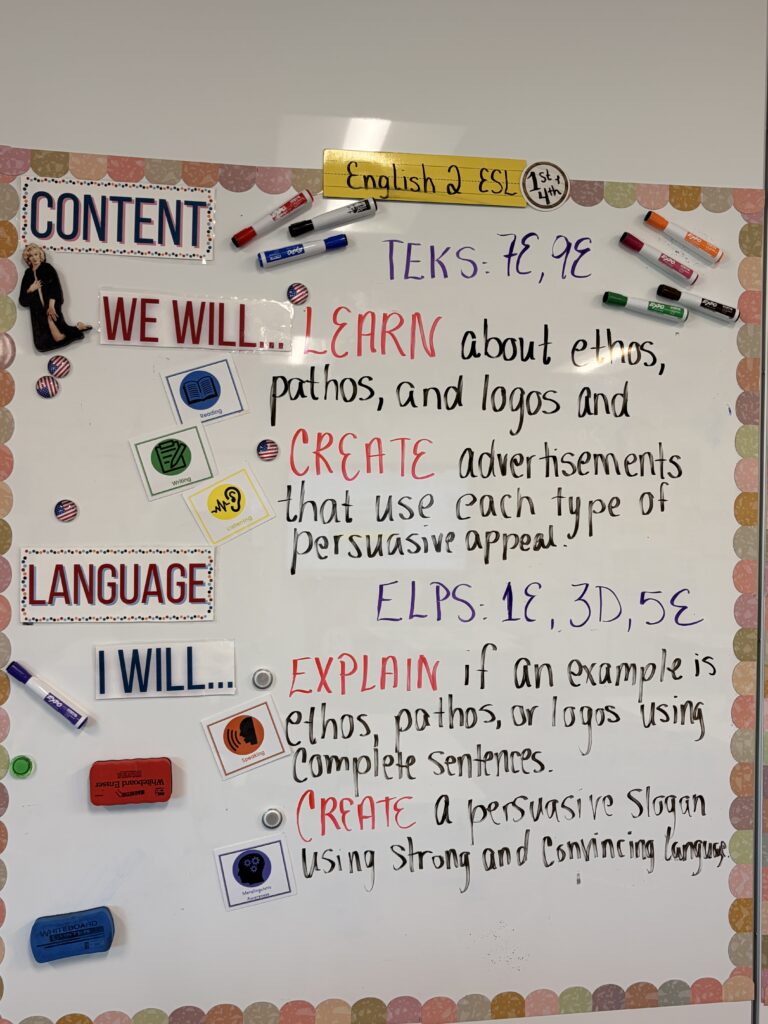
My board setup reflects the planning process I describe in Language Objectives for High School ESL.
I keep my content and language objectives visible throughout the lesson so students always know both what they are learning and how they will use English to demonstrate that learning. Color-coded magnetic sentence strips make it easy to update the objectives each day without rewriting everything on the board. I also keep magnetic dry-erase markers and magnetic board erasers attached to the whiteboard so the materials I need are always within reach. Having everything organized in one place makes updating the board quick and helps me maintain a consistent routine for my students.
Create a Newcomer Support Zone with Bilingual Visuals
One of the most important high school ESL classroom ideas is creating a space where newcomers can find the support they need without feeling overwhelmed or singled out. My goal is to make the classroom welcoming and functional while still maintaining an age-appropriate environment for teenagers. Instead of filling the room with elementary-style decorations, I use bilingual visuals and practical reference materials that students can use independently throughout the day.
One area of my classroom includes common survival phrases in both English and Spanish, along with visuals that help students communicate their basic needs. Newcomers can quickly find phrases for asking to use the restroom, getting a drink of water, borrowing supplies, asking for help, or letting me know they don’t understand. These simple supports reduce anxiety and help students participate long before they feel comfortable speaking in complete English sentences.
I also label important classroom areas and materials so students can easily locate supplies and understand classroom routines. During the first few weeks of school, I intentionally teach students where to find these resources and encourage them to look around the room before asking for help. Over time, they become more confident and independent because they know exactly where to find the information they need.
I believe a student’s home language is an important bridge to learning English, especially during those first weeks in a new school. Strategic bilingual supports help students understand directions, reduce frustration, and build confidence while they develop their English proficiency. As students become more comfortable, they naturally rely less on these supports, but having them available from the beginning creates a classroom where newcomers feel successful from day one rather than constantly confused.
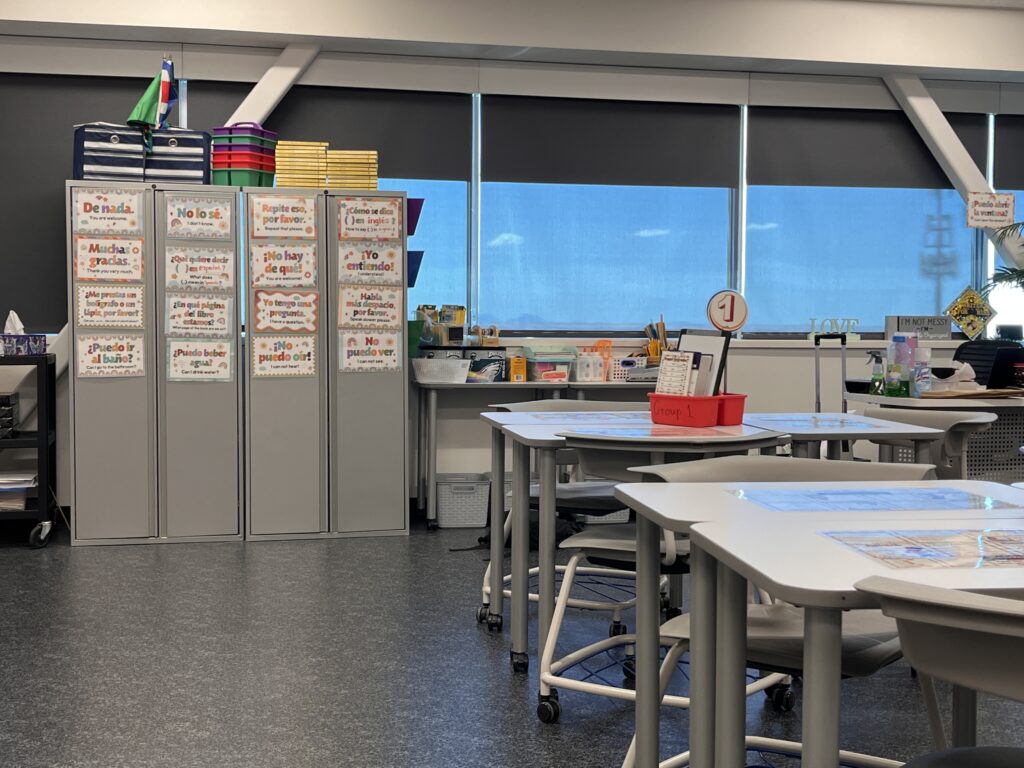
I connect these visual supports to the routines in my first 30 days plan for high school ESL newcomers.
Home-language support can be used purposefully rather than treated as something students must abandon, as I explain in Translanguaging in the Secondary ESL Classroom.
Teachers supporting beginning learners may also find these beginner ESL high school strategies useful.
Use Functional ESL Decor, Not Decoration for Decoration’s Sake
When I think about high school ESL classroom ideas, I don’t focus on decorating every available wall. Instead, I want every display in my classroom to serve a purpose. Wall space is valuable, so I try to fill it with resources that students actually use during instruction rather than decorations they stop noticing after the first few weeks of school.
The most effective classroom displays help students become more independent learners. They remind students of classroom expectations, reinforce daily routines, provide academic vocabulary, model sentence structures, support the writing process, and encourage students to solve problems before immediately asking for help. When students can look around the room to find the support they need, they build confidence and rely less on the teacher for every question.
The goal isn’t to create the prettiest classroom—it’s to create a classroom that works. When every display has a purpose, students spend less time wondering what to do next and more time using English to communicate, collaborate, and learn.
Make expectations visible
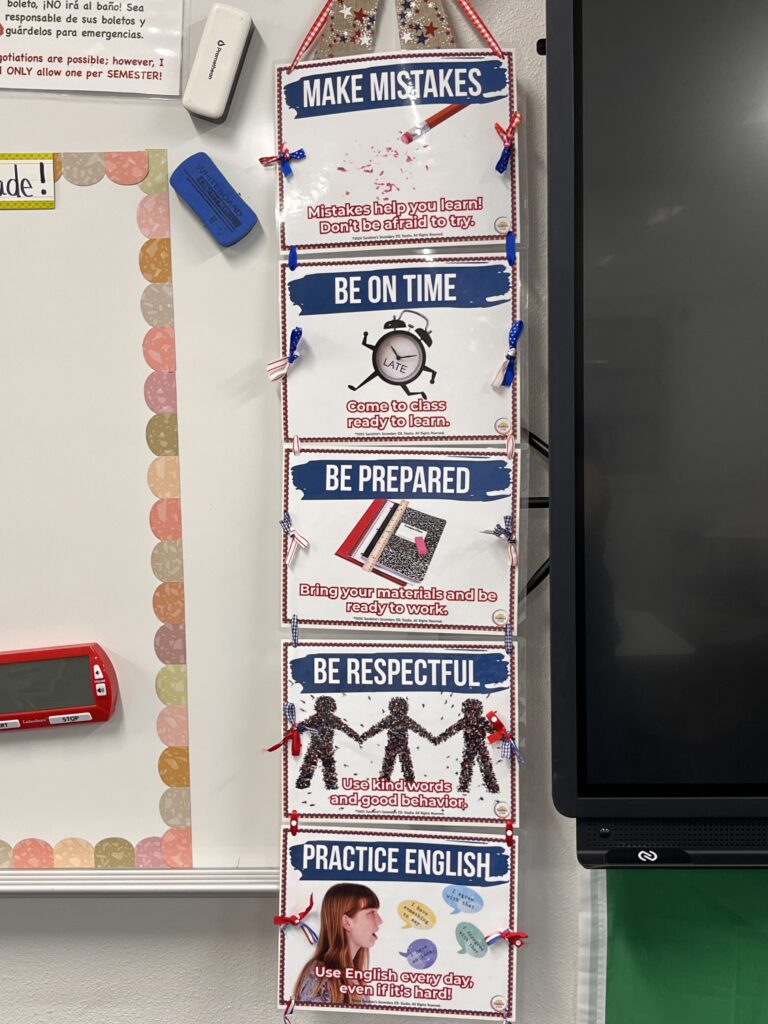
I explain how I introduce and revisit these visuals in Visual ESL Expectations Posters for High School Classrooms.
Related classroom directions and routine language are covered in my post on ESL commands and routines task cards.
Use writing walls as yearlong reference tools
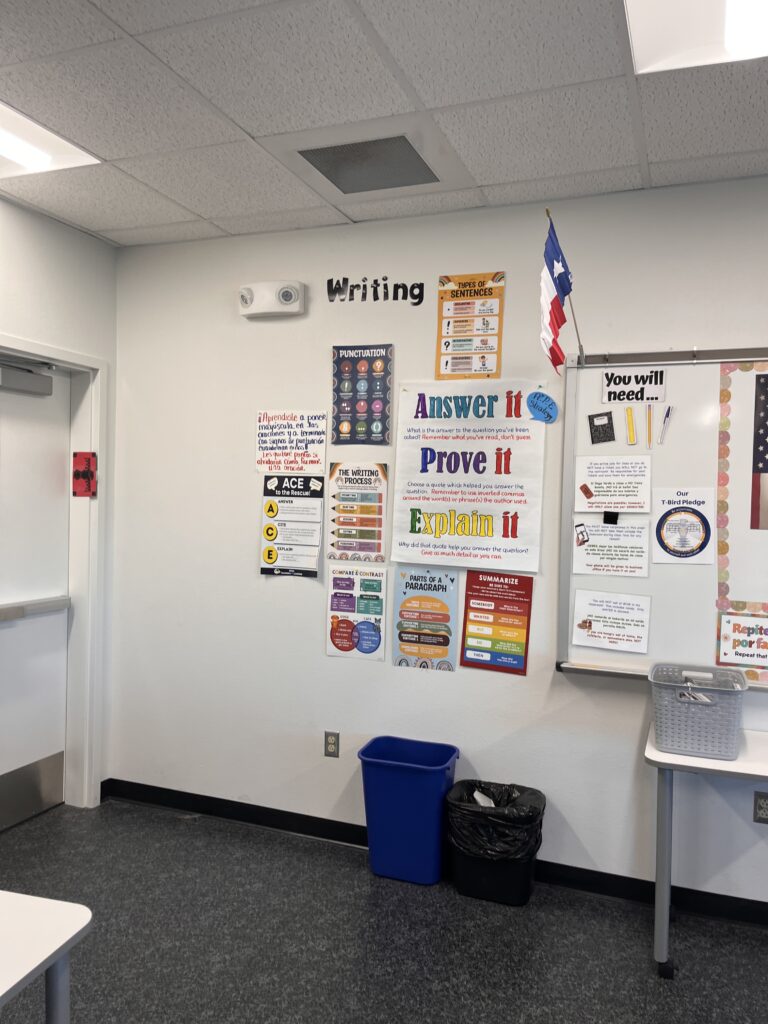
These classroom references work alongside the scaffolds in my guide to ESL writing support strategies.
Make Phone and Materials Routines Obvious
One of the most practical high school ESL classroom ideas I used before my state’s cellphone ban was a visible phone-storage system that made it easy to see whether students had followed the routine. The photo in this section was taken before the current ban went into effect. My state now requires phones to remain completely out of sight, so I no longer use this setup. However, it may still work well for teachers in states or districts with different rules—or in schools without a cellphone ban.
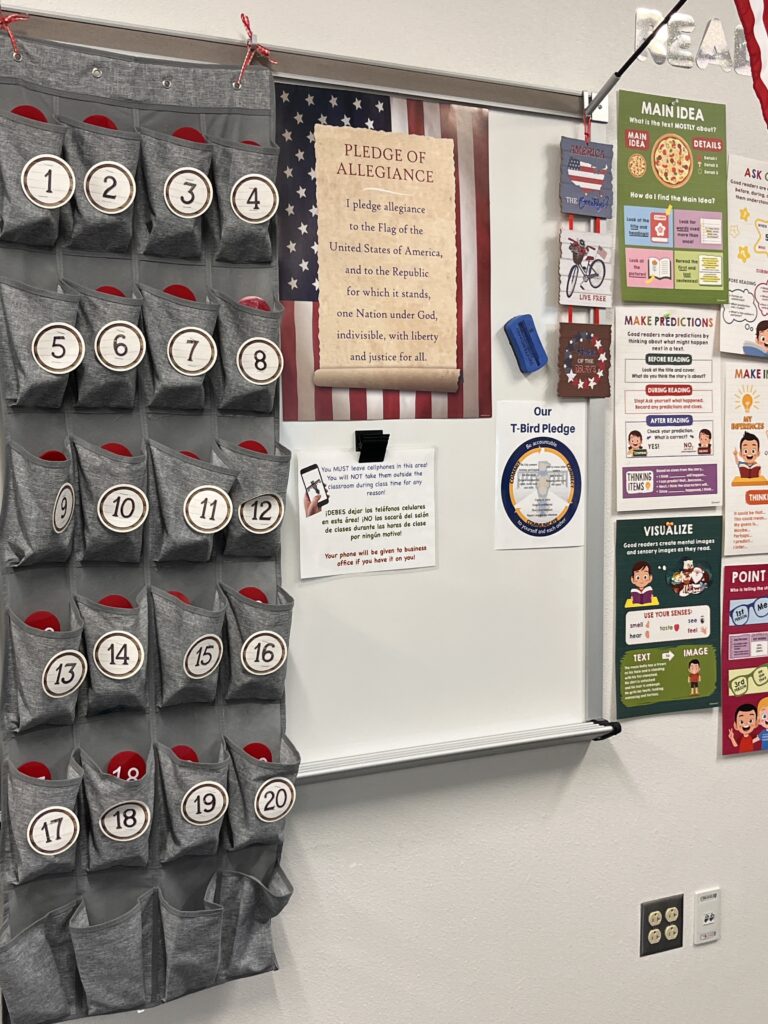
Instead of buying a traditional cellphone holder, I used an over-the-door cloth shoe organizer. I added round number labels to the pockets so each phone had a clearly marked place. At the beginning of class, students placed their phones in the corresponding numbered pocket, removed the matching red plastic numbered placeholder back to their desks.
This gave me a quick visual way to check the system. When I looked around the room, I could see which numbered placeholders were on students’ desks and where their phones had been stored. It also helped students retrieve the correct phone at the end of class without confusion.
As with any cellphone procedure, teachers should first check their current state, district, and campus policies. A system that worked well in my classroom before the ban may not meet the requirements of every school today.
Organize a Student Supply Station for Independence
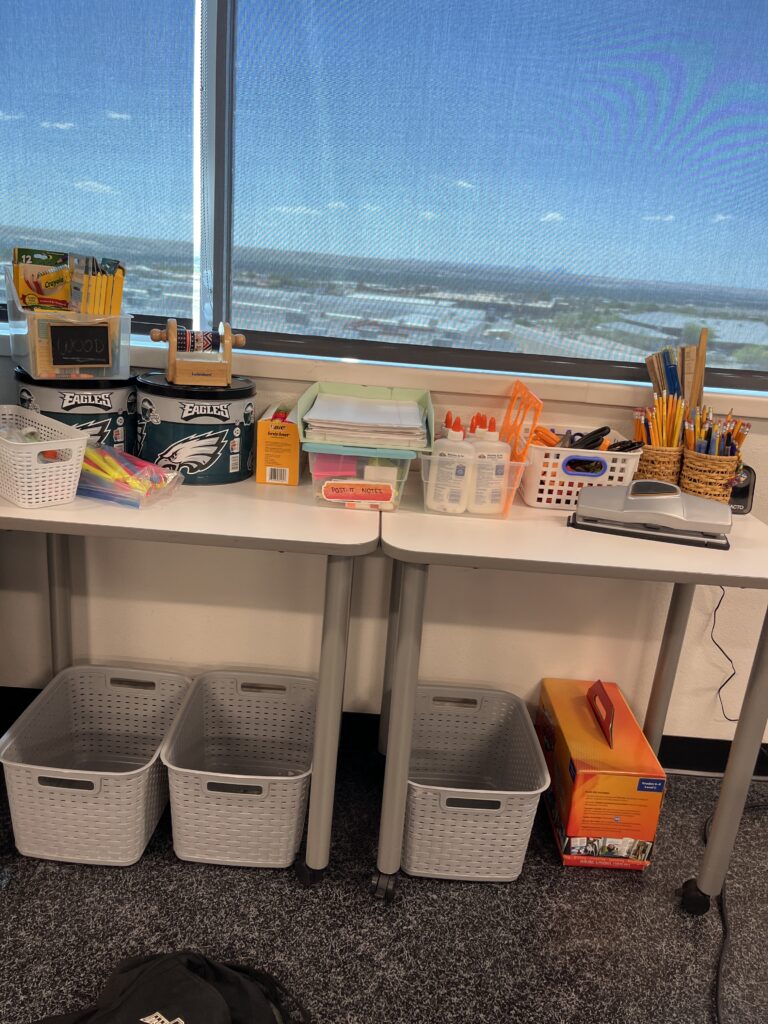
One of the most useful high school ESL classroom ideas is creating a supply station students can use without asking for permission every time they need something. In my classroom, I keep frequently used materials in clearly labeled areas so students know where to find pencils, paper, scissors, glue, rulers, and other basic supplies.
I separate the materials by type and place the items students use most often where they are easy to reach. This makes transitions faster and prevents small interruptions from stopping the lesson. Instead of waiting for me to hand out a pencil or locate a pair of scissors, students can get what they need and return to their work.
At the beginning of the year, I explicitly teach students how to use the station, where each item belongs, and what should be returned after use. We practice the routine just like any other classroom procedure. Over time, students become more independent because they know exactly where to go and what to do.
For multilingual learners, especially newcomers, a predictable supply area can make the classroom feel easier to navigate. Clear organization reduces confusion, supports independence, and allows students to focus more on learning and less on figuring out where materials are kept.
Build a Predictable Start-of-Class Routine
One of the most effective high school ESL classroom ideas is creating a start-of-class routine students can follow without waiting for repeated directions. When students enter my classroom, they know where to look for the bell ringer, what materials to retrieve, and how to begin.
I usually display the opening task in the same place each day so students can get started quickly. Depending on the activity, they may begin independently and then compare answers with a partner, or they may start with a short speaking prompt at their table. Because the seating arrangement already supports partner and small-group interaction, it is easy to move from quiet work into structured conversation without rearranging the room.
While students are working, I can take attendance, check in with late arrivals, prepare materials, or provide support to students who need extra help. A consistent routine also makes it easier for students who enter late because they can look at the board, gather what they need, and join the lesson with less disruption.
Over time, this predictable beginning helps students build independence and confidence. It also creates more opportunities for speaking because students become comfortable with the expectation that they will think, respond, and then discuss their ideas with a partner or group.
I use ESL bell ringers and daily warm-ups to give students a clear task as soon as they enter.
Group seating also makes it easier to move into structured ESL speaking routines and teen-friendly ESL icebreakers during the opening weeks.
New teachers can pair the classroom setup with these first-week tips for high school ESL teachers.
My ESL Bell Ringers Mega Bundle gives students a predictable daily starting task with visual, audio, speaking, and writing support.