
I Dreaded the Cellphone Ban at First
I’ll be honest: when Texas announced stricter cellphone laws for schools, I was not excited.
As a high school ESL teacher, I already had my own classroom cellphone policy. In previous years, students placed their phones into a pocket pouch at the front of the room. They could charge them during class, and honestly, I thought that system worked fairly well.
But this year was different.
Students were no longer supposed to use personal devices during the school day at all. That included:
- cellphones
- AirPods
- smartwatches
- personal tablets
- personal laptops and iPads
Students now had to keep devices powered off inside their backpacks during instructional time.
At first, I worried the new policy would create constant conflict.
I imagined arguments.
I imagined students refusing to comply.
And honestly, I worried about becoming the “phone police” all day long.
My Teacher Confession: Phones Quietly Became a Reward
Here’s something I think many teachers may secretly relate to.
I was not always a perfect bell-to-bell teacher.
Sometimes if students finished early, I allowed them to get on their phones for the last few minutes of class. Sometimes I relaxed the rules because I was tired myself. It felt harmless at the time.
But slowly, I started noticing something I didn’t like.
Students were no longer focused on learning.
They were focused on earning phone time.
Assignments became rushed. Students hurried through work just to get access to their devices. And if I decided not to allow phones at the end of class, the complaints started immediately.
Without even realizing it, phones had become the reward students were truly working toward.
Looking back now, I think many classrooms slowly drifted into that pattern over the years.
What Changed in My ESL Classroom
Once students realized the cellphone restrictions were serious, the atmosphere in my classroom slowly started changing.
And surprisingly, many of the changes were positive.
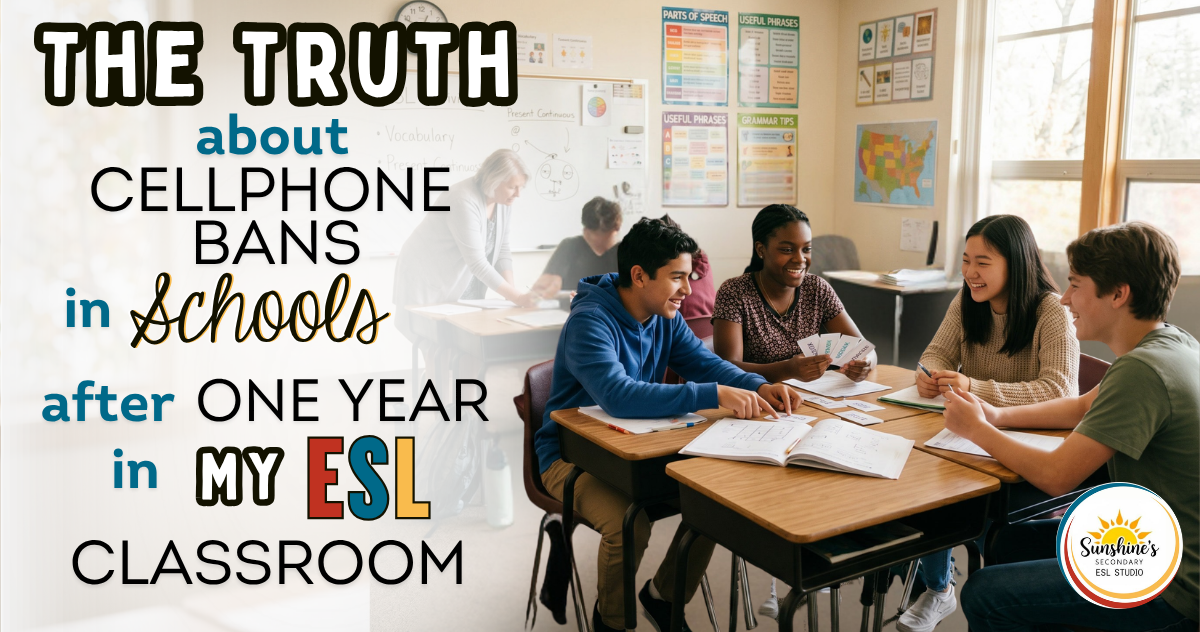
My ESL students became more present during lessons. They participated more during discussions and partner activities. Students who usually hid behind screens or earbuds became more engaged with the people around them.
I teach many of the same students year after year, so I could clearly see the difference.
Students were:
- more focused during instruction
- more willing to participate
- more engaged during speaking activities
- less distracted during reading tasks
- more connected to classroom conversations
I even had moments where students became so absorbed in activities that they didn’t realize the bell was about to ring.
That honestly shocked me.
For multilingual learners especially, attention matters. Language learning requires listening, interaction, processing, and practice. Constant notifications and screen distractions interrupt all of those things.
I noticed students speaking to each other more naturally during activities like:
- partner discussions
- vocabulary games
- collaborative reading tasks
- speaking routines
That is one reason I rely heavily on structured speaking activities in my classroom. If you teach secondary ESL students, you may also enjoy these related posts:
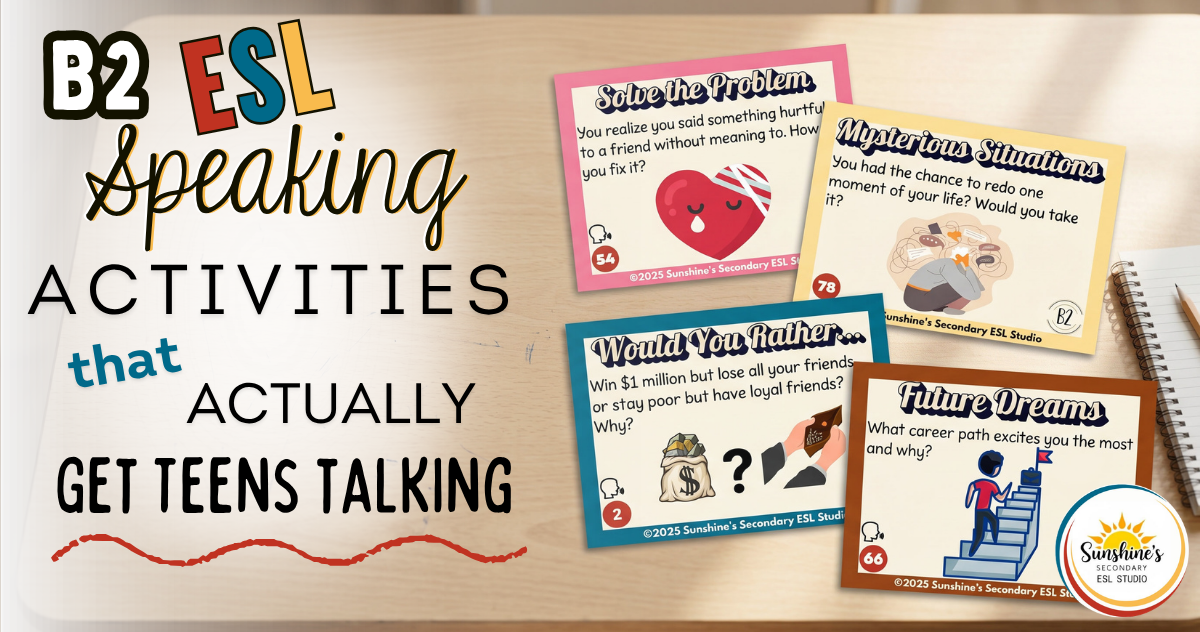
- ESL Teen Speaking Activities
- How to Build ESL Speaking Routines
- ESL Speaking Confidence Activities
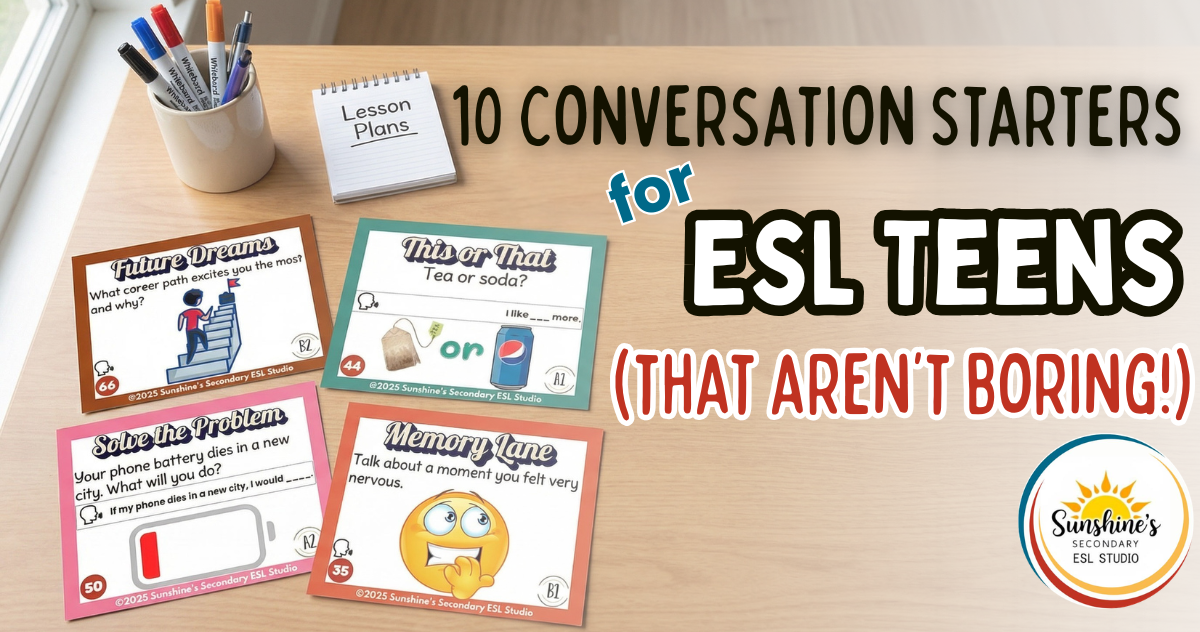
- Conversation Starters for ESL Teens
Ironically, the Ban Made Me a Better Teacher
One thing I did not expect was how much the cellphone ban would change my own teaching.
Since I could no longer rely on “free phone time” at the end of class, I had to become more intentional about how we used those final minutes.
Instead of students disappearing into screens, we started using that time for:
- quick class discussions
- vocabulary games
- speaking challenges
- collaborative activities
- logic puzzles
- review games
And honestly? Those last few minutes now feel more meaningful than they used to.
The room feels more alive.
Students laugh more. They interact more. Even reluctant students participate more when screens are not competing for their attention.
Some of my favorite replacements for phone time have been activities like:
These activities give students the interaction and engagement many of them were actually craving all along.
If you are trying to create a more interactive classroom environment without relying on devices, you can also explore my ESL resources for secondary students here:
Sunshine’s Secondary ESL Studio on TPT
But Here’s the Truth: Consistency Matters
Now that we are only a couple weeks away from the end of the school year, I also think it is important to be honest about something else:
Cellphone bans only truly work when there is consistency across the school.
And in a large high school, that is difficult.
At my school, students still walk through the halls wearing AirPods, checking smartwatches, and using cellphones openly. Some students even bring personal iPads instead of district-issued devices, despite those devices technically not being allowed.
The reality is that classroom teachers cannot solve this issue alone.
When students see different expectations from class to class, confusion happens. If one teacher strictly enforces the law while another allows devices freely, students naturally begin testing boundaries everywhere.
And honestly, I understand why many teachers feel exhausted trying to constantly monitor devices. Most teachers do not want every hallway interaction to become a confrontation over earbuds or cellphones.
I also think parents, schools, teachers, administrators, and students all have to be part of the conversation if cellphone restrictions are going to succeed long term.
Because while I have absolutely seen benefits inside my own classroom, inconsistency across an entire campus makes full success much harder.
I Still Believe the Classroom Benefits Are Real
Even with those challenges, I can honestly say this year changed my perspective.
I still believe many students benefit from having fewer distractions during instructional time.
My classroom felt calmer.
Students interacted more naturally.
Class discussions improved.
And perhaps most importantly, students seemed more mentally present.
Not perfect.
Not magically transformed.
But more present.
I never expected to say this at the beginning of the school year, but removing phones forced me to rethink both student engagement and my own teaching habits.
And in many ways, I think my classroom became stronger because of it.
Final Thoughts
If your school is navigating cellphone restrictions right now, my biggest advice is this:
Do not simply take phones away.
Replace them with something meaningful.
Replace them with interaction.
Replace them with movement.
Replace them with speaking opportunities, games, collaboration, and real conversation.
Because once students begin reconnecting with the people around them instead of constantly reconnecting with their screens, the atmosphere in the classroom really does begin to change.
And after one full year of teaching under these policies, that is the truth I can honestly share from my own ESL classroom.