
Teaching pronunciation to teenagers can be tricky. Many secondary ESL students still need explicit support with sounds, decoding, and fluency, but the moment an activity feels too childish, participation drops fast. That’s exactly why I started using an ESL pronunciation test for teens that feels age-appropriate while still giving me meaningful data about student growth.
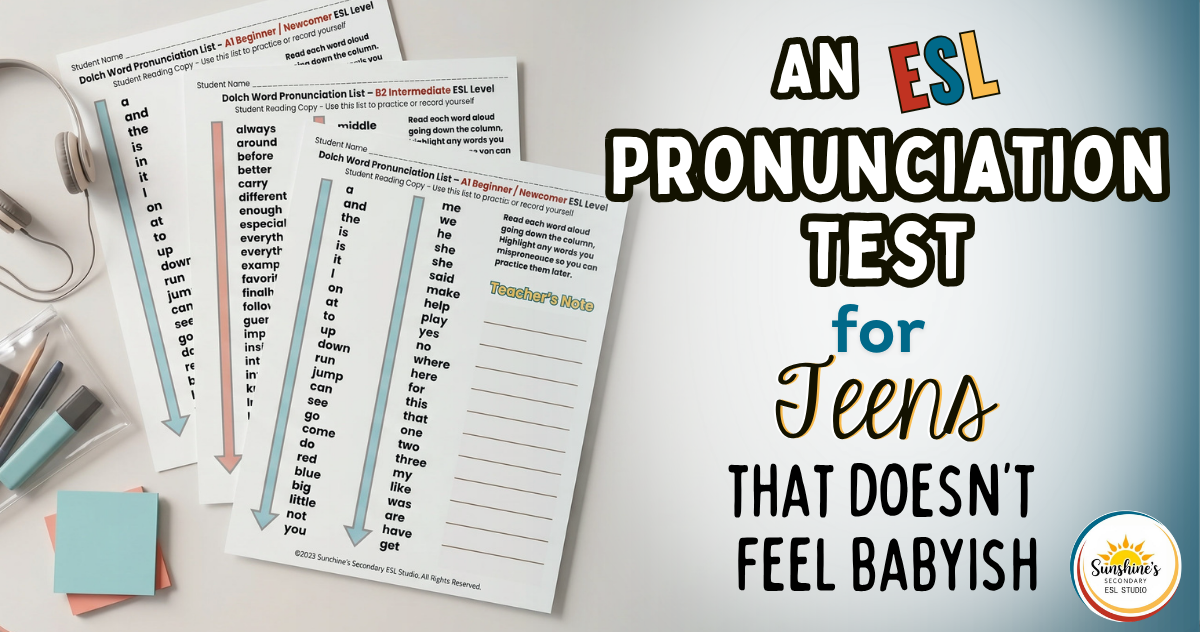
Instead of using elementary-style phonics drills, I created a leveled pronunciation assessment built around high-frequency English words and aligned it to CEFR levels (A1–B2). The result? My students take it seriously, I get actionable pronunciation data, and nobody feels like they’re back in second grade.
If you’ve struggled with finding age-respectful speaking assessments for secondary learners, this approach may help.
Why an ESL Pronunciation Test for Teens Matters
Pronunciation affects much more than speaking. It impacts reading fluency, listening comprehension, classroom participation, and even student confidence. I’ve noticed that students who struggle to pronounce common high-frequency words often hesitate during discussions, avoid reading aloud, or misunderstand directions during class activities.
That’s especially important in high school ESL classrooms where students are expected to participate in rigorous speaking and listening tasks. In my post about building speaking confidence in ESL students, I talk about how confidence and language production are deeply connected. Students are much more willing to speak when they feel successful.
An effective ESL pronunciation test for teens gives students a starting point without embarrassing them.
Why I Use High-Frequency Words Instead of “Phonics”
I built this assessment around Dolch-style high-frequency words because these words appear constantly in real communication. They show up in classroom instructions, conversations, reading passages, and writing prompts every single day.
Words like because, through, again, and where may seem simple, but they reveal important pronunciation patterns. When students struggle with these common words, it often affects their overall fluency and comprehension.
Using level-appropriate word lists also supports differentiation, which is essential in secondary ESL classrooms. In my blog post about differentiating ESL instruction from A1 to B2, I explain why proficiency-level grouping is often more effective than grade-level expectations for multilingual learners.
With this system:
- Newcomers may begin with A1
- Intermediate students might use A2 or B1
- Advanced learners can challenge themselves with B2
That flexibility helps students feel successful instead of overwhelmed.
How I Administer the Pronunciation Assessment
At the beginning of the year, I introduce the assessment during our first-week routines and speaking activities. If you teach secondary newcomers, you might also like my post on first week ESL teacher tips because establishing safe speaking routines early makes a huge difference.
Each student receives a 50-word pronunciation list matched to their proficiency level. Then they either:
- Read the list aloud one-on-one with me
- Record themselves using Vocaroo
- Complete the assessment during stations or independent work time
Using recordings has been a game changer. I can review pronunciation later instead of trying to assess every student in real time.
Students also tend to feel less nervous when recording independently.
The Reflection Piece Changes Everything
One of the most valuable parts of this ESL pronunciation test for teens is the reflection component.
After each assessment round (beginning, middle, and end of year), students reflect on:
- Which words felt difficult
- Which sounds need more practice
- How their pronunciation improved over time
- What strategies helped them succeed
The reflection sheets are available in both English and Spanish, which makes the process more accessible for newcomers and beginning learners.
I’ve found that teens respond well when we involve them in tracking their own growth. It feels much more respectful and motivating than simply marking errors on a checklist.
That same student-centered mindset is something I also discuss in my post about why rigor in ESL looks different. Students can absolutely engage in rigorous language work when it’s scaffolded appropriately and presented in an age-respectful way.
What’s Included in the Resource
The full pronunciation bundle includes 200 high-frequency words across four CEFR levels:
- A1
- A2
- B1
- B2
Each level includes:
- Teacher pronunciation checklists
- Student reading sheets
- Half-page and full-page formats
- IPA transcriptions
- Student-friendly phonetic spellings
- Reflection sheets in English and Spanish
I designed it specifically for middle school and high school multilingual learners who still need pronunciation support without elementary-style visuals or activities.
You can view the full resource here:
- Dolch Sight Word Pronunciation Tests for ESL Teens | A1–B2 Bundle
- FREE A1 Dolch Sight Word Pronunciation Test for ESL Teens | Back to School
If you teach pronunciation regularly, you may also enjoy pairing this with my ESL listening activities for high school students or my conversation starters for ESL teens to help students apply pronunciation skills in authentic speaking situations.
Why This Works Better for Teenagers
Teenagers want to feel respected. They know when materials are designed for little kids, and many shut down immediately when instruction feels infantilizing.
This assessment works because it focuses on growth, fluency, and communication instead of “baby phonics.”
Over the course of the year, I’ve watched students go from barely whispering through a word list to confidently participating in classroom discussions and reading activities. The improvement becomes visible to both the students and the teacher.
That sense of progress matters.
If you’re looking for an ESL pronunciation test for teens that supports real language growth while still feeling appropriate for secondary learners, this approach may be worth trying in your classroom.