

If you’ve ever felt like ESL classroom management in high school is a completely different game than anything you were trained for… you’re not imagining it.
Managing a classroom full of multilingual teens isn’t just about behavior—it’s about language barriers, confidence levels, cultural differences, and figuring out how to keep students engaged when they may not fully understand what’s happening.
And here’s the truth: traditional classroom management strategies don’t always work in an ESL setting.
What does work? Structure, consistency, and creating a classroom where students feel safe enough to participate—but clear enough on expectations to stay on track.
If you’re just starting out or trying to reset your systems, some of the first week strategies for ESL teachers can actually make a huge difference in how your classroom runs all year.
Let’s break down the strategies that actually make a difference.
Why ESL Classroom Management in High School Feels So Different
When we talk about ESL classroom management in high school, we’re not just talking about redirecting behavior—we’re talking about supporting students who:
- May not fully understand directions
- Feel anxious about speaking in English
- Default to their native language when unsure
- Have varying levels in the same classroom (A1 to B2… all at once)
So when a student is “off-task,” it’s not always defiance.
Sometimes it’s confusion.
Sometimes it’s avoidance.
Sometimes it’s I have no idea what’s going on, so I’m going to check out.
This is why strategies like wait time matter more than we think—giving students a moment to process can completely shift participation (you can read more about that in these wait time strategies for the ESL classroom).
1. Build Predictable Routines (Your Secret Weapon)
If there’s one thing that transforms an ESL classroom, it’s this: predictability.
High school ESL students thrive when they know what to expect. It reduces anxiety and increases participation.
Think of your class like a pattern:
- Bell Ringer
- Mini Lesson / Input
- Structured Practice (partner or group)
- Independent Work
- Exit Ticket
When this routine becomes automatic, you spend less time managing behavior and more time actually teaching.
If you want to visually reinforce those routines, something as simple as ESL routines posters or classroom visuals can anchor expectations without you constantly repeating yourself.
In my own classroom, I also use ESL Commands & Routines Task Cards as a quick daily warm-up or review. Students practice classroom language (“open your notebook,” “work with a partner,” etc.), and it reinforces expectations without feeling like a lecture.
2. Don’t Rely on Whole-Class Questioning
This is one of the biggest mistakes in managing an ESL classroom.
Asking a question and calling on one student might work in a general ed class—but in ESL?
You’ll get:
- Silence
- “I don’t know”
- Or the same 2 confident students answering every time
Instead, shift to structured speaking routines:
- Turn and talk
- Partner responses
- Small group discussion
- Sentence frames for support
If you need ready-to-go support, these free ESL sentence starters for teens can make a huge difference in getting even your quieter students to participate.
I also lean heavily on my Teen Talk Conversation Cards and Real-World Speaking Task Cards here. These give students something specific to talk about, which eliminates that awkward silence and keeps everyone engaged at the same time.
And if you’re building this into a consistent system, I highly recommend creating intentional routines like the ones in how to build ESL speaking routines.
3. Make Expectations Visible (and Repeat Them A Lot)
Many classroom management strategies begin with the physical setup of the room. If you’d like to see how I organize my classroom to support routines, independence, and student success, explore my secondary ESL classroom for ideas you can adapt to your own teaching space.
In a typical classroom, you might explain directions once or twice.
In an ESL classroom, that’s not enough.
For strong ESL behavior strategies, you need:
- Written directions on the board
- Verbal explanation
- Modeled example
- Possibly even a visual
That’s where visual supports really shine. Things like visual ESL expectations posters or even desk supports can reduce confusion before it turns into behavior issues.
I personally love using ESL Desk Mats (Back to School or Survival English versions) because students can quickly reference common phrases, expectations, and language without constantly asking for help. It builds independence and cuts down on off-task behavior.
And yes… repeating yourself is part of the job.
But here’s the payoff: fewer behavior issues because students actually understand what they’re supposed to do.
4. Engagement Solves More Problems Than Discipline
A lot of classroom management issues in ESL come from one thing:
Students aren’t engaged.
If something feels too hard, too confusing, or too boring, students will check out.
That’s when side conversations, phones, and off-task behavior start creeping in.
So instead of asking:
“Why are they off-task?”
Try asking:
“Is this activity accessible and engaging?”
For example, incorporating speaking-based activities—even simple ones like conversation cards or structured prompts—can dramatically increase engagement. Activities like conversation starters for ESL teens or interactive games (like this fun Basta-style ESL vocabulary game) keep students actively involved instead of passively sitting.
When I really want high engagement with built-in accountability, I use my ESL Logic Puzzles (Technology Mysteries). Students have to collaborate, read carefully, and solve the mystery—so they stay on task because they actually want the answer.
5. Normalize Language Support (Not Just Behavior Correction)
Here’s something that doesn’t get talked about enough in ESL classroom management high school settings:
Students act out less when they feel capable.
If a student doesn’t have the language to participate, behavior becomes the escape.
So instead of focusing only on correction, build in support:
- Sentence stems
- Word banks
- Model responses
- Opportunities to rehearse before speaking
If you’re working with mixed levels, strategies from differentiating ESL instruction (A1–B2) can help you support everyone without lowering expectations.
This is also where structured resources like ESL Grammar Task Cards come in. They give students guided, level-appropriate practice so they’re not sitting there lost—which is often what leads to behavior issues in the first place.
6. Set the Tone Early (and Stick to It)
High school students will test boundaries—it’s just part of the deal.
But in an ESL classroom, consistency matters even more.
Be clear about:
- Voice levels during activities
- When native language is okay vs. when English is expected
- Participation expectations
- What “on-task” looks like
If you’re navigating that balance between languages, this idea of translanguaging in the secondary ESL classroom can help you set expectations without shutting students down.
7. Relationships Matter More Than You Think
This isn’t just feel-good advice—it’s practical.
Students are far more likely to stay engaged and respectful when they feel seen and supported.
And for ESL students, that connection matters even more.
Learn their names quickly.
Ask about their interests.
Acknowledge effort—even when the English isn’t perfect.
I like to build this through low-pressure speaking and writing activities at the beginning of the year—things like identity-based prompts or simple discussion cards. It gives students a voice early on, which makes classroom management smoother later.
If you want to go deeper into that, this post on culturally responsive teaching for ESL teens connects directly to classroom management in ways people don’t always realize.
Final Thoughts: It’s Not About Control—It’s About Clarity
At the end of the day, ESL classroom management in high school isn’t about being strict or controlling every behavior.
It’s about:
- Clear routines
- Clear expectations
- Engaging instruction
- Strong support systems
When those pieces are in place, a lot of the “behavior problems” start to disappear on their own.
Because students aren’t just being managed—they’re being set up to succeed.
If you’ve been feeling like classroom management in your ESL class is harder than it should be, you’re not alone—and you’re definitely not doing anything wrong.
Sometimes it’s just about adjusting the approach to fit the learners in front of you.
And if you want to explore more strategies, you can always browse the full collection over on the ESL Teacher Blog for ideas you can use right away.
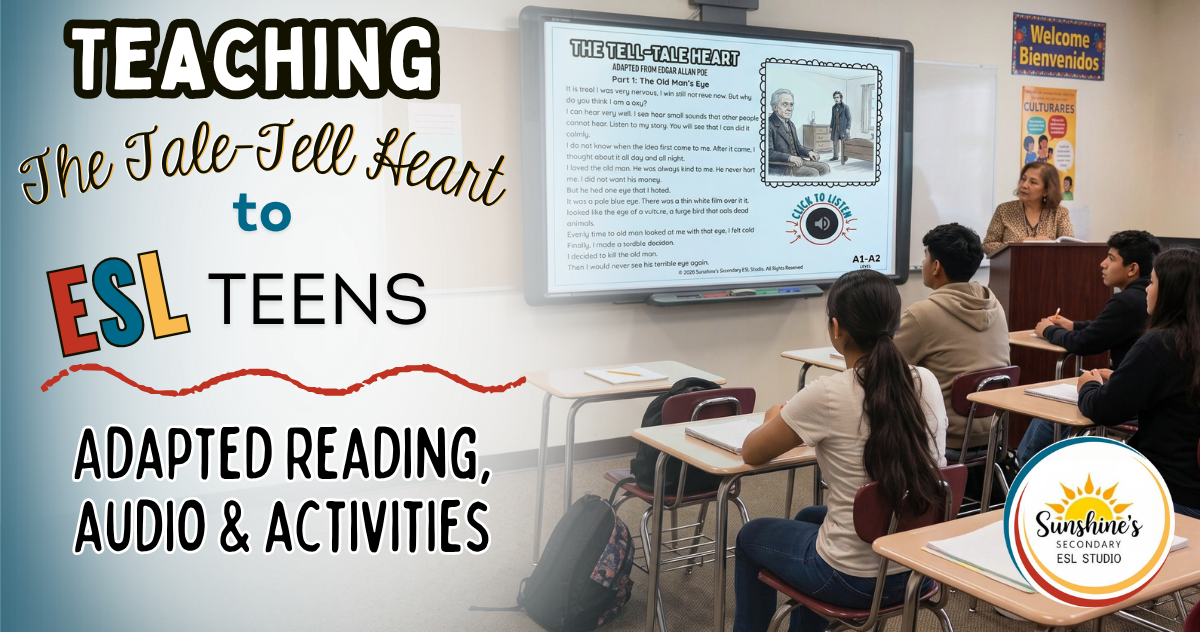
Teaching The Tell-Tale Heart to ESL Teens: Adapted Reading, Audio & Activities
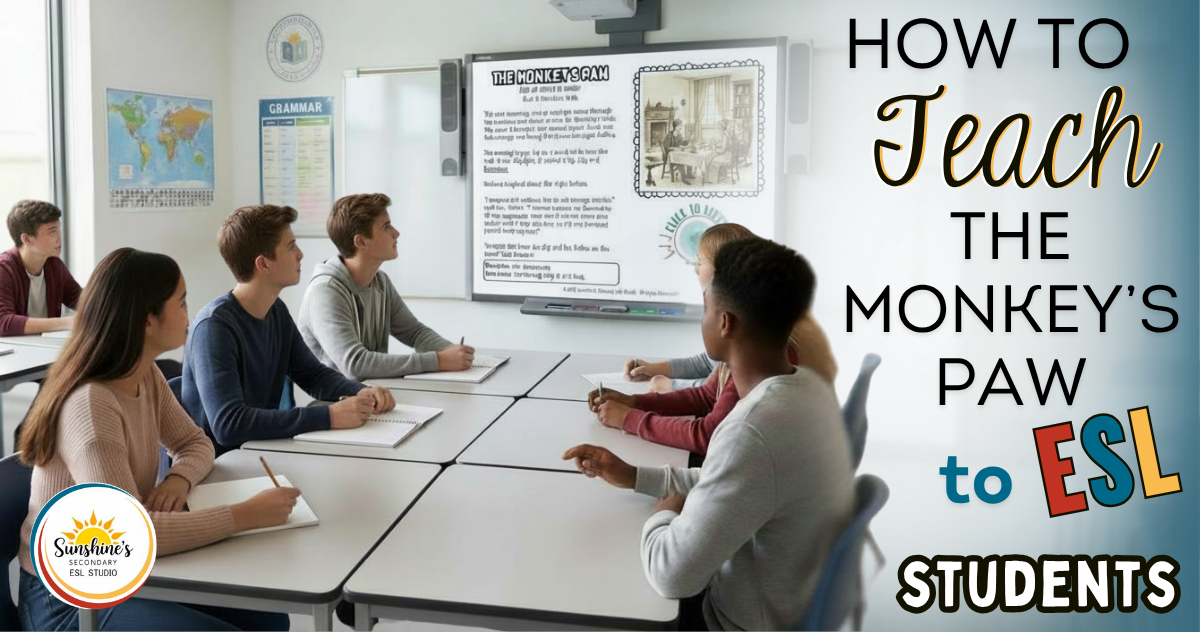
The Monkey’s Paw ESL: How to Teach the Classic Short Story to English Learners
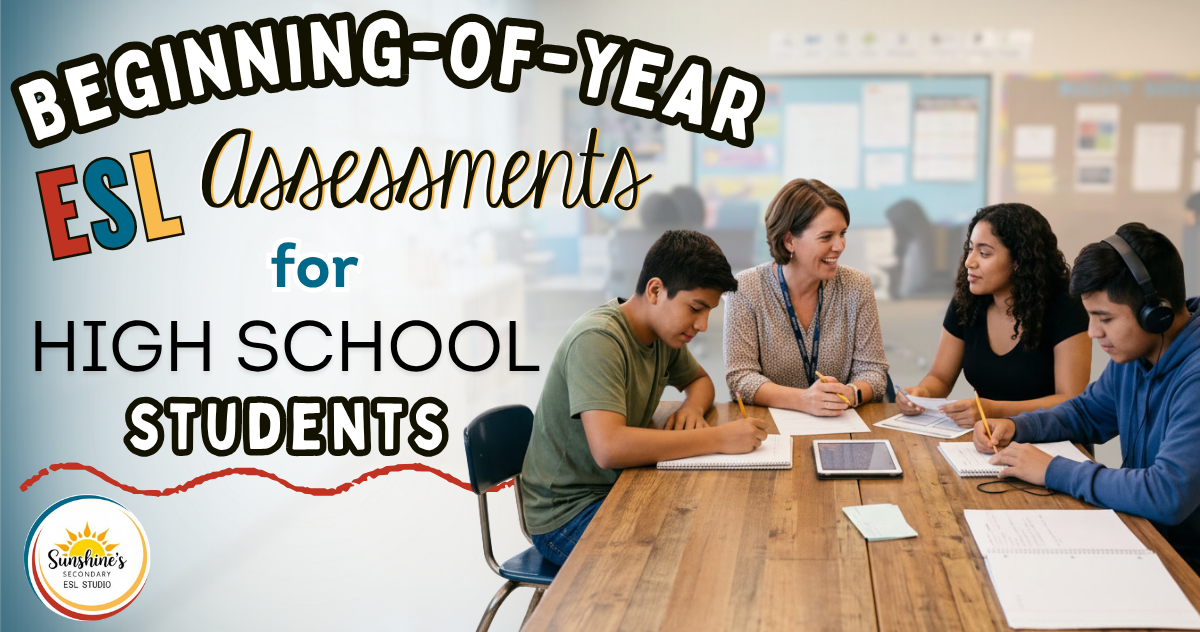
Beginning-of-Year ESL Assessments for High School Students