
Getting ESL teens to actually talk in class isn’t always easy. Some days they’re engaged and willing to share. Other days? You’re met with silence, one-word answers, or a whole lot of “I don’t know.”
If you’ve been there, you’re not doing anything wrong.
Many students—especially multilingual learners—need more than a simple “talk to your partner.” They need structure, support, and a reason to speak. That’s where ESL speaking prompts for teens can completely change the dynamic.
Why ESL Speaking Prompts Work So Well
When students struggle to speak, it’s usually not because they don’t want to—it’s because they don’t know what to say or how to say it.
That’s why prompts are so powerful.
Instead of putting students on the spot, you’re giving them a clear starting point. And when those prompts are based on emotions, the conversations become even more meaningful.
Emotion-based prompts help students:
- Connect language to real-life experiences
- Practice past tense naturally through storytelling
- Build vocabulary tied to feelings and situations
- Move beyond surface-level responses
If you’re trying to build consistent routines, this fits really well with the strategies in: How to Build ESL Speaking Routines
Easy Ways to Use ESL Speaking Prompts in Your Classroom
You don’t need complicated plans or extra prep time. These are simple ways to make speaking part of your daily routine.
1. Daily Warm-Ups
Start class with one prompt:
“Describe a time you felt proud of yourself.”
Model your answer first, then let students respond.
If your students need support, sentence frames make a huge difference. You can grab free ones here: Free ESL Sentence Starters for Teens
2. Pair & Share Activities
Give each pair a prompt and a short timer (3–5 minutes). Then rotate.
This keeps conversations moving and eliminates awkward silence.
For more ideas like this, check out: Conversation Starters for ESL Teens
3. Speaking Circles
Have students answer a prompt aloud, then allow classmates to ask follow-up questions like:
- “What happened next?”
- “Why did you feel that way?”
This builds both speaking and listening skills at the same time.
4. Exit Ticket Speaking
End class with one quick prompt.
It’s simple, but it reinforces consistency—and that’s what builds confidence over time.
Why Emotion-Based Prompts Work Especially Well for Teens
Not all prompts are equally effective.
Teens don’t usually respond well to random or generic questions. But when you give them something real—something they’ve actually experienced—they’re much more likely to engage.
Prompts like:
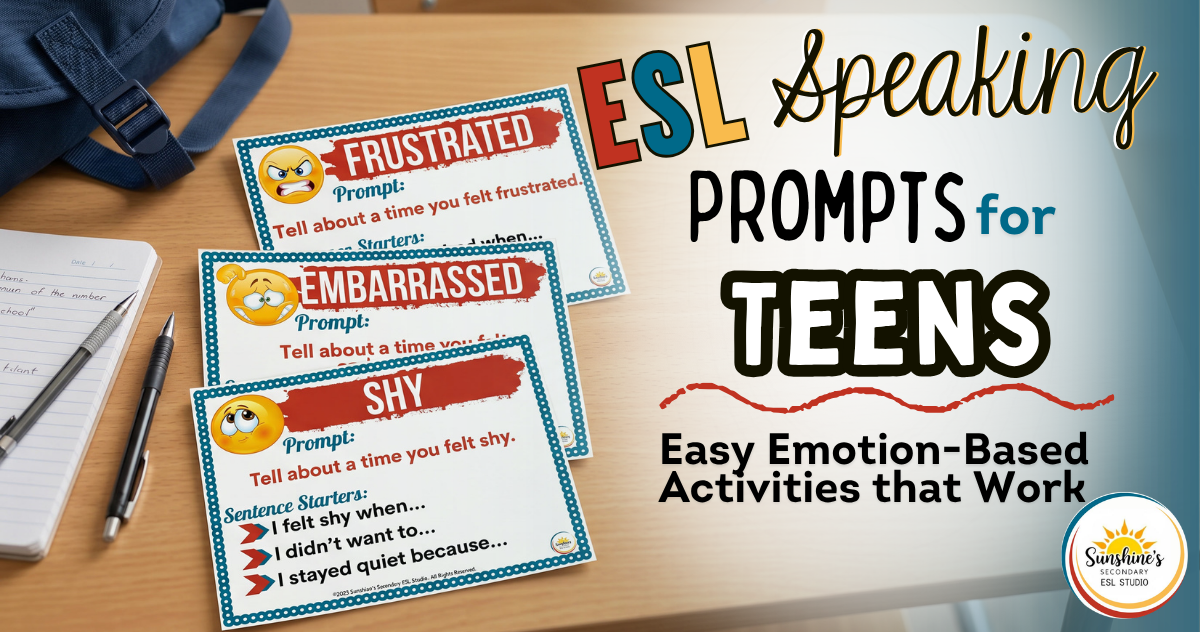
- “Describe a time you felt embarrassed.”
- “Talk about a moment you felt proud.”
- “Explain a situation where you felt frustrated.”
…lead to stronger, more natural conversations.
This also connects well to ideas from: Social Emotional Learning for ESL Teens
What to Look for in ESL Speaking Prompts
If you’re choosing or creating your own prompts, keep this in mind:
- Make them age-appropriate (no childish topics)
- Keep the language clear and accessible
- Focus on open-ended responses
- Choose prompts that encourage storytelling
If you’re working with mixed levels, you’ll also want to differentiate your support. This guide can help: Differentiating ESL Instruction for A1 to B2
Want Ready-to-Use ESL Speaking Prompts?
If you’re short on time, having something ready to go can make your life a lot easier.
I created a set of ESL speaking prompts for teens focused on emotions—designed to get students talking without extra prep.
They include 24 prompts covering a range of real-life emotions like:
- embarrassment
- gratitude
- frustration
- excitement
You can use them for warm-ups, partner work, or full speaking activities.
👉 Emotion Task Cards for ESL Teens | Prompts + Sentence Starters + Audio
Final Thought
Getting ESL students to speak doesn’t require complicated activities or perfect grammar.
Sometimes, all they need is the right prompt.
When students can connect what they’re saying to something they’ve actually experienced, the conversation becomes more natural—and the language starts to follow.
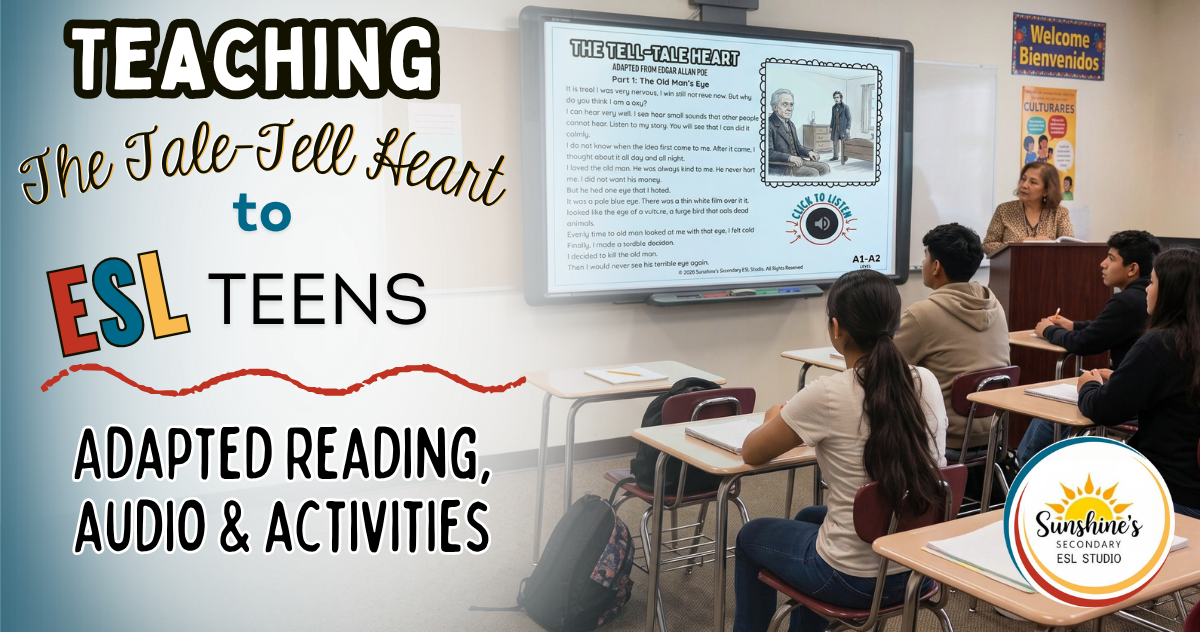
Teaching The Tell-Tale Heart to ESL Teens: Adapted Reading, Audio & Activities
The Monkey’s Paw ESL: How to Teach the Classic Short Story to English Learners
Beginning-of-Year ESL Assessments for High School Students