
When I first introduced the poem I, Too to my students, I wasn’t sure what to expect. Would the language feel too abstract? Would the message be hard for English learners to connect with?
But it ended up becoming one of the most powerful lessons in my classroom.
If you’re looking for a Langston Hughes poem for ESL students, this is one of the best places to start.
Why This Langston Hughes Poem Works So Well for ESL Students
My ESL classes are filled with students who bring rich backgrounds, cultures, and experiences into the room. Many of them understand what it feels like to be overlooked or underestimated—and that’s exactly why I, Too resonates so deeply.
The beauty of using a Langston Hughes poem for ESL instruction is that:
- The language is simple but meaningful
- The structure is short and accessible
- The themes are powerful and relevant
This combination makes it perfect for building both language skills and confidence.
If you’re trying to build more meaningful connections like this in your classroom, you might also like how I approach culturally relevant instruction in this post: Culturally Responsive Teaching for ESL Teens
How We Break Down the Poem
I always start with a read-aloud.
I model fluency, pacing, and expression, then we read it again together. This repetition helps students feel more comfortable with the language before we dig deeper.
From there, we focus on key vocabulary:
- darker brother
- ashamed
- sing America
Then we annotate together. Nothing overwhelming—just focused, scaffolded thinking:
- Who is speaking?
- What does the speaker want?
- How does the tone change?
Some of the best discussions come from simple questions like:
- Why does the speaker say “I, too, sing America”?
- What might the table represent?
- How does the speaker feel at the end?
These conversations often lead students to share their own experiences, which is where the real magic happens.
If you need more structured ways to support comprehension, this pairs really well with strategies from: ESL Reading Comprehension for High School
Building Speaking Confidence Through Poetry
After comprehension, we move into speaking.
I use structured sentence stems like:
- I think the speaker feels… because…
- This poem reminds me of…
- I connect to this poem because…
These supports make it easier for students to participate—even if they’re not fully confident yet.
If you’re trying to build more consistent speaking routines, this will help: How to Build ESL Speaking Routines
And for more ready-to-use prompts: Conversation Starters for ESL Teens
From Discussion to Writing
Once students have processed the poem orally, we transition into writing.
Some of my go-to prompts:
- What does this poem mean to you?
- Why is the speaker hopeful?
- Write your own poem starting with “I, too…”
This is where students really start to take ownership of their voice.
If you want more support for structuring writing tasks, this connects well with: ESL Writing Support Strategies
Why This Lesson Sticks
What I love most about using this Langston Hughes poem for ESL students is that it goes beyond language.
Students don’t just learn vocabulary or sentence structure—they feel seen. They reflect. They connect.
And those are the lessons they actually remember.
Want a Ready-to-Go ESL Lesson for “I, Too”?
If you’re thinking, I want to try this but I don’t have time to build it from scratch—I’ve already done it for you.
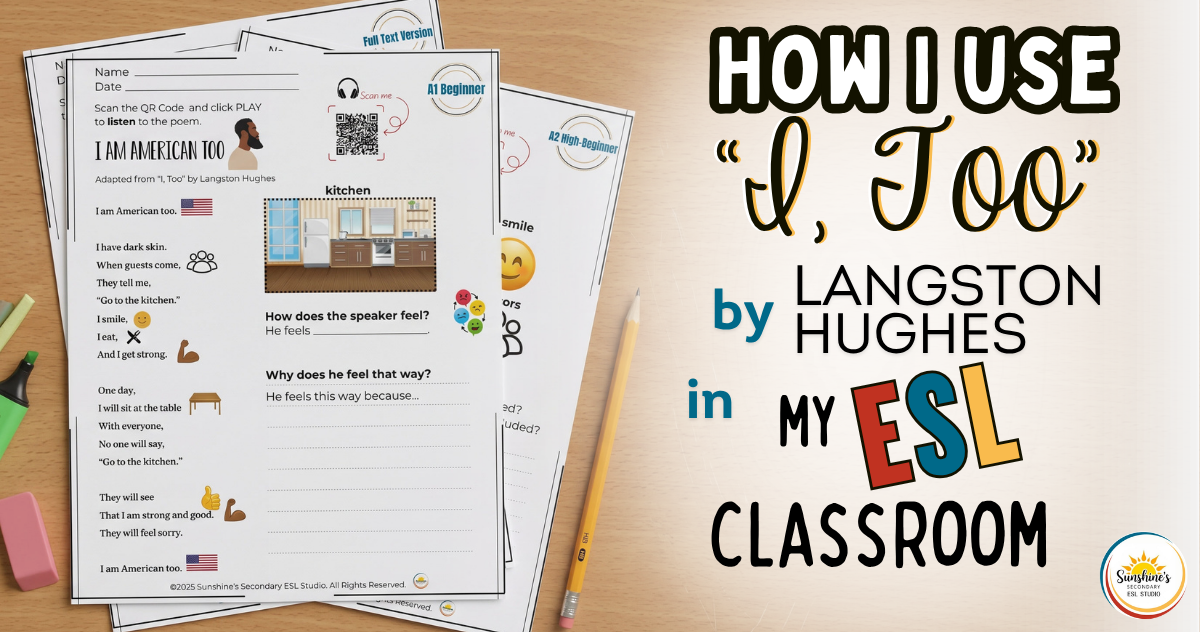
I created a scaffolded ESL resource for “I, Too” by Langston Hughes that includes:
- Vocabulary support
- Guided comprehension questions
- Speaking activities with sentence stems
- Writing prompts
- Structured, ESL-friendly scaffolding
👉 You can also check out the Free sample version here: Free “I, Too” B1 ESL Poem | Reading + Comprehension + Audio
Bonus: Pair It with a Langston Hughes Biography
If you really want students to connect with the poem, adding background knowledge makes a huge difference.
I highly recommend pairing the poem with a Langston Hughes biography reading so students understand:
- The historical context
- His voice and purpose
- Why this poem matters
👉 Langston Hughes ESL Biography with Audio | Black History Month Reading Activity
Final Thoughts
If you’ve been hesitant to teach poetry, this is your sign to try.
Using a Langston Hughes poem for ESL instruction doesn’t have to feel intimidating. With the right scaffolding, it can become one of the most meaningful lessons you teach all year.
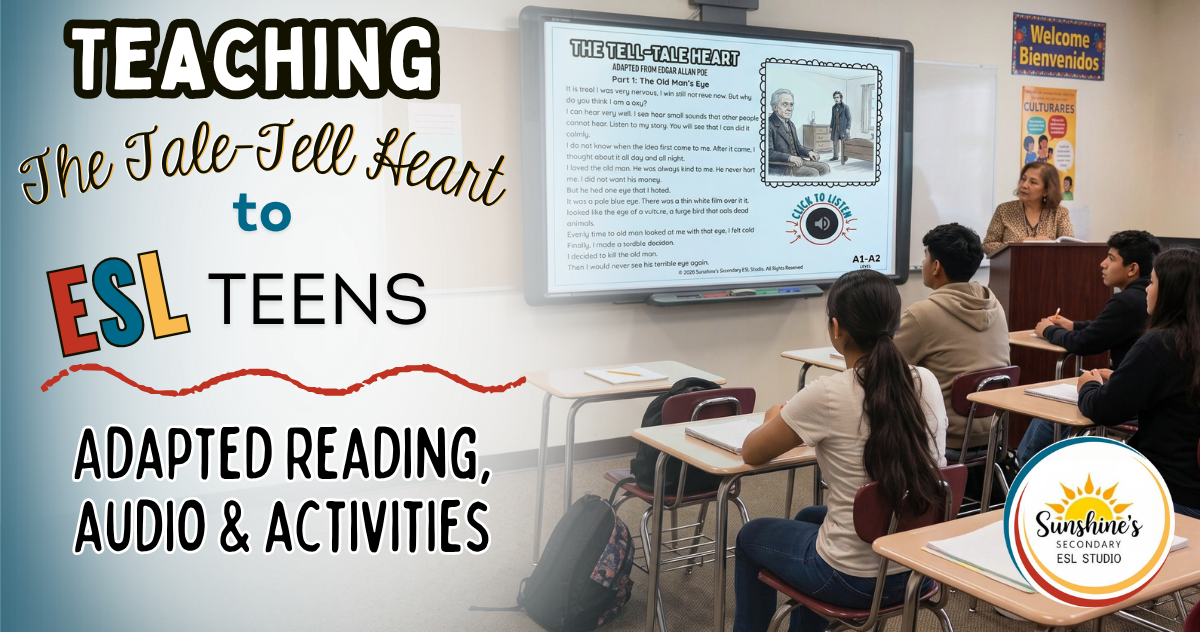
Teaching The Tell-Tale Heart to ESL Teens: Adapted Reading, Audio & Activities
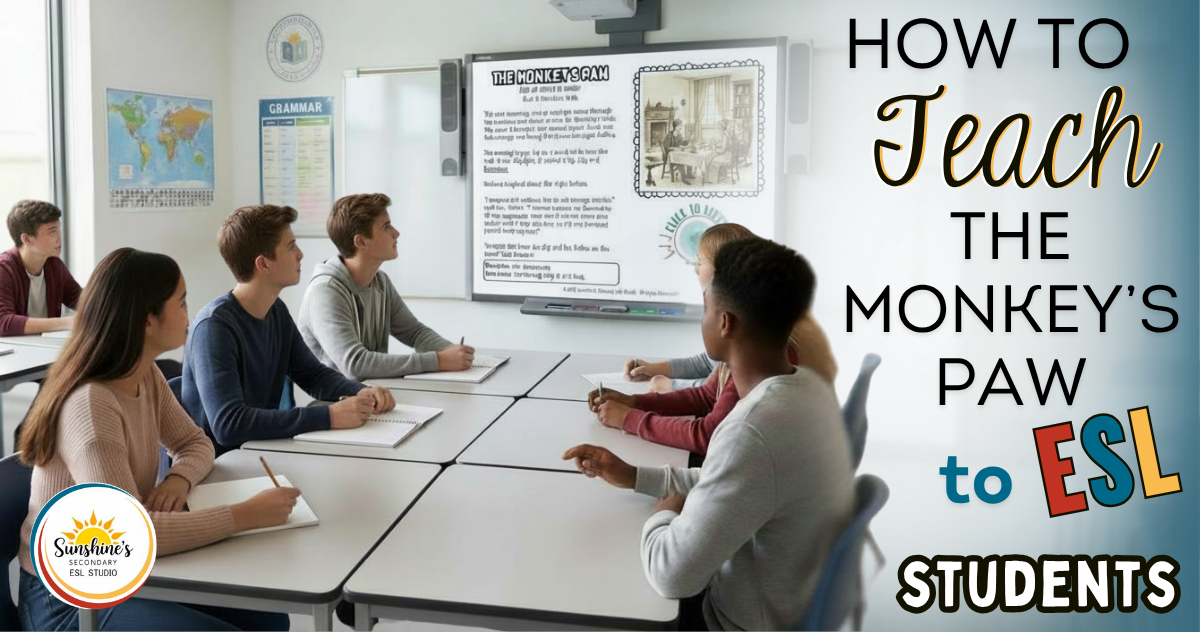
The Monkey’s Paw ESL: How to Teach the Classic Short Story to English Learners
Beginning-of-Year ESL Assessments for High School Students