
Looking for meaningful Hispanic Heritage Month ESL activities that go beyond basic worksheets and simple holiday lessons?
Every year, I want my students to do more than memorize facts. I want them reading engaging nonfiction, discussing important cultural traditions, building academic vocabulary, and developing stronger writing skills. Hispanic Heritage Month provides the perfect opportunity to do all of those things while helping students learn about influential Hispanic and Latino individuals and traditions.
As ESL teachers, we often face a challenge: finding resources that are rigorous enough for secondary students while still being accessible for English learners. That’s exactly why I created a growing collection of Hispanic Heritage Month ESL activities designed specifically for middle and high school multilingual learners.
These resources combine reading, listening, vocabulary development, comprehension, and writing practice into lessons that are both culturally relevant and academically meaningful.
Start with Two Free Hispanic Heritage Month ESL Activities
Before exploring the full collection, grab two free resources that your students can start using immediately.
Free Celia Cruz ESL Biography
Students learn about the life and legacy of Celia Cruz, the Queen of Salsa. This resource includes leveled reading passages, vocabulary support, comprehension questions, and writing activities designed for English learners.
FREE Sample – Celia Cruz ESL Biography & Comprehension Questions (A2/B1)
Free Día de los Muertos Informational Text
Students explore the traditions and meaning behind Día de los Muertos while practicing important reading comprehension and vocabulary skills.
FREE Sample – Día de los Muertos ESL Informational Text & Comprehension (A2/B1)
Both resources include audio support through QR codes, making them especially helpful for multilingual learners who benefit from listening while reading.
If you’re looking for additional free reading resources, be sure to check out my article on Free ESL Reading Samples for High School Students:
Why Hispanic Heritage Month ESL Activities Matter
One of the most effective ways to increase student engagement is to help students see themselves reflected in classroom materials.
Many of our students come from Hispanic and Latino backgrounds. When they encounter texts that celebrate their cultures, traditions, and histories, learning becomes more meaningful. Even students from other backgrounds benefit because they gain new perspectives and build cultural understanding.
This idea connects closely to what I discuss in my article about Culturally Responsive Teaching for ESL Teens:
When students feel represented, they are often more willing to participate in discussions, take risks with language, and engage deeply with texts.
Balancing Rigor and Accessibility
One common misconception is that English learners only need simplified materials.
In reality, students need access to rigorous content along with the scaffolds necessary to succeed. Strong Hispanic Heritage Month ESL activities should challenge students to think critically while providing support for language development.
That’s why every resource in this collection includes leveled texts, vocabulary support, comprehension questions, and evidence-based writing opportunities.
If you’d like to learn more about this topic, I recommend reading Why Rigor in ESL Looks Different:
What Makes These Hispanic Heritage Month ESL Activities Different?
Leveled Reading Passages
Every resource includes:
- A2/B1 version
- B2 version
This allows teachers to support newcomers, intermediate learners, and advanced English learners using the same lesson topic.
For additional differentiation strategies, visit:
Vocabulary and Context Clues Practice
Students encounter academic and cultural vocabulary before and during reading. Instead of simply memorizing definitions, they learn how to determine meaning through context.
Vocabulary development is one of the strongest predictors of reading success. If you’re looking for more ideas, check out:
Reading Comprehension Skills
Every reading includes comprehension questions that require students to:
- Identify central ideas
- Cite textual evidence
- Make inferences
- Analyze details
- Draw conclusions
These are the same skills students need for state assessments and academic success.
You may also enjoy my article about:
Short Constructed Response Writing
Students don’t simply answer questions—they explain their thinking using evidence from the text.
Each resource includes:
- Graphic organizers
- Sentence stems
- Rough draft planning
- Final draft writing page
This structure helps students develop confidence with academic writing while maintaining high expectations.
For additional writing support strategies, visit:
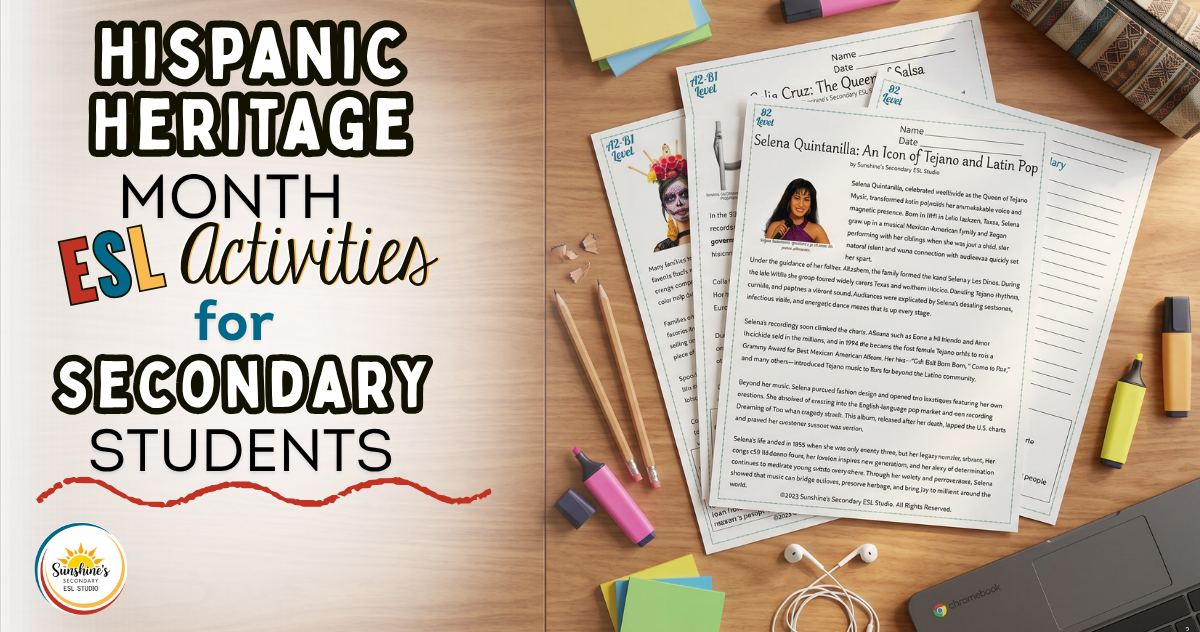
Current Hispanic Heritage Month ESL Activities Available
Celia Cruz: The Queen of Salsa
Students learn how Celia Cruz used music to celebrate Cuban culture and inspire generations around the world.
Celia Cruz ESL Biography – Leveled Reading, Comprehension & STAAR-Style Writing
Día de los Muertos: Honoring Loved Ones
Students explore one of Mexico’s most recognized cultural traditions while practicing reading and writing skills.
This lesson pairs perfectly with my blog post:
Halloween + Día de los Muertos ESL Informational Texts with Audio
Selena Quintanilla Biography
Students learn about Selena’s impact on music, culture, and representation while strengthening literacy skills through engaging reading and writing activities.
Selena Quintanilla ESL Biography Reading with Audio & Activities
For additional ideas about teaching biographies in ESL classrooms, visit:
Audio Support for Multilingual Learners
One feature teachers consistently appreciate is the built-in audio support.
Students can listen while reading, replay difficult sections, and improve listening comprehension alongside reading comprehension.
Audio support is especially valuable for newcomers and students developing reading fluency.
You can learn more about using audio with English learners in:
ESL Listening Activities for High School
and
Using QR Codes for ESL Listening Practice
Perfect for Hispanic Heritage Month and Beyond
Although many teachers use these lessons during Hispanic Heritage Month, they work throughout the school year.
These resources are ideal for:
- Whole-class reading lessons
- Small-group instruction
- Guided reading
- Newcomer support
- Literacy centers
- Independent practice
- Emergency sub plans
Because every resource includes printable and digital options, they are easy to implement with very little preparation.
Looking Ahead
My goal is to continue expanding this collection of Hispanic Heritage Month ESL activities and culturally responsive reading resources.
Future topics may include:
- Athletes
- Scientists
- Artists
- Activists
- Musicians
- Historical figures
- Cultural celebrations
I’d love to hear which Hispanic and Latino figures your students would most enjoy learning about. Leave a comment below and share your suggestions.
Final Thoughts
The best Hispanic Heritage Month ESL activities do more than celebrate culture. They help students build vocabulary, strengthen reading comprehension, improve writing skills, and develop a deeper understanding of the world around them.
By combining leveled reading passages, audio support, vocabulary development, comprehension practice, and evidence-based writing, these resources provide meaningful literacy instruction while celebrating Hispanic and Latino cultures.
Start by downloading the free Celia Cruz and Día de los Muertos resources, then explore the growing collection of Hispanic Heritage Month ESL activities designed specifically for secondary English learners.