


Estimated reading time: 5 minutes
When teaching ESL high school pronunciation, many teachers struggle to find a system that works for adolescent learners. Pronunciation often gets pushed aside in secondary ESL classrooms—not because it isn’t important, but because it can feel awkward to teach, difficult to assess, and stressful for students.
Unlike reading and writing, pronunciation growth is not always visible. Without a clear way to monitor progress, teachers may feel unsure whether their instruction is actually helping students improve. This is especially true in mixed-level classrooms where students arrive with very different language backgrounds.
This post shares a practical, low-pressure system for teaching pronunciation in high school ESL—one that respects students’ confidence, uses existing proficiency data, and allows growth to be measured over time.
Teaching ESL High School Pronunciation Starts With Knowing Students’ Language Levels
When students begin in an ESL program, most states assess them to determine their current English proficiency level. Newcomers are often tested upon enrollment, and returning ESL students typically arrive with data from a state language assessment such as TELPAS or WIDA.
These assessments provide a baseline for understanding students’ overall language ability. Instead of ignoring this data, I use it to guide how I approach teaching ESL high school pronunciation.
Students begin pronunciation assessment at the level that reflects their language development:
- A1
- A2
- B1
- B2
Starting at the appropriate level ensures that pronunciation instruction feels achievable rather than overwhelming.
Why Pronunciation Is Often Ignored in Secondary ESL Classrooms
Pronunciation is frequently overlooked at the secondary level due to time constraints, large class sizes, and student anxiety around speaking. Many available resources are designed for young learners and don’t translate well to a high school setting.
When teaching ESL high school pronunciation, the goal is not accent removal or perfection. The goal is intelligibility—helping students be understood and feel confident using English in academic and social settings.
This distinction is critical, especially for teens who are highly aware of how they sound when speaking.
What Pronunciation Progress Monitoring Really Means
Pronunciation progress monitoring is not about correcting every sound during speaking activities. Instead, it is a structured way to track improvement over time using consistent, repeatable assessments.
Effective pronunciation monitoring:
- Focuses on intelligibility
- Uses the same format multiple times per year
- Keeps assessment private and low-stress
- Allows students to hear their own growth
This approach aligns well with how adolescents learn and builds trust between teacher and student.
A Practical System for Teaching ESL High School Pronunciation With Mixed Proficiency Levels
Instead of testing every phonetic sound or moving the entire class through the same phonics lessons, I developed a leveled pronunciation assessment system aligned to student proficiency.
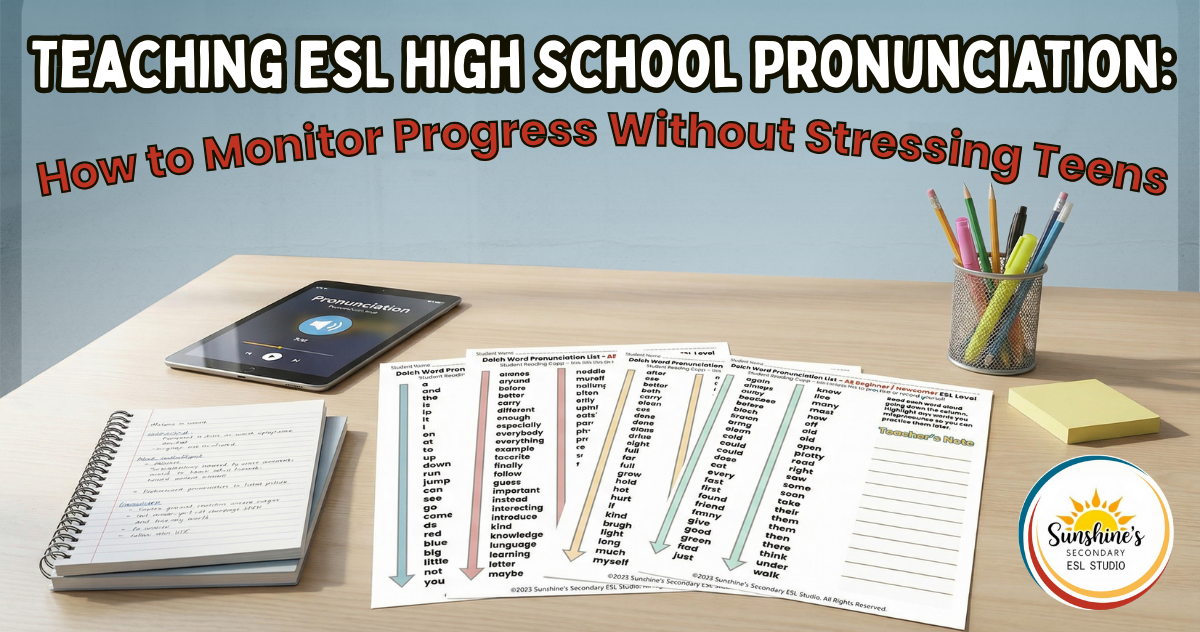
Each student receives an individualized word list that matches their current language level. These word lists are built using high-frequency Dolch sight words—not because they are simplistic, but because they are foundational to spoken English.
Pronunciation challenges often appear in common words students use daily. Addressing these words improves fluency, confidence, and comprehension across skills.
Why Dolch Sight Words Work for ESL Teens
Dolch sight words are sometimes dismissed as “elementary,” but in reality, they represent some of the most frequently used words in spoken and written English.
For secondary ESL students:
- These words appear constantly in oral reading
- They impact speaking fluency
- They influence how confident students feel when communicating
Using leveled, high-frequency vocabulary allows pronunciation practice to feel relevant rather than remedial.
Using Audio Recordings to Reduce Anxiety
After receiving their individualized word list, students record themselves reading the list aloud. This can be done one-on-one with the teacher, but I prefer using free audio tools such as Vocaroo.
Recording instead of reading aloud:
- Reduces anxiety
- Removes peer pressure
- Allows students to focus on pronunciation
Teachers can listen later, which makes assessment more manageable and consistent.
Teaching ESL High School Pronunciation Through Individual Conferences
Once recordings are reviewed, I meet briefly with students to discuss patterns and areas for improvement. Because feedback is based on their own recording, students are more receptive and engaged.
This process helps students understand:
- Which sounds they struggle with
- Why support is needed
- What their next steps should be
Pronunciation instruction becomes collaborative rather than corrective.
Why Whole-Class Phonics Often Fails at the Secondary Level
Traditional ESL programs often use whole-class phonics instruction, which can be ineffective in mixed-level high school classrooms.
Students who already know certain sounds may disengage, while others may feel embarrassed needing foundational support. This dynamic can negatively impact classroom culture.
When teaching ESL high school pronunciation, individualized instruction is essential.
Tracking Pronunciation Growth Over the School Year
To make progress visible, students complete the same pronunciation assessment three times per year:
- Beginning of year
- Middle of year
- End of year
Using the same word list allows students to clearly hear their improvement and builds confidence over time.
How Teaching ESL High School Pronunciation Supports Speaking and Confidence
As students become more confident in how they sound, they are more willing to participate in discussions, read aloud, and take academic risks.
Pronunciation progress supports:
- Speaking confidence
- Listening comprehension
- Reading fluency
- Classroom engagement
Common Mistakes When Teaching ESL High School Pronunciation
Some common pitfalls include:
- Correcting pronunciation constantly during speaking
- Using random word lists
- Assessing pronunciation only once
- Treating pronunciation as an add-on
A consistent, leveled system avoids these issues and provides meaningful data.
Frequently Asked Questions About Teaching ESL High School Pronunciation
Is Dolch appropriate for teens?
Yes, when used intentionally and at appropriate proficiency levels.
How often should pronunciation be assessed?
Three times a year provides clear growth data without overwhelming students.
Does this replace speaking assessments?
No. It complements them by focusing specifically on pronunciation.
Final Thoughts on Teaching ESL High School Pronunciation
Teaching pronunciation in secondary ESL does not have to be stressful or uncomfortable. With the right system, pronunciation instruction becomes individualized, respectful, and empowering.
When teaching ESL high school pronunciation, growth matters—but so does student dignity. A leveled, repeatable assessment system allows students to see their progress, take ownership of their learning, and build confidence over time.