

Estimated reading time: 5 minutes
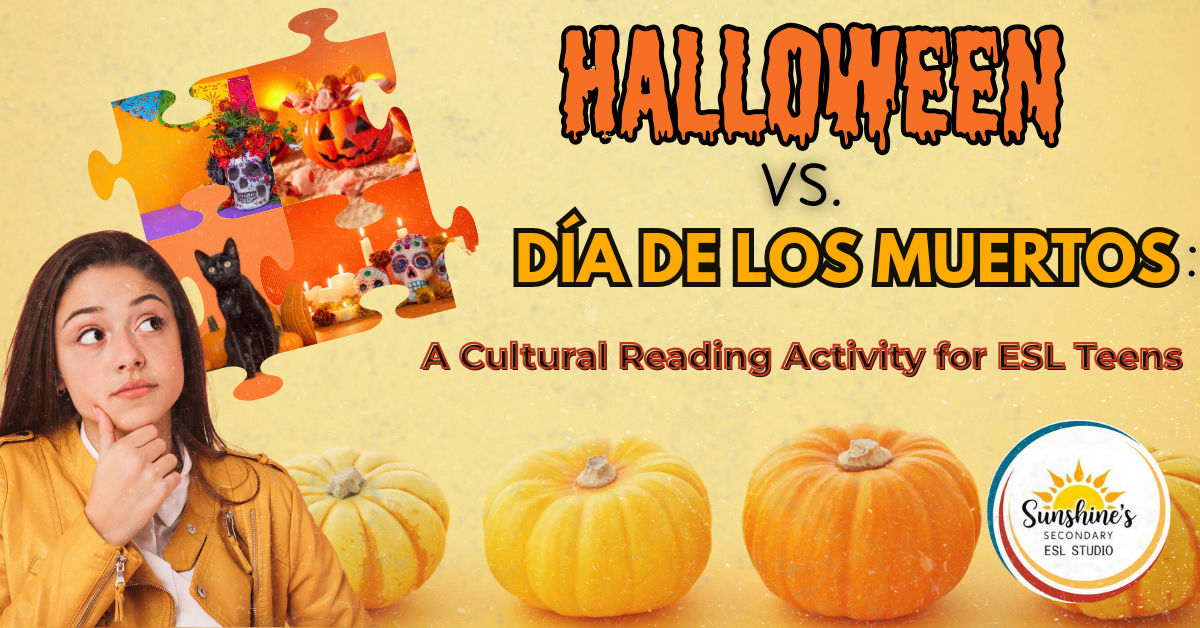
Holidays are always a powerful way to engage ESL students, but some are especially rich in cultural meaning. Two of the most fascinating fall traditions are Halloween and Día de los Muertos, and exploring them side by side can create an unforgettable learning experience. For ESL teens, this type of compare and contrast Halloween and Día de los Muertos ESL activity builds not just language skills, but also cultural understanding and critical thinking. Therefore, incorporating a Halloween vs Día de los Muertos ESL lesson can be particularly enriching.
In this post, I’ll share how you can structure a classroom lesson around these holidays, why comparison activities are so effective, and how my ready-to-use resources can save you hours of prep.
Why Use Cultural Holidays in ESL Classrooms?
Teen learners are naturally curious about holidays, especially ones tied to legends, traditions, and visuals. Discussing cultural celebrations like Halloween and Día de los Muertos allows students to:
- Build background knowledge about widely celebrated traditions in the U.S. and Latin America.
- Engage with academic vocabulary (superstition, symbolism, remembrance, tradition, etc.).
- Practice critical reading skills through informational texts that are accessible but challenging.
- Connect personally by comparing traditions to their own cultural celebrations.
This makes October and early November a perfect time to bring these themes into your classroom.
The Power of Compare and Contrast in ESL Lessons
One of the most effective strategies for language development is teaching students to compare and contrast. When students analyze similarities and differences, they:
- Strengthen comprehension by noticing details.
- Use higher-order thinking skills (analysis, evaluation).
- Practice transition language such as both, however, while, in contrast.
- Write stronger constructed responses aligned with STAAR and other state standards.
That’s why I designed my Halloween vs. Día de los Muertos bundle to center on paired texts and writing tasks that guide students through this very skill.
A Step-by-Step Plan for Teaching Halloween vs. Día de los Muertos
Here’s a sample sequence you can adapt for your ESL classroom:
1. Build Curiosity with an Anticipation Guide
Before reading, give students agree/disagree statements like:
- All cultures celebrate holidays about life and death.
- Halloween and Día de los Muertos are the same thing.
- Traditions help us remember important values.
This activates prior knowledge and gives students a reason to read.
2. Provide Accessible Informational Texts
Give students leveled passages about Halloween and Día de los Muertos. In my bundle, both readings are written at two levels (A2–B1 and B2), with embedded audio so even newcomers can follow along. This ensures all learners can participate meaningfully.
3. Teach Key Vocabulary in Context
Highlight academic words students will encounter, such as altar, superstition, bonfire, remembrance, ancestors. Provide visuals or sentence frames so students can use the terms in discussion.
4. Guide Students in Compare and Contrast
Use a Venn diagram or T-chart to record similarities and differences between the two holidays. Encourage discussion:
- Both holidays involve nighttime traditions.
- Halloween is associated with fear, while Día de los Muertos focuses on remembrance.
This structured note-taking prepares them for writing.
5. Scaffold a Short Constructed Response (SCR)
Provide a graphic organizer for students to draft their response:
Prompt: Compare and contrast Halloween and Día de los Muertos. How are these holidays similar, and how are they different?
Students can cite details from both texts, then move to a final draft page. My bundle includes both rough draft organizers and polished final draft sheets.
6. Wrap Up with Reflection and Sharing
Have students share their responses in pairs or small groups. Encourage them to also discuss cultural holidays they celebrate in their own families, creating personal connections.
Using a Halloween vs Día de los Muertos ESL Lesson to Build Critical Thinking
This lesson taps into three powerful teaching moves:
- Cultural Relevance – Students are naturally engaged by holidays and traditions.
- Scaffolding – Leveled texts, audio, and guided organizers mean all learners can succeed.
- Academic Rigor – Students aren’t just celebrating a holiday; they’re practicing TEKS-aligned skills like reading informational texts and writing constructed responses.
For teachers, it means you can check off standards and keep students engaged.
Try a Free Día de los Muertos Lesson
If you’d like a no-prep way to test this approach, I offer a Día de los Muertos freebie that includes a leveled reading passage, comprehension questions, and an answer key. It’s perfect for introducing the holiday in your classroom and seeing how your students respond to culturally relevant informational texts.
Download the free Día de los Muertos sample here! FREE Sample – Día de los Muertos ESL Informational Text & Comprehension (A2/B1)
Take It Further with the Halloween vs. Día de los Muertos Bundle
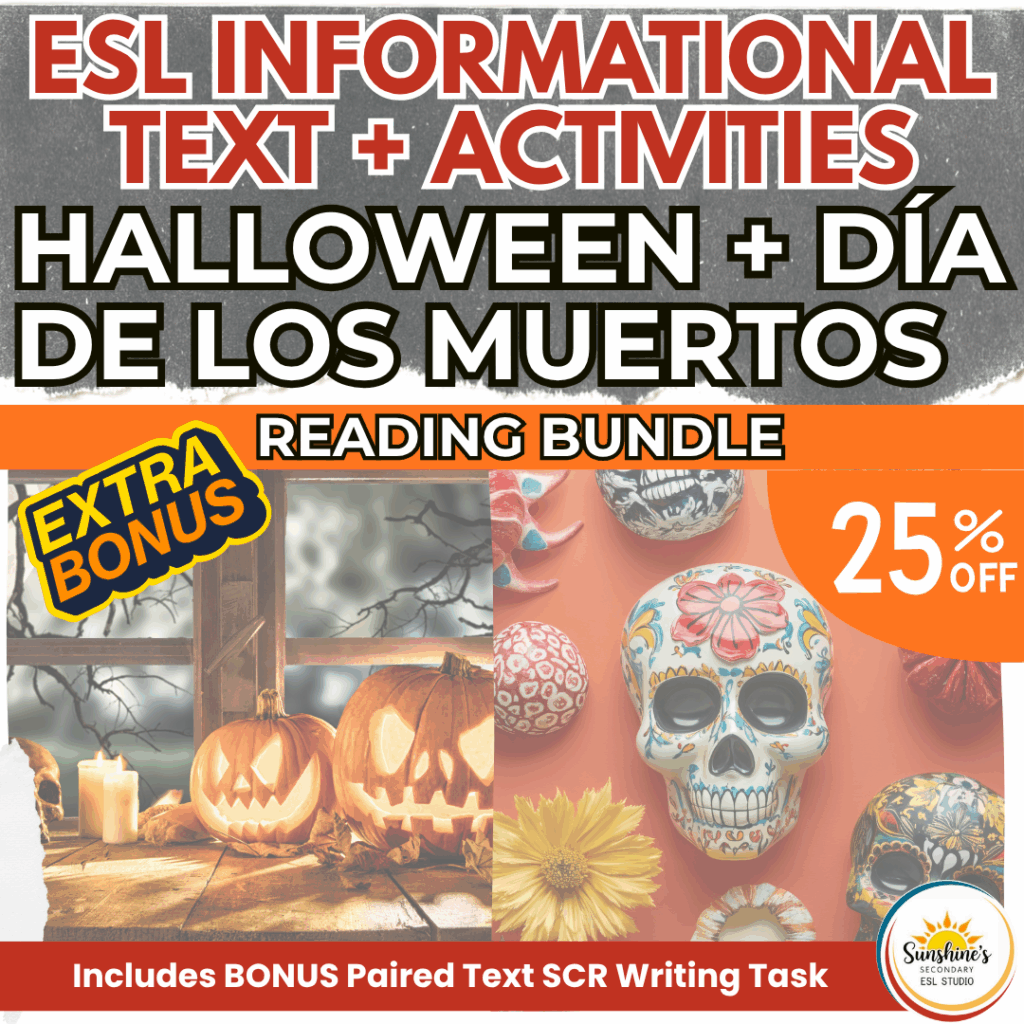
If you want to save time and give your students the full cultural reading experience, my Halloween vs. Día de los Muertos Reading Bundle has everything ready for you:
- Two holiday readings at two levels (A2–B1 and B2)
- Audio embedded in Google Slides & PowerPoint plus standalone audio files
- Comprehension questions with answer keys
- Context clues practice activities
- Short Constructed Response (SCR) organizers and final draft sheets
- Bonus paired-text writing activity to compare both holidays
Available in print, Google Slides, and PowerPoint, this bundle takes the stress out of October planning while engaging your students in meaningful, culturally rich lessons.
Conclusion: Make Fall Lessons Memorable
Seasonal holidays don’t have to be fluff activities. With the right structure, they can build reading comprehension, writing fluency, and cultural awareness. A compare and contrast Halloween and Día de los Muertos ESL activity not only makes October lessons fun, but also challenges your ESL teens to think critically and write effectively.
Start with the free Día de los Muertos sample to introduce the holiday, and when you’re ready, dive into the full bundle for a complete compare/contrast lesson that your students will remember.