
One of the best parts of teaching ESL is helping students connect with literature that actually resonates with them. But let’s be honest—not every story clicks right away, especially for multilingual learners.
That’s why a strong By Any Other Name ESL lesson can make such a difference.
With the right scaffolds in place, this story becomes more than just a reading—it becomes a way for students to explore identity, culture, and belonging in a way that feels personal and relevant.
If you’re working with students who need support accessing literature, this pairs well with strategies like these: How to Support ESL Students During Novel Studies
Why By Any Other Name Works for ESL Teens
This story follows two sisters navigating a British-run school in India, but what really connects with students is the moment they are forced to give up their names.
That loss of identity? Your students feel it immediately.
Many ESL teens are already balancing multiple languages, cultures, and expectations. When they see that reflected in a text, engagement goes way up.
This kind of connection is a big part of culturally responsive teaching—something I dive deeper into here: Culturally Responsive Teaching for ESL Teens
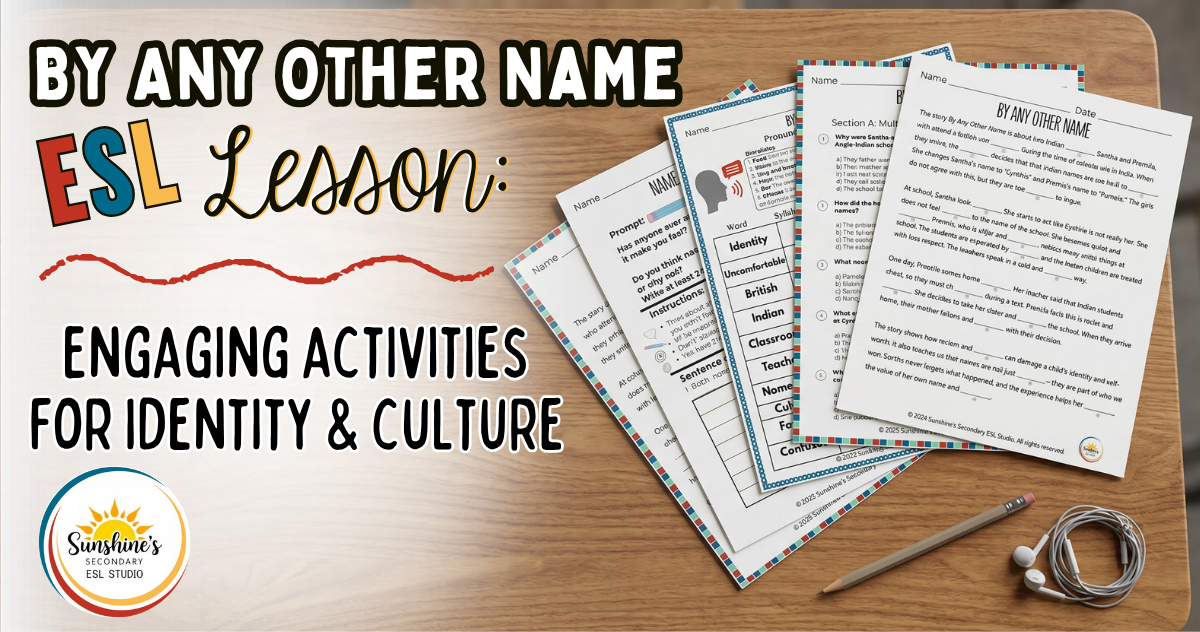
How I Structure My By Any Other Name ESL Lesson
To make sure students don’t get overwhelmed by language, I break this lesson into clear, scaffolded pieces that build on each other.
Cloze Listening Activity (Build Background First)
I always start with a listening-based entry point.
Students listen to a short summary and fill in missing words as they go. This helps them:
- focus on key vocabulary
- build listening accuracy
- understand the story before reading
This type of activity is especially helpful if your students struggle with listening comprehension: Cloze Listening Activities for ESL
Speaking & Listening Activities (Make It Personal)
Once students understand the story, we shift into discussion.
Prompts like:
- What does your name mean to you?
- Would you ever change your name to fit in?
These conversations get real very quickly—and that’s where engagement spikes.
If your students need support with speaking, sentence frames like these can help: Free ESL Sentence Starters for Teens
You can also build confidence with structured routines: How to Build ESL Speaking Routines
Reading & Writing (Analyze Identity & Point of View)
Next, we move into deeper thinking.
Students analyze how the narrator’s perspective shifts and reflect on their own experiences with identity.
This is where you start to see real growth—not just in language, but in confidence.
If you’re building writing skills, these strategies can support that transition: ESL Writing Support Strategies
Comprehension Check (Keep It Low-Stress)
Finally, I use a simple comprehension check to assess understanding.
Nothing high-pressure—just a mix of:
- literal questions
- inferential thinking
- quick review
This works well for:
- quick grades
- review days
- sub plans: ESL Sub Plans: Easy No Prep for Secondary
Want Everything Ready to Go?
If you prefer having everything organized in one place, I’ve bundled all of these activities together so you can teach this story without scrambling to piece it together.
You can see the full set here: By Any Other Name ESL Resource Bundle | B1 Reading, Listening, Speaking, Writing
Final Thoughts
A strong By Any Other Name ESL lesson isn’t just about comprehension—it’s about connection.
When students see themselves reflected in a story, everything changes:
- engagement increases
- discussions become meaningful
- language use becomes more natural
If you’re looking to bring literature to life in your ESL classroom, this is one of those stories that truly delivers.