


Estimated reading time: 7 minutes
Dear New ESL Teacher, here are some valuable first week tips for new ESL teachers to help you navigate the beginning of your teaching journey.
Welcome! Whether you’re fresh from certification, moving from general ed, or stepping into your first ESL classroom ever — you’re in the right place. ESL teaching is a rewarding journey, but the first week can be overwhelming. If you’re searching for first week tips new ESL teachers actually use in real classrooms, you’re in the right spot.
You’re not just setting up routines and passing out syllabi — you’re building trust across cultures, languages, and skill levels. And when you’re brand new, it’s easy to make a few rookie mistakes. Don’t worry — we all do. But by being aware of the most common missteps, you can start your year with confidence and connection.
Here are 10 of the biggest first week tips new ESL teachers can use to avoid common mistakes and build a stronger classroom from day one.
Mistake #1: Coming Off Too Strict or Too Laid-Back
Many new teachers try to “establish control” by being extra serious — or go the other way and try to win students over by being the fun, chill teacher. But extremes don’t build trust.
What to Do Instead:
Be warm and firm. Set clear expectations, establish consistent routines, and show your personality in small moments. Your ESL students will thrive in an environment that feels both safe and respectful.
Mistake #2: Skipping Cultural and Personal Connections
When students feel unseen, they disengage — and in ESL classrooms, that’s a fast track to silence. If we don’t make the effort to learn about their lives, cultures, and identities, we miss out on powerful connection points.
What to Do Instead:
Learn your students’ names and how to pronounce them correctly. Ask about their families, interests, and dreams. Incorporate multicultural texts, music, and visuals when possible. Even a small nod to who they are can make a big impact.
Mistake #3: Enforcing an English-Only Classroom
While immersion sounds ideal in theory, an English-only policy often increases student anxiety and alienates their native languages — which are powerful tools for learning.
What to Do Instead:
Encourage English use during instruction, but also allow students to think, write, or brainstorm in their home language. Use translation apps, bilingual dictionaries, and side-by-side supports. Honoring their full linguistic identity helps students feel valued and seen.
Tech Tip: While we don’t want to lean on technology for everything, it can be a powerful support. I recently wrote about teaching teens in the age of AI, and how ESL teachers can use tools wisely without replacing authentic communication.
Mistake #4: Speaking Too Fast
New teachers often speak too quickly — whether out of nerves or habit. But for students still learning English, rapid speech can be overwhelming and discouraging.
What to Do Instead:
Slow it down. Pause between instructions. Repeat key ideas. Pair your speech with visuals or gestures to reinforce meaning. Your clarity is more important than your pace.
Mistake #5: Not Facing the Room While Speaking
It’s easy to start explaining something while writing on the board or looking at your screen — but this makes it nearly impossible for ESL students to understand you.
What to Do Instead:
Always face the class when speaking. Use your facial expressions, body language, and eye contact to help them process what you’re saying. You are one of their most important visual cues.
Mistake #6: Using English That’s Too Advanced
Even if you’re speaking slowly, the level of vocabulary you use might still be too high. Academic or abstract words early on can confuse students and make them feel like they’re already behind.
What to Do Instead:
Use simple, clear vocabulary during the first week. Provide definitions, visuals, or gestures to support new terms. Rephrase explanations when needed, and model responses often. Scaffold, don’t simplify.
Mistake #7: Watering Down the Content
One of the biggest misconceptions is that ESL students can’t handle grade-level content. New teachers sometimes hand out babyish worksheets or fill time with fluff.
What to Do Instead:
Believe in your students’ ability to rise to high expectations — with proper supports. Use grade-level content, but scaffold it with sentence stems, guided notes, bilingual glossaries, and group work. The goal is access, not avoidance.
Mistake #8: Not Giving Enough Wait Time (or Peer Processing Time)
When you ask a question and no one answers right away, it’s tempting to move on — or give the answer yourself. But ESL students need extra time to process the question, translate their thoughts, and respond in English.
What to Do Instead:
Ask a question and then wait. Count to five in your head (or longer). Let students think — it helps reduce panic and builds speaking confidence.
Better yet, build in short peer discussions first. Give students time in small groups to talk about the question in their native language or using sentence stems you’ve provided. They can help each other work through the question, clarify meaning, and agree on a response. Then, when you call on someone, they’re not caught off guard — they’re prepared and empowered.
Mistake #9: Giving Long Lectures in English
If your first few days are full of long English lectures, even your most motivated students may tune out. Language learners struggle to hold on to meaning when input isn’t chunked or interactive.
What to Do Instead:
Break your talking into small, manageable chunks. Use visuals, anchor charts, and sentence frames. Let students practice language by doing — pair discussions, sorting activities, drawing tasks, or group projects. The more interactive, the better.
Mistake #10: Defaulting to Rows or Poorly Planning Seating
Traditional rows can feel isolating and passive. But even in group seating, throwing students together without thinking about language levels or comfort zones can backfire — especially if a high-level speaker is expected to “help” a beginner.
What to Do Instead:
Be intentional about seating. It’s okay (and often better) to group beginners together so they feel safe and supported. When mixing levels, be sure to structure roles and expectations. Group work only works when all students feel comfortable contributing.
Final Thoughts
Here’s the truth: You’re going to make mistakes. That’s okay. It’s not about being perfect — it’s about being present, reflective, and committed to your students.
And if you need more first week tips new ESL teachers can apply right away, come back to this post any time. You’ve got this — and your students are lucky to have you.
If you want a ready-to-go bundle that pulls together all the essentials, I’ve got it here.
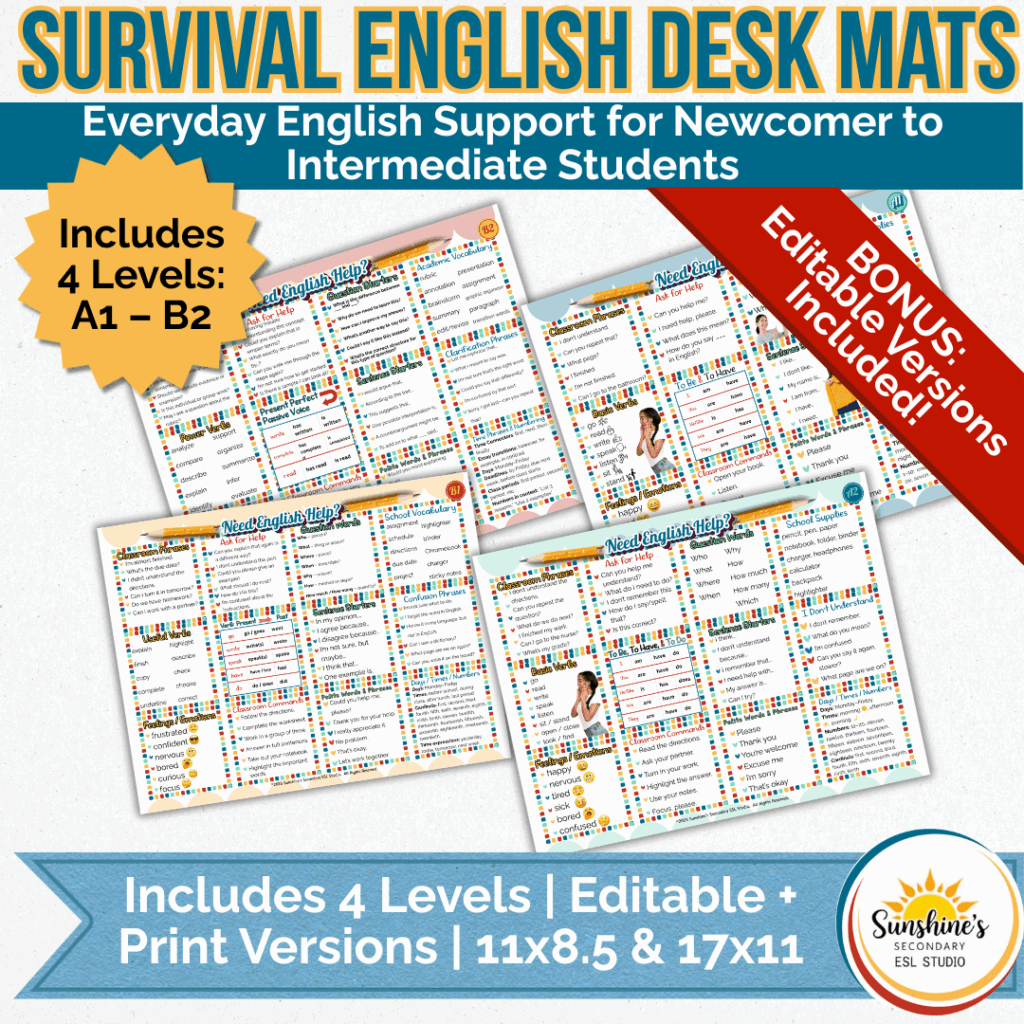
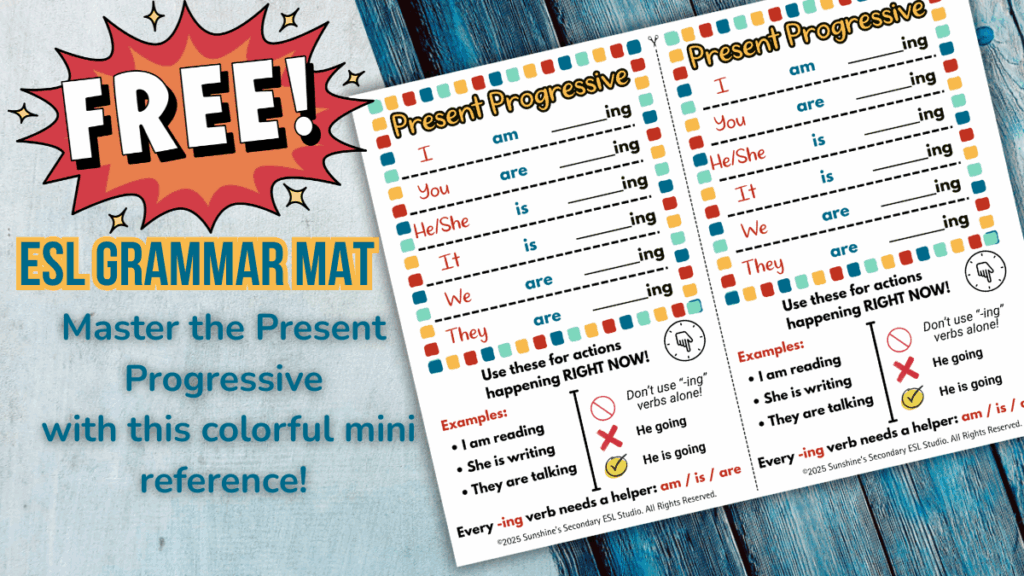
Looking for extra support your first week? Grab my free ESL Desk Mat or explore my ready-to-use First Week ESL Bundle — designed to build confidence, routines, and connection from day one.