

Estimated reading time: 5 minutes
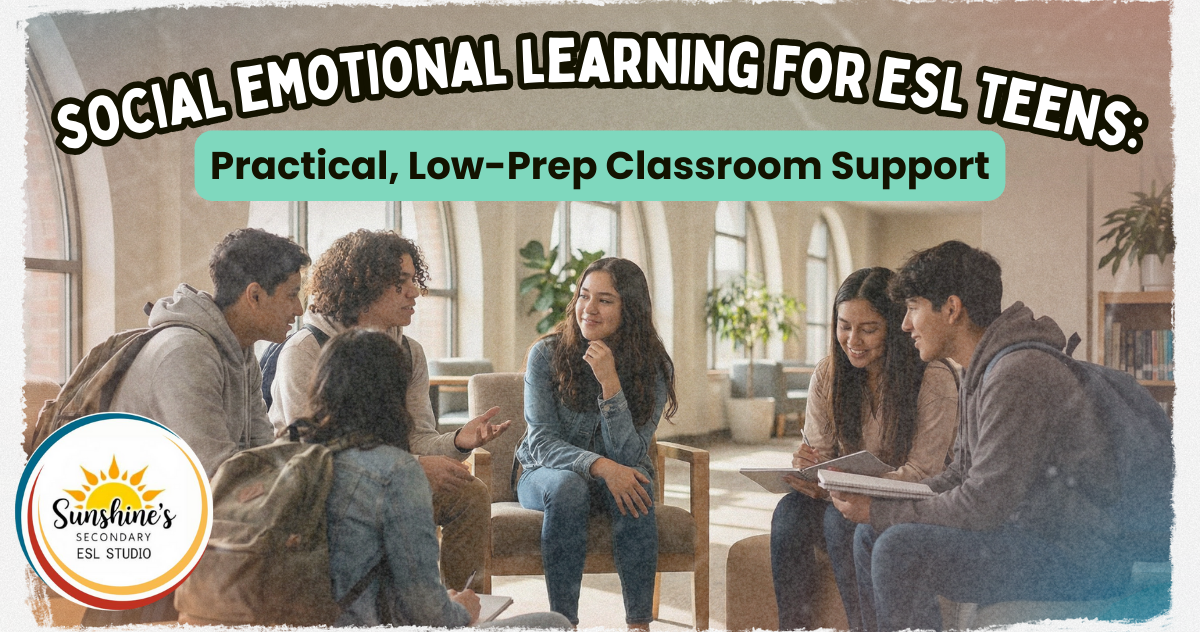
Social Emotional Learning for ESL teens often looks different than SEL in general education classrooms—and that’s exactly why it deserves a more intentional approach. ESL teens are learning academic English while also navigating new social norms, cultural expectations, and emotional challenges. When Social Emotional Learning for ESL teens is designed with language development in mind, it supports both emotional growth and academic success.
In secondary ESL classrooms, effective SEL instruction is structured, age-appropriate, and accessible. When done well, it helps students build confidence, manage emotions, and communicate more effectively—without adding stress or awkward moments.
Why Social Emotional Learning for ESL Teens Matters
By middle and high school, social and emotional skills directly impact student behavior, engagement, and academic performance. For ESL teens, these skills are especially important because language barriers can make emotions harder to express and misunderstandings more common.
Social Emotional Learning for ESL teens supports students who may:
- Feel anxious participating in class discussions
- Struggle to express emotions in English
- Experience frustration during language learning
- Misinterpret peer interactions or expectations
Intentional SEL instruction helps ESL teens develop both the language and strategies needed to navigate these challenges successfully.
Why Traditional SEL Activities Don’t Always Work for ESL Teens
Many SEL lessons rely heavily on open-ended discussion, abstract reflection, or spontaneous speaking. While well-intentioned, these activities can overwhelm ESL teens who are still developing academic and social language.
For Social Emotional Learning for ESL teens to be effective, instruction should:
- Use clear, scaffolded language
- Provide context before personal reflection
- Allow students to engage without pressure to share personal experiences
- Offer structured opportunities to practice language skills
This is where informational texts become a powerful tool.
Using Informational Texts for SEL instruction for ESL teens
Informational texts provide a low-risk, language-supported entry point into SEL topics. Instead of starting with personal reflection, students first learn about a concept—what it is, why it matters, and how it applies to real-life situations.
Using informational texts for Social Emotional Learning for ESL teens allows students to:
- Build academic and SEL-related vocabulary
- Practice reading comprehension with predictable structure
- Engage with SEL content in a safe, objective way
- Transition naturally into discussion or writing
When paired with audio support, these texts also strengthen listening skills and improve accessibility for multilingual learners.
High-Impact SEL in secondary ESL classrooms
Certain SEL topics consistently resonate with secondary ESL students because they connect directly to school, relationships, and language learning.
Emotional Regulation
Emotional regulation helps ESL teens recognize and manage strong feelings, especially during stressful academic or social situations. Explicit instruction gives students language for emotions and strategies for responding calmly.
Coping Skills
Coping skills instruction helps ESL teens manage stress, anxiety, and pressure in healthy ways. These lessons provide practical strategies students can use both in and out of the classroom.
Growth Mindset
Growth mindset is especially powerful for ESL teens, who often feel discouraged when learning a new language. This topic helps students understand that effort, mistakes, and persistence are part of the learning process.
Conflict Resolution
Conflict resolution instruction gives ESL teens the language and tools to solve problems respectfully and communicate clearly with peers and adults.
Keeping SEL in secondary ESL classrooms Low-Prep
One of the biggest challenges teachers face is time. Social Emotional Learning for ESL teens should feel manageable and sustainable—not like an extra burden.
SEL instruction works best when it:
- Follows a consistent structure
- Integrates reading, listening, and writing
- Can be taught in short, focused lessons
- Supports classroom routines and expectations
Low-prep, structured SEL resources allow teachers to focus on instruction instead of preparation.
Bringing SEL and Language Development Together
In ESL classrooms, SEL is most effective when it supports language development rather than competing with it. Informational texts allow students to build literacy skills while engaging with meaningful Social Emotional Learning topics.
That’s why I created Social Emotional Learning informational texts designed specifically for ESL teens. Each resource uses accessible language, predictable structure, and audio support to help students engage confidently.
You may want to start with individual topics such as:
- Emotional Regulation for ESL Teens
- Coping Skills for ESL Teens
- Growth Mindset for ESL Teens
- Conflict Resolution for ESL Teens
A Complete SEL instruction for ESL teens Bundle
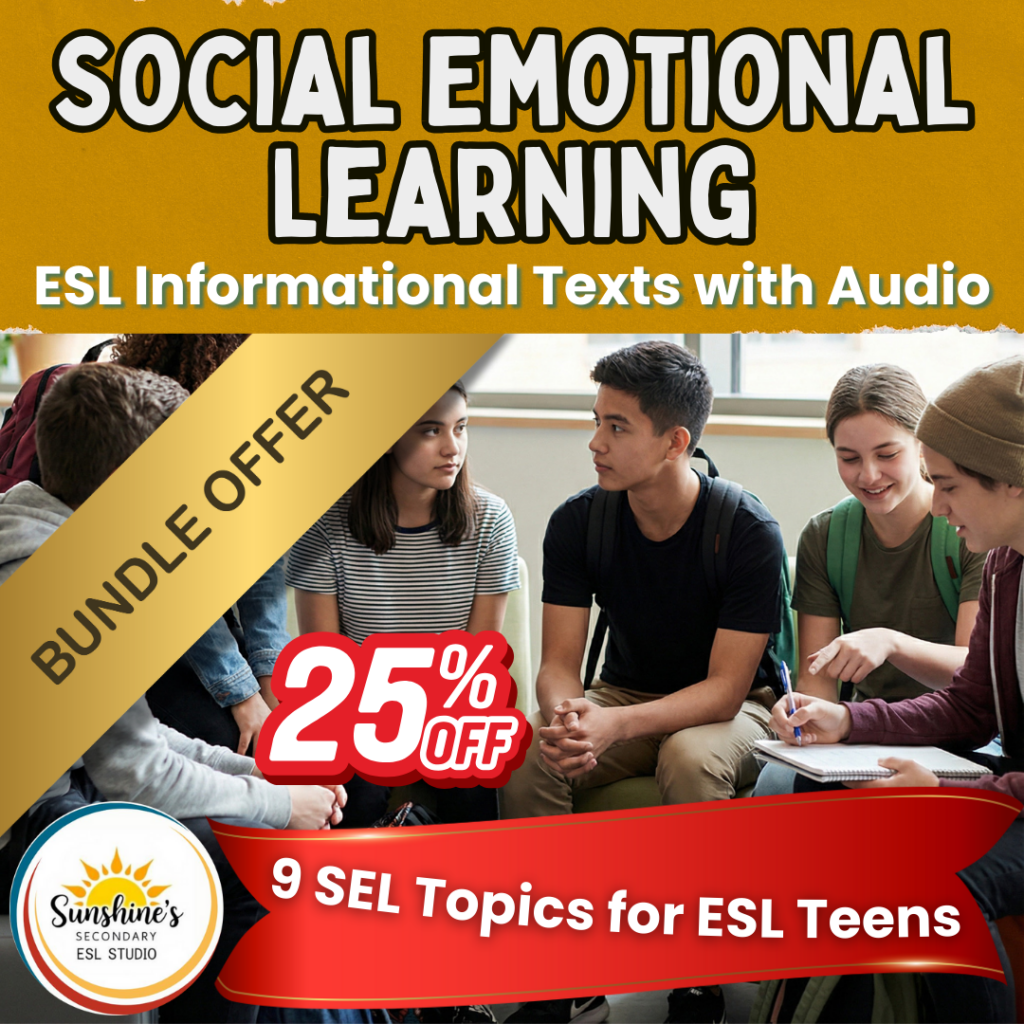
For teachers looking for a comprehensive option, the Social Emotional Learning for ESL Teens Bundle includes nine scaffolded informational texts with audio. The bundle supports grades 6–12 and is designed for secondary ESL and ELL classrooms.
Final Thoughts
Social Emotional Learning for ESL teens doesn’t need to be complicated or uncomfortable. With the right structure and language support, SEL becomes a natural and meaningful part of ESL instruction—helping students grow emotionally while strengthening their English skills.