

Estimated reading time: 4 minutes
Why I Created 744 Grammar Task Cards for My High School ESL Students
Find out how an ESL grammar task card bundle for high school can make a difference. And why they might just save your sanity too.
I’ll be honest with you—grammar used to be my least favorite thing to teach.
Not because I don’t think it’s important. It’s essential. But because every year, I’d find myself scrambling for engaging, level-appropriate activities that didn’t bore my students or feel like busywork. You know the kind I’m talking about—worksheets that look like they were made in 1992 and ask questions about “John and Mary going to the disco.”
That just doesn’t cut it for high school English learners trying to master subject-verb agreement and navigate teenage life in a second language.
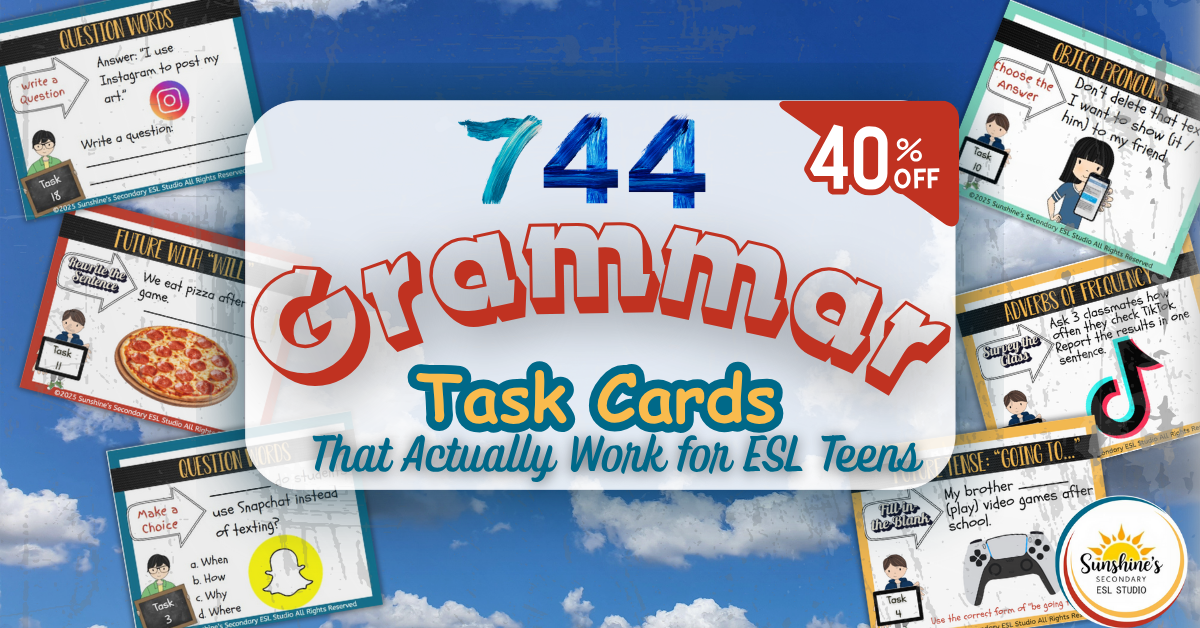
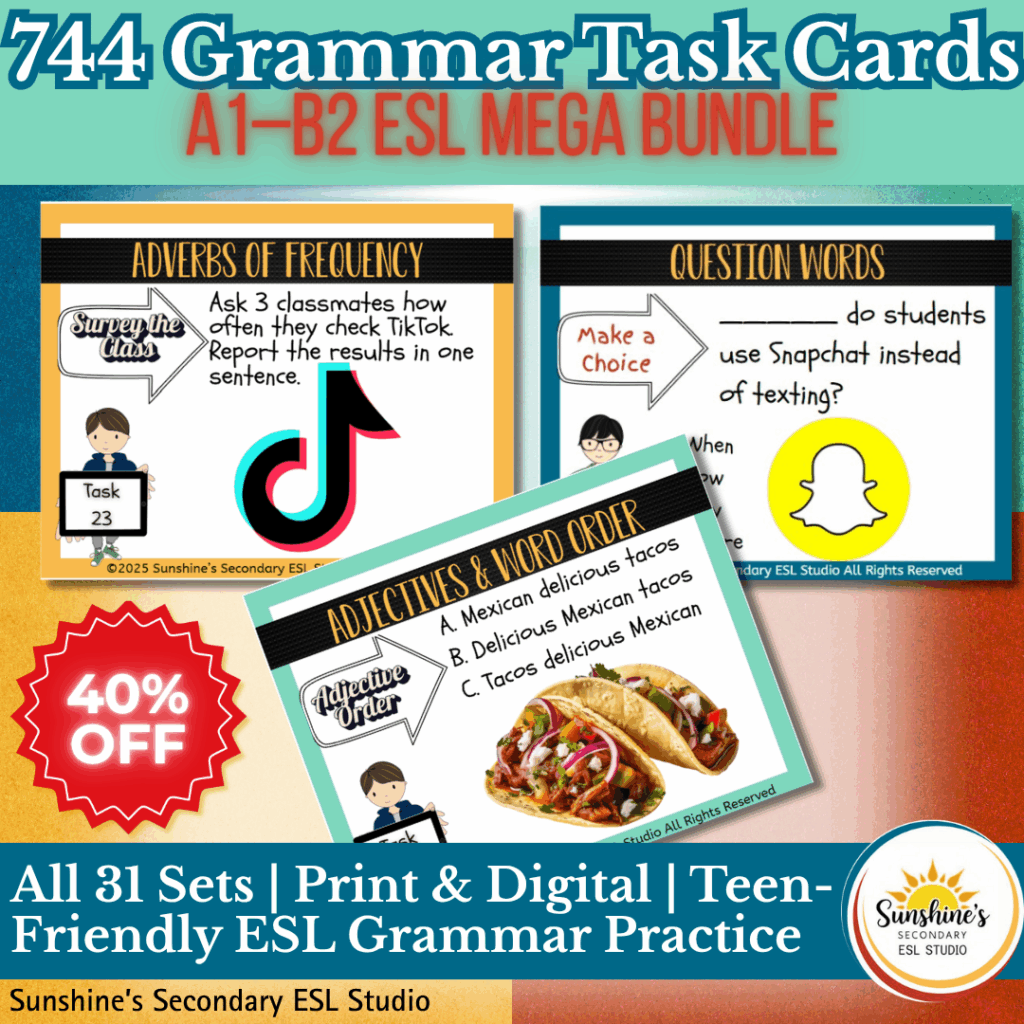
So, I started building my own grammar task cards. At first, it was just one set. Then two. Then… well, let’s just say things escalated. Fast forward, and I now have 31 sets of ESL grammar task cards covering A1 to B2, with 744 total cards designed specifically for teens.
And no, I didn’t set out to create a mega bundle. But now that it exists, I’m not going back.
Why Task Cards Work So Well in ESL Classrooms
If you’ve never used grammar task cards with your students, here’s the magic: they’re flexible, interactive, and easy to differentiate. Unlike worksheets, task cards feel less intimidating and more like a challenge. Students can move around, collaborate, or work independently. They don’t feel stuck staring at a page full of grammar drills.
I use them as:
- Warm-ups
- Station activities
- Fast finisher work
- Mini speaking prompts
- Review before tests
- Emergency sub plans
They’re the Swiss Army knife of grammar review.
What Makes This Set Different
I wanted these cards to reflect the kinds of grammar skills that actually matter in teen ESL classrooms—not just the basics, but the stuff we need to spiral and revisit all year long. That includes:
- Be Verbs
- Simple Present & Past
- Future with Will and Going To
- Modal Verbs
- Comparatives & Superlatives
- Passive Voice
- Conditionals
- Subject-Verb Agreement
- …and more
Each set includes 24 task cards with a mix of sentence corrections, fill-in-the-blanks, sentence building, and writing prompts.
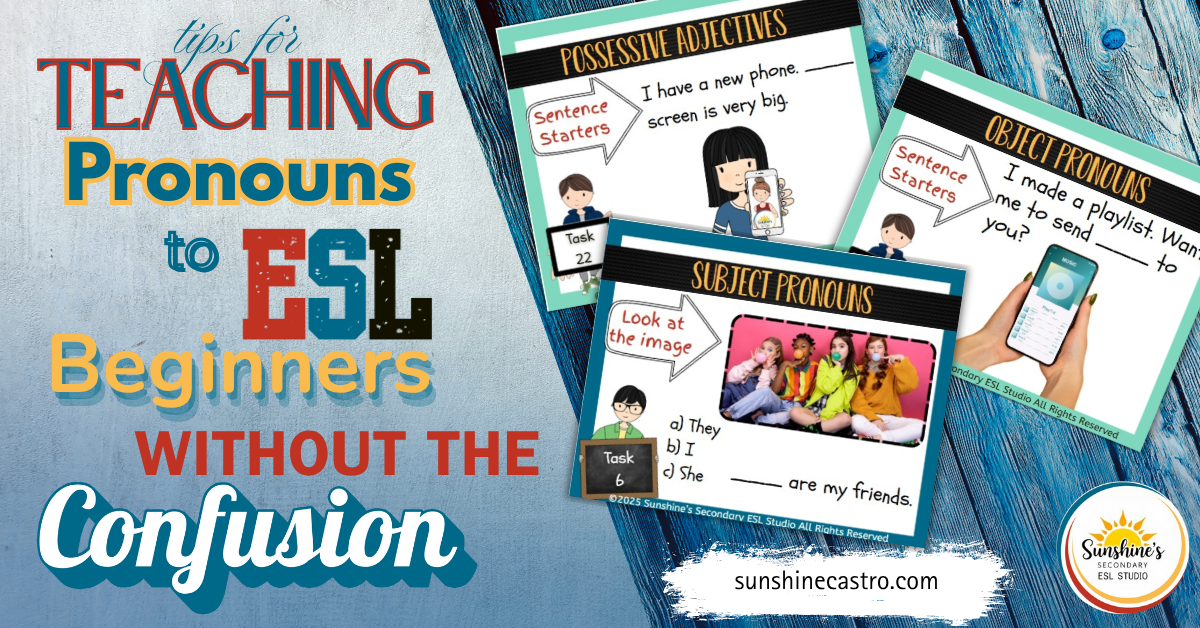
But what really sets them apart? The language is written for real teenagers. No more “Jane has a red pencil case.” Think: music, food, friends, opinions, routines, and situations students recognize from their own lives.
Built to Fit Every Level—Without Rewriting Everything
I’m a big believer in scaffolding. That’s why this bundle covers A1 to B2 CEFR levels. Whether I’m working with newcomers or long-term ELLs, I can pull a set that matches their level and plug it into my lesson without reinventing the wheel.
It also makes grouping and differentiation easier. Sometimes I even let students choose which level they want to try based on their confidence that day.
Want Just One Set? You Can Grab Them Individually Too.
Not ready for the mega bundle? No worries. Every set is also available individually, so you can build your own collection over time or just pick what fits your next unit.
Browse the Individual ESL Grammar Task Cards Here
I made this option on purpose—because I’ve been the teacher who just needs one thing to round out a week.
Final Thoughts
When I look back, creating this bundle wasn’t just about making task cards. It was about solving a problem I kept facing as a high school ESL teacher: I needed grammar materials that were age-appropriate, ready to go, and still effective.
That’s why this ESL grammar task card bundle for high school became my go-to resource—because it actually works. It saves time, reduces prep, and gives students the kind of grammar practice that doesn’t feel like a chore.
Now I have it—and so can you.
Whether you teach ELDA, sheltered English, or pull-out support, having 744 grammar cards ready to go gives you one less thing to worry about. And in our world, that’s saying something.
Ready to check out the full bundle? Click on the image below.
Let me know if you have any questions about what’s inside—or how I use them in my own classroom. I love hearing how other teachers adapt these for their students.
Scrollable
ESL Teacher Morale: The Must-Have No One Puts on a Supply List
ESL Logic Puzzles for Teens: A Critical Thinking Activity for Secondary ESL

Teaching U.S. History in High School ESL
Teaching Black History Month in ESL Classrooms: Meaningful, Accessible, and Age-Appropriate
Teaching ESL High School Pronunciation: How to Monitor Progress Without Stressing Teens