

Estimated reading time: 4 minutes
Getting ESL teens to open up in class can feel like a coin toss. Some days they’re chatty, other days you’re met with silence and a sea of shrugging shoulders. Sound familiar?
If so, you’re not alone—and you’re definitely not doing anything wrong. Teens (especially those learning English) often need more than a generic “talk to your partner” instruction. They need structure. They need relevance. And sometimes? They just need to talk about how they feel—without it turning into a therapy session.
That’s where emotion-based speaking prompts come in.
Why Use Emotion Prompts in ESL Class?
Emotions are universal. Whether your students are newcomers or have been learning English for years, they already know what it means to feel nervous, proud, jealous, or excited. The trick is helping them put those feelings into words—in English.
Emotion prompts give students:
- A safe way to express themselves
- Practice with descriptive language and past-tense storytelling
- A chance to build real-world vocabulary tied to feelings and situations
- More meaningful conversations—not just “What’s your favorite food?”
Simple Ways to Use Emotion Speaking Cards
Whether you’re teaching in-person or online, these are some of my favorite low-prep ways to bring emotion cards into your ESL speaking routine:
1. Daily Warm-Ups
Pull one card a day as a class warm-up. For example:
“Describe a time you felt proud of yourself.”
Give sentence starters if needed, or model your own answer. It builds a classroom culture of sharing.
2. Pair & Share Routines
Use the cards for structured partner work. Give each pair one card and a 3–5 minute timer. Then switch. This avoids awkward silences and keeps everyone engaged.
3. Group Speaking Circles
Have students draw a card, answer it out loud, and invite 1–2 follow-up questions from classmates. It encourages active listening and follow-up language like:
“What happened next?”
“How did that make you feel?”
4. Exit Ticket Speaking
Use one prompt at the end of class to wrap up the day. It’s a great way to integrate social-emotional learning with language practice.
What to Look for in Emotion Prompts
Not all speaking prompts are created equal. I like to make sure mine are:
- Teen-relevant (no babyish clipart or topics)
- Clear in language level (especially for B1 or B2 learners)
- Easy to print, cut, or project—because who has time to reinvent the wheel every day?
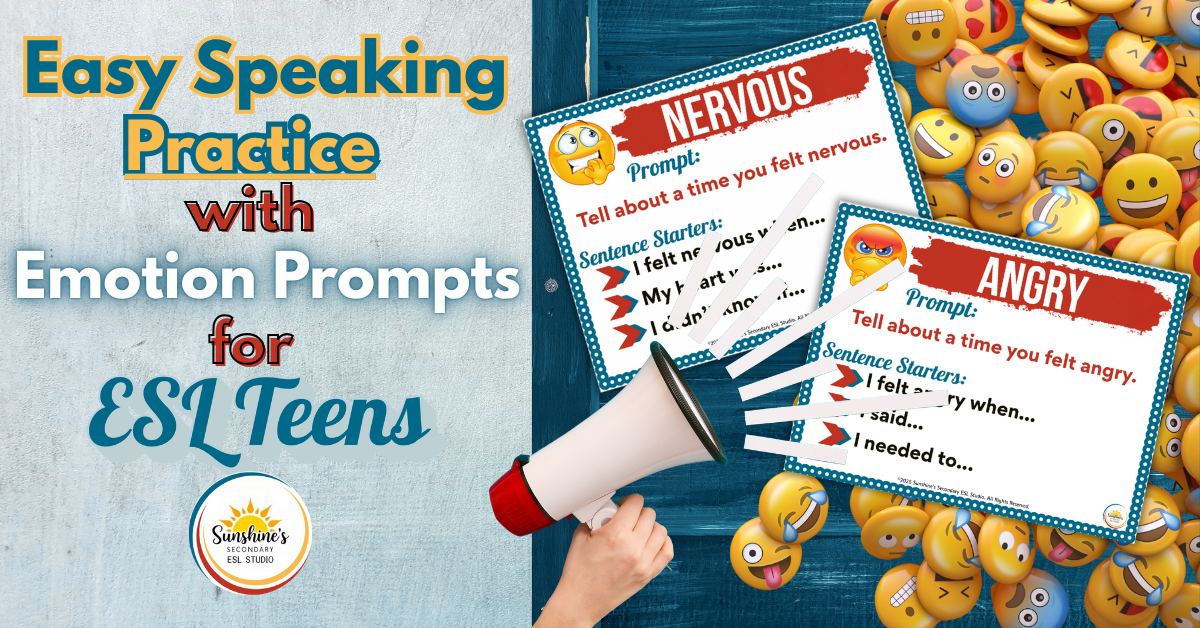
That’s why I created my own set of ESL Emotion Speaking Cards—a ready-to-go tool designed just for teens. They include 24 prompts across a range of emotions, from embarrassment to gratitude to disappointment. And best of all? They’re conversation-ready—no prep required.
Final Thought
Sometimes the key to getting teens talking isn’t fancy tech or complex grammar—it’s just giving them something real to talk about. Emotion-based prompts let students connect language with their own lives. And once that connection is made, the speaking comes a whole lot easier.
Want to try them out?
You can check out the full ESL Emotion Speaking Cards set on TpT here. Whether you use them as warm-ups, partner work, or part of a larger speaking unit, they’re an easy win for boosting meaningful conversation in your ESL class.