

Estimated reading time: 6 minutes
In a recent PLC meeting, my colleagues were lamenting that they were disheartened at their students not having empathy when they were reading Night by Elie Wiesel. They were brainstorming ways to build empathy while teaching Holocaust literature to ESL teens. Do they truly lack empathy? Are they that sadistic not to care about the people they read about? Do they even have to have empathy when reading such materials? When approaching teaching Holocaust literature in ESL settings, these are critical questions.
Why Empathy Matters in Holocaust Education
We want our teens to have empathy because it brings the stories, whether fiction or non-fiction, to life and that supports comprehension. A good reader can play the story they are reading in their heads as if it were a movie. When the language vocabulary is lacking that can make that understanding obsolete, therefore, empathy isn’t possible. But why is building empathy important for teaching Holocaust literature?
- Empathy makes history feel personal, not just distant.
- Empathy helps students connect the past to present issues (refugees, discrimination, human rights).
I truly believe that these students are capable of empathy and that it isn’t something they are lacking, but more of the fact that they haven’t learned to put themselves in the shoes of the people they encounter in the written text which is super important to comprehension. Convincing students of the importance of empathy is essential when teaching Holocaust literature in ESL classes.
Because ESL teens may be a varying levels of reading in English, it is important to select texts that they can handle. They may not feel for the characters because they aren’t fully understanding the stories they are reading.
What Holocausts Texts are Suitable
To foster empathy when teaching Holocaust literature to an ESL class, it’s essential to carefully choose texts that are appropriate for your specific group of students. The list below has been tested in ESL classrooms and work well for building empathy while teaching about the Holocaust to ESL teens.
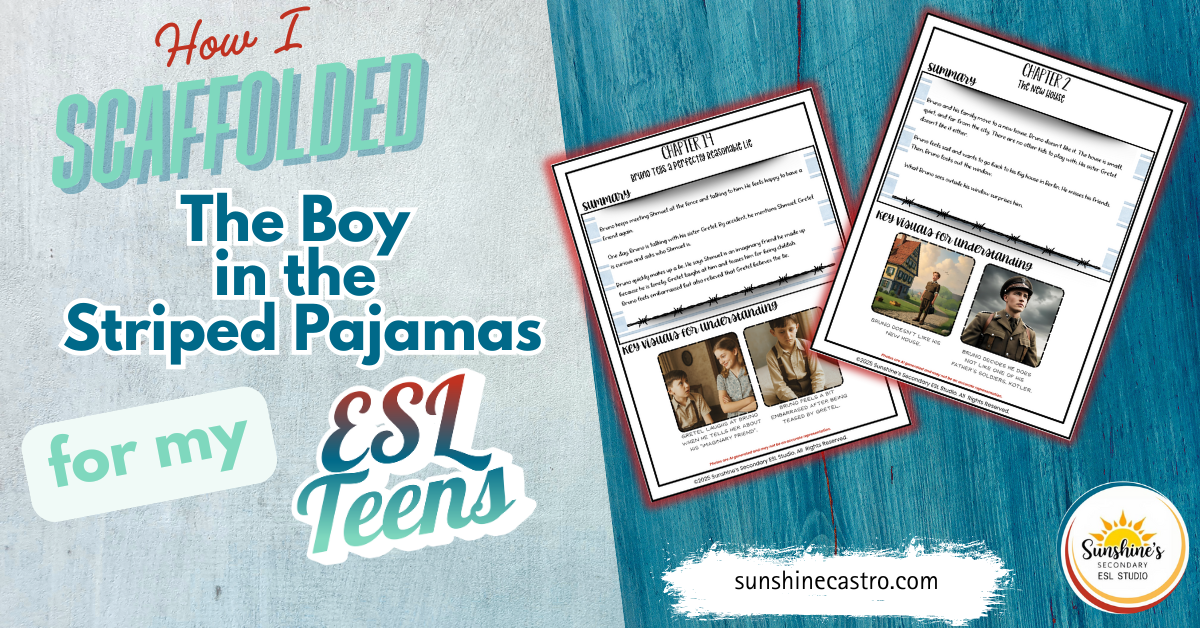
- The Boy in the Striped Pajamas (fictional, emotional entry point)
- Number the Stars (more accessible for emerging readers)
- I Never Saw Another Butterfly (poetry and art-based)
- Visual or graphic novel versions of survivor stories
Tips for Scaffolding Texts
When introducing any text, you may find that it can still be difficult for some emergent readers to fully understand the literature. The following are some ways to make teaching Holocaust literature in ESL classrooms more comprehensible.
- Paired reading with audio
- Pre-teaching vocabulary and historical context
- Visuals, maps, and timelines
Build Empathy Before the Reading Starts
In an ESL classroom, you will want to activate prior knowledge when teaching concepts that students clearly aren’t familiar with. One of the reasons my colleagues may be struggling with the lack of empathy may very well be that they never tapped into their students’ background knowledge and the lack thereof. This is vital to helping students foster the empathy that comes with reading about the Holocaust. Some ways to build empathy is through anticipatory activities like:
- “How would you feel?” scenario cards
- Photo discussions (e.g., children’s shoes, train tracks, memorials)
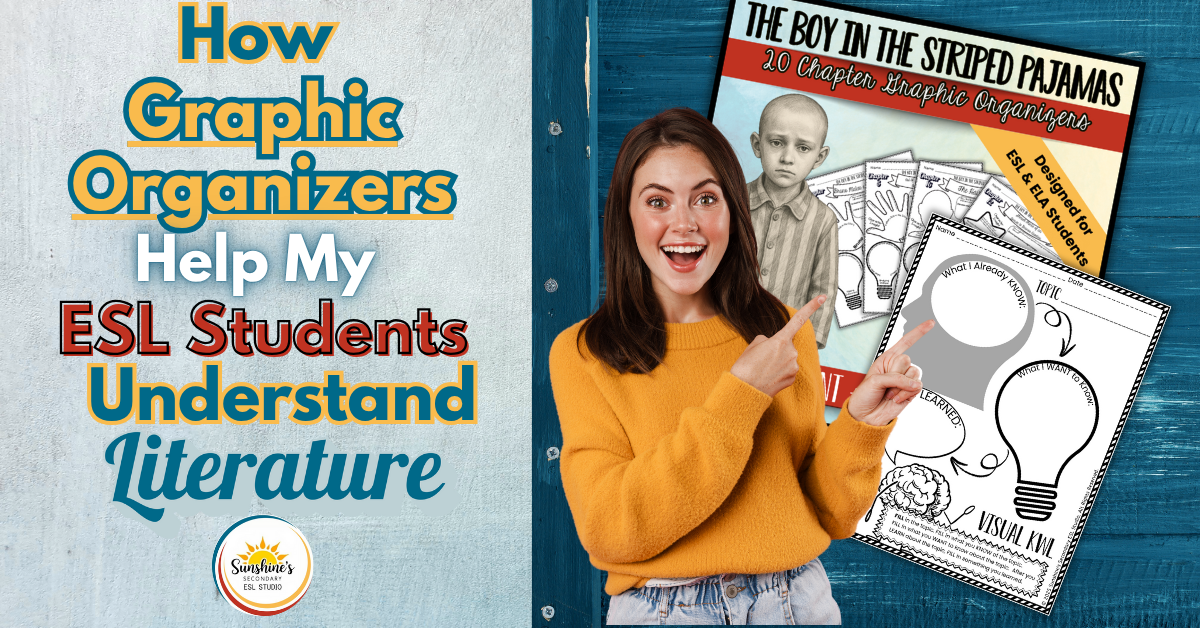
- KWL charts focused on human emotion: What do you feel? What do you wonder?
You can get a free KWL chart though my TPT store:
Free KWL Chart | Printable PDF, Editable PowerPoint & Google Slides™
Humanize the Story with Real Voices
Our students come with many different experiences and many haven’t seen or even heard of the Holocaust. In my classroom this year, many students are from Mexico and only a few know about the Holocaust. However, my student from Switzerland has more knowledge as she has been to Auschwitz and is quite familiar with the topic. She often takes over the discussions to tell the others the things she has learned from her experiences in Europe. She is quite the exception. Many students need to hear the stories through real voices. Some ways to do that when teaching Holocaust literature to ESL students would be:
- Incorporate short video clips or survivor interviews with subtitles.
- Assign mini-biographies or diary excerpts (like Anne Frank) to give names and faces to the history.
These vignettes of history, will really be a powerful addition to your Holocaust lessons. Another way to build empathy while teaching Holocaust literature in ESL classes is through classroom discussion.
Discussion and Reflection Strategies
In ESL classes discussions aren’t the same as lectures. Ideally, the teacher should faciliate the practice of leading into the discussion and allow the students take the floor. That can be difficult for students that need more English vocabulary. Sentence frames, pre-taught vocabulary, and some peer native language support can help make these discussions meaningful. Some sentence frames and strategies to achieve this goal would be:
- “I felt ___ when I read about because ___.”
- “This reminds me of a time when I felt ___.”
- Use “empathy circles” or pair-share storytelling to build community and trust.
Creative Expression to Deepen Empathy
For some students, showing their emotions outwardly in a classroom is not at all comfortable. It is a brave act to show emotions when reading in a group. Afterall, we are talking about teenagers here. They often care about what others will think of them. Sometimes it is best to tap into their emotions through artistic expressions. Some ways to do this would be:
- Poetry or journal entries in their own words (sometimes even allowing this in their native languages).
- Art or symbolism (e.g., drawing what hope looks like)
- Letter writing to a character in the story (forces them to put themselves in the shoes of others).
Tip: Your classroom needs to be a place that your students feel safe to freely express themselves. Some subject matter may just be too traumatic for some students to take in especiallly if they have experienced trauma. Always be flexible if you see students get overwhelmed.
In Conclusion
Teaching about the Holocaust isn’t just about teaching history — it’s about growing the kind of humans we want to see in the world. For ESL students, the added challenge of learning in a second language doesn’t mean we have to water down the emotional truth. With the right support, these students can not only understand — they can feel, reflect, and respond with empathy.