

Estimated reading time: 5 minutes
Let’s be honest—teaching phonics to teenagers can feel like walking a tightrope. On one hand, they need phonological support to improve their speaking and reading skills. On the other hand, the moment something feels even remotely elementary, they shut down. That’s why incorporating an ESL pronunciation test for teens can be an effective way to engage them without making them cringe at phrases like “sight words” or “sounding it out.”
However, pronunciation improvements are crucial, especially in this age group for accurate tests.
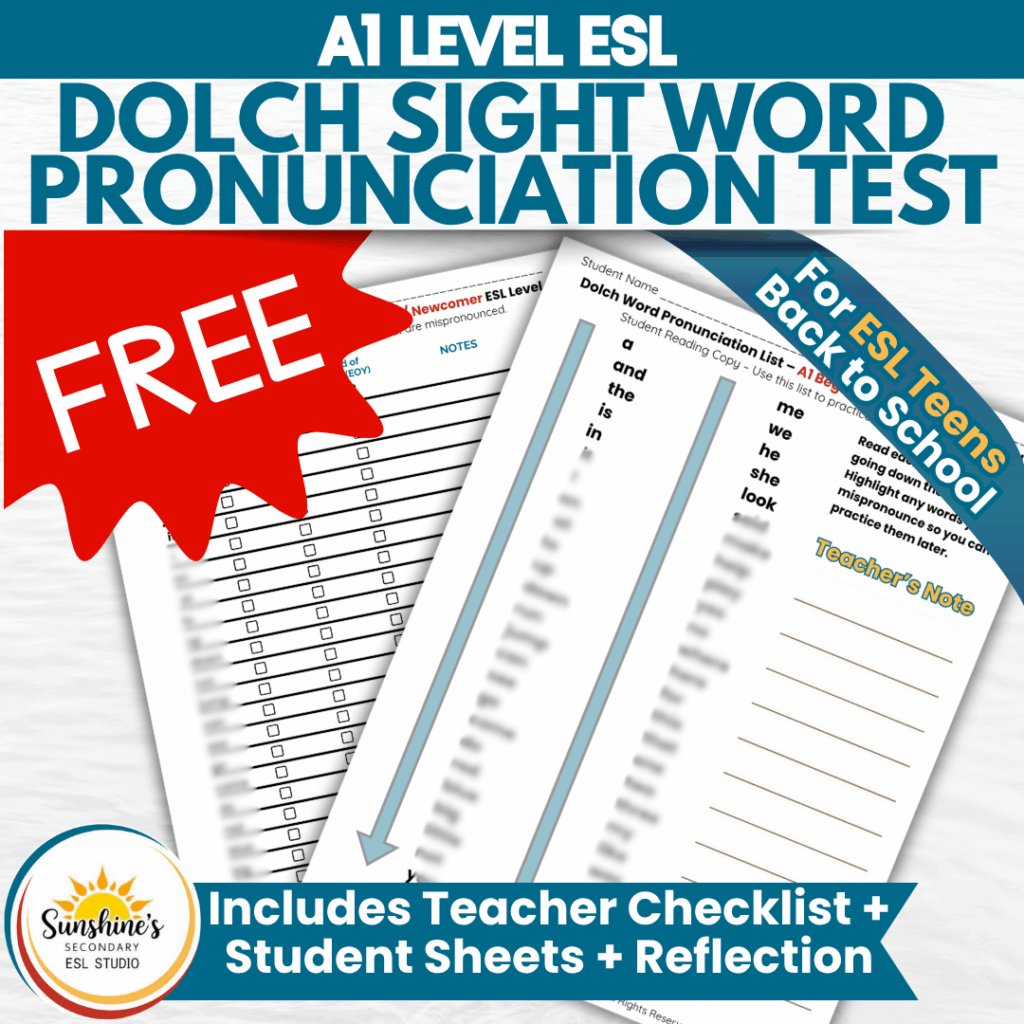
That’s why I started using a leveled pronunciation test built on Dolch sight words—but tailored specifically for teens and aligned to CEFR levels (A1–B2). Instead of making them feel like they’re being tossed back into early elementary school, it gives them a way to track real growth—and gives me data I can actually use.
A Smarter Way to Start the Year
At the beginning of the school year, I roll this out during our “get to know you” activities and classroom routines. Each student receives a 50-word list that matches their English proficiency level—not their grade. For example, a newcomer might begin with the A1 list, while a more advanced learner might test at B2. That flexibility has been a game changer with the pronunciation test.
They read the list aloud, and I assess their pronunciation using a simple checklist. Sometimes I sit with them one-on-one; however, I often have them record themselves reading the list using Vocaroo.com—a free voice-recording tool that allows me to review their pronunciation later when I have more time.
It’s stress-free, fast, and honestly kind of fun for them.
Why Use High-Frequency Word Lists?
I chose to build this assessment using what are commonly known as Dolch words—a set of high-frequency English words that appear over and over in everyday language. These words aren’t content-specific or academic; instead, they’re the core words students need to understand classroom instructions, directions, and even casual conversations.
For example, words like because, again, and where show up constantly, whether we’re reading, giving directions, or having a simple discussion. If a student can’t pronounce them clearly, that struggle tends to show up across all areas of communication and test results.
By focusing on just 50 level-appropriate high-frequency words, I can quickly identify pronunciation patterns and help students build confidence where it matters most.
Built-in Reflection = Built-in Accountability
One of my favorite features of this tool is the student reflection sheet. After each round of testing—which I do at the beginning, middle, and end of the year—students reflect on their performance. They identify which words were difficult, which sounds need more practice, and how they plan to improve based on the ESL pronunciation test.
This isn’t just about data for me—it’s about helping students become more aware of their own pronunciation habits. In addition, the reflection sheets are available in both English and Spanish, which makes the process more inclusive and accessible.
It’s amazing how honest teens can be when we treat them like partners in their learning.
What’s Included?
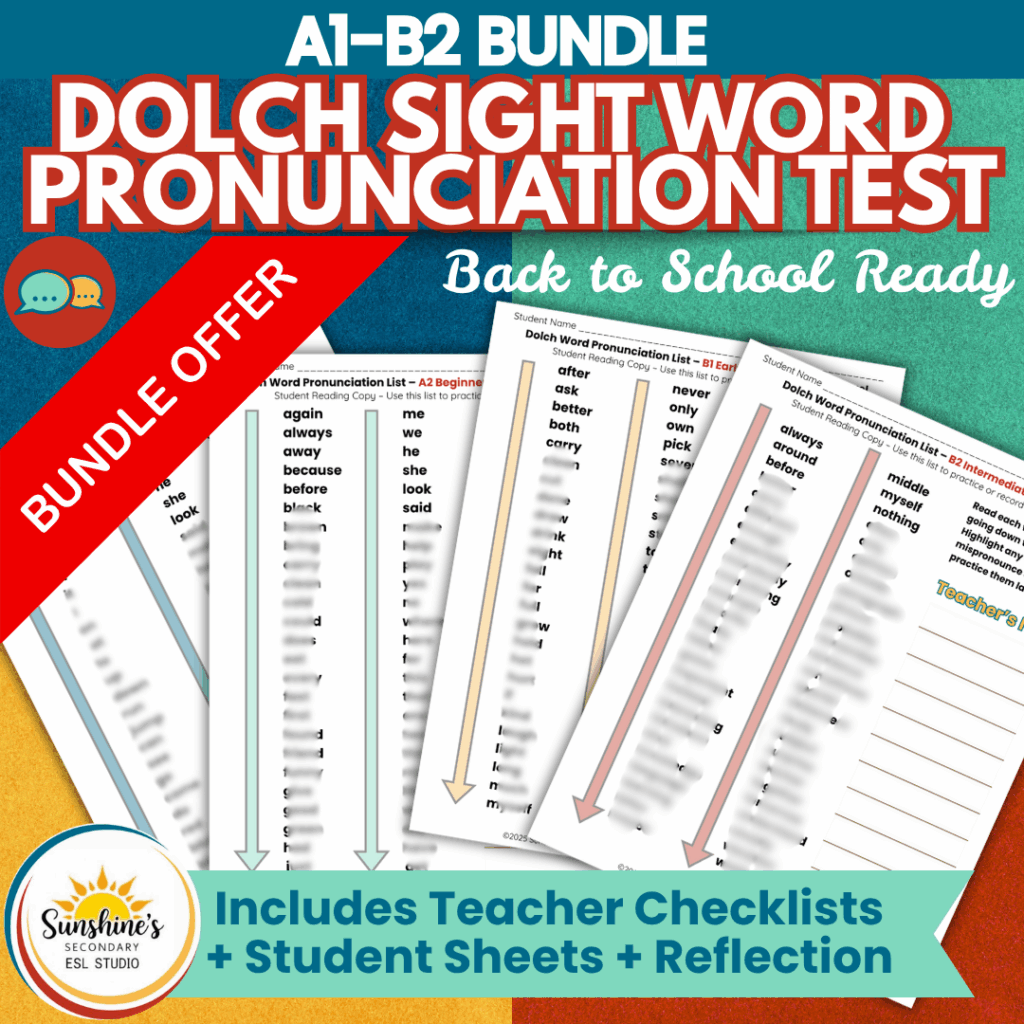
The full bundle includes 200 Dolch (High-Frequency) words spread across four CEFR levels—A1, A2, B1, and B2, perfect for a comprehensive ESL pronunciation test tailored for teens. Each level includes:
- Teacher pronunciation checklists
- Student reading sheets in full and half-page formats
- Phonetic transcriptions in both IPA and student-friendly spellings
- Reflection worksheets in English and Spanish
As a result, this tool can be used in multiple formats—whether you prefer one-on-one assessments or reviewing student recordings on your own schedule.
Back-to-School Ready
There’s no perfect time to begin pronunciation tracking, but I’ve found that starting in the first weeks of school sets the tone. My students know that pronunciation matters and that I care about helping them improve. More importantly, they learn that it’s a safe space to try, mess up, and grow with the ESL pronunciation test resources.
As the year goes on, we revisit the list, reflect, and celebrate the progress they’ve made. I’ve seen students go from whispering through a simple word list in September to confidently reading grade-level texts by May.
If you’d like to try it in your classroom, I offer the full A1–B2 bundle here, and the A1 level is totally free—so you can test it with your newcomers right away.
This approach has changed the way I support my students’ speaking goals—and it just might work for yours too.