

Estimated reading time: 5 minutes
Let’s be real—reading literature in a second language is hard. And for ESL teens? It can feel downright overwhelming. Between unfamiliar vocabulary, figurative language, and subtle character development, it’s easy for students to miss the big picture (or honestly, any picture at all).
That’s where graphic organizers have completely changed the game for me.
If you’ve ever looked around your classroom during a novel or short story and seen blank stares (or frantic flipping back to page one), you’re not alone. I’ve been there. But once I started consistently using graphic organizers for ESL literature, everything shifted—for me and for my students.
Here’s how I use them, why they work, and how they’ve made reading feel less intimidating and a whole lot more successful in my classroom.
1. They Break Down Big Ideas into Bite-Size Chunks
When you hand an ESL student a full novel or even a dense short story, it can feel like information overload. Graphic organizers act like a built-in scaffold, helping students organize their thinking as they go—especially around characters, setting, conflict, and theme.
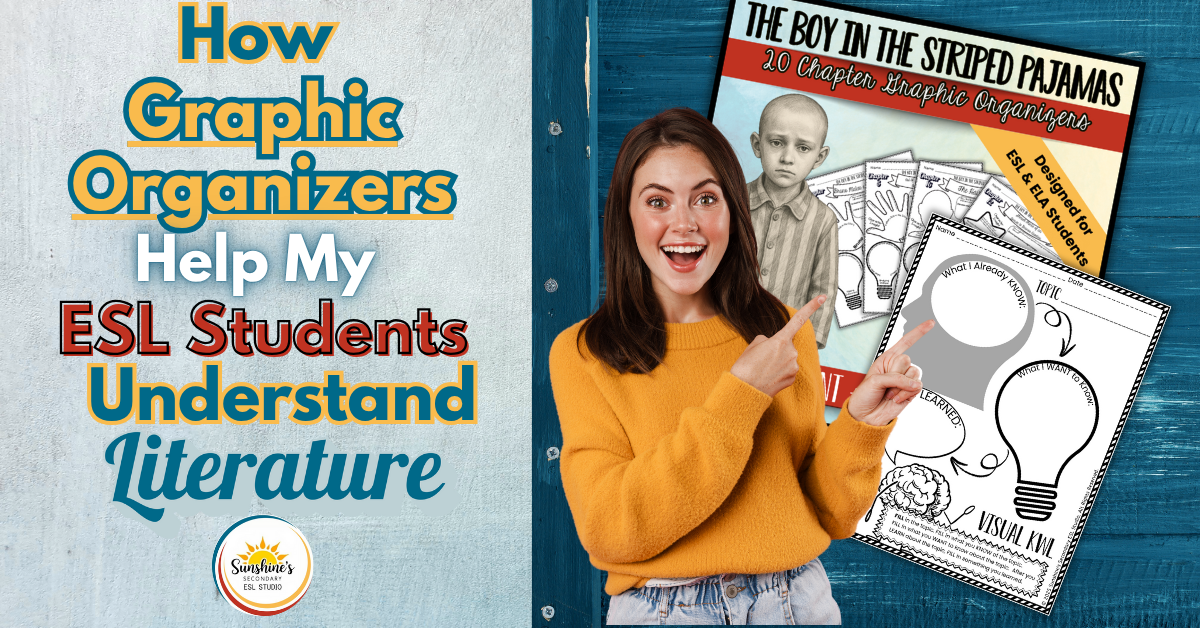
My go-to structure includes:
- Character charts with visuals
- “What happened in this chapter?” summary boxes
- Quote + response sections (with sentence frames)
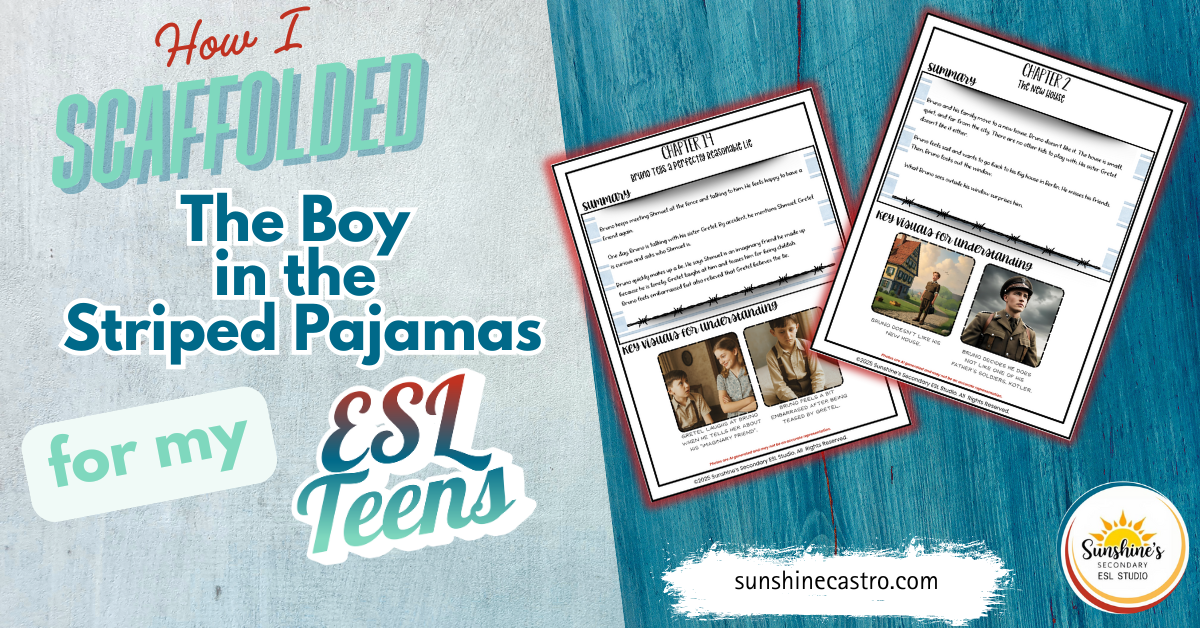
Even my A2 students start writing full sentences when they’re not trying to hold everything in their heads at once. And yes—I’ve created a ton of these as editable or printable resources to match the stories I teach, especially for titles like The Boy in the Striped Pajamas or To Kill a Mockingbird.
2. They Keep Discussions Structured—Without Shutting Them Down
Have you ever asked a question like “What do you think this poem means?” and been met with total silence?
Yeah, me too.
But when I use a graphic organizer that gently walks students through a few ideas first—like tone, word choice, or a guiding question—they suddenly have something to say.
Graphic organizers aren’t just worksheets. They’re thinking tools that help students process what they’re reading so they can actually join the conversation.
3. They Work for Any Level
Whether I’m working with newcomers or B2-level students, I just adjust the supports:
- A1/A2: word banks, icons, sentence starters
- B1/B2: open-ended responses, quote analysis, theme tracking
Having multiple levels ready saves me so much time. That’s why I started making leveled graphic organizer packs to use across the board. Now I can differentiate without reinventing the wheel every time we start a new story.
If you’re curious, I have several graphic organizer bundles on TpT designed specifically for ESL literature units—adaptable for different CEFR levels and ready to print or assign digitally.
4. They Help with Grading (and Sanity)
Here’s the thing no one tells you: when students use graphic organizers, you get better insight into their understanding—and grading becomes 10x easier.
Instead of guessing whether they “got it,” I can actually see:
- What they noticed
- What they remembered
- How they interpreted a key scene
It also helps me spot who needs a reteach before the test or essay hits.
Final Thoughts
If literature feels like a struggle in your ESL classroom, graphic organizers might be your new best friend. They give your students structure, reduce overwhelm, and create more chances for meaningful conversation and growth.
If you’re looking for some ready-made tools, I’ve put together graphic organizers for ESL literature that align with popular middle and high school texts. They’re leveled, teen-friendly, and built specifically for English learners who need support—but still want to feel successful.
Reading doesn’t have to be a mystery. Sometimes, all it takes is a good organizer.