

Estimated reading time: 6 minutes
Creating a classroom where students feel safe, seen, and supported isn’t extra—it’s everything. For ESL teens, especially those navigating new countries, school systems, and sometimes new alphabets, culturally responsive teaching strategies for high school ESL students can create that sense of belonging can make all the difference. Culturally responsive teaching isn’t a buzzword. It’s how we honor our students’ identities while helping them grow in reading, writing, listening, and speaking. This approach forms the basis of culturally responsive teaching strategies for high school ESL students.
In this post, I want to share how I weave students’ cultures and lived experiences into our daily ESL routines—and why it’s been one of the most powerful things I’ve ever done in my classroom. Implementing responsive strategies helps navigate high school ESL teaching effectively.
Why Culturally Responsive Teaching Matters in ESL
Our students come with rich backgrounds—full of stories, traditions, languages, and perspectives. If we only teach from a one-size-fits-all curriculum, we miss the chance to connect with what they already know and love. And let’s be honest—when students feel disconnected from the content, engagement drops fast.
By intentionally bringing in their cultures, we’re telling students, “You matter here.” We’re not just building vocabulary. We’re building trust and implementing culturally responsive teaching strategies for high school ESL students.
And here’s the best part: when students see themselves reflected in the classroom, they participate more, take more risks, and grow faster.
Let’s break it down by skill area—because culturally responsive teaching can (and should!) live in all four language domains.
Reading: Let Their Backgrounds Lead
We’re not always going to have a class set of texts that match our students’ identities—but we can still honor who they are through how we approach reading. Using strategies responsive to students’ cultural backgrounds enhances ESL learning in high schools.
Instead of jumping straight into a story, I start with a cultural connection. For example, before we read By Any Other Name by Santha Rama Rau, I ask students to journal about the meaning of their names, how names work in their cultures, or whether they’ve ever been called something different in a new place.
This pre-reading connection turns a 1950s Indian memoir into something incredibly personal. Students immediately recognize themes of identity and cultural conflict because they’ve lived it.
Tip: Add sentence stems and visuals to build accessibility, but don’t water down the meaning. They’ll rise to the challenge when the content feels real.
Writing: Identity as the Prompt
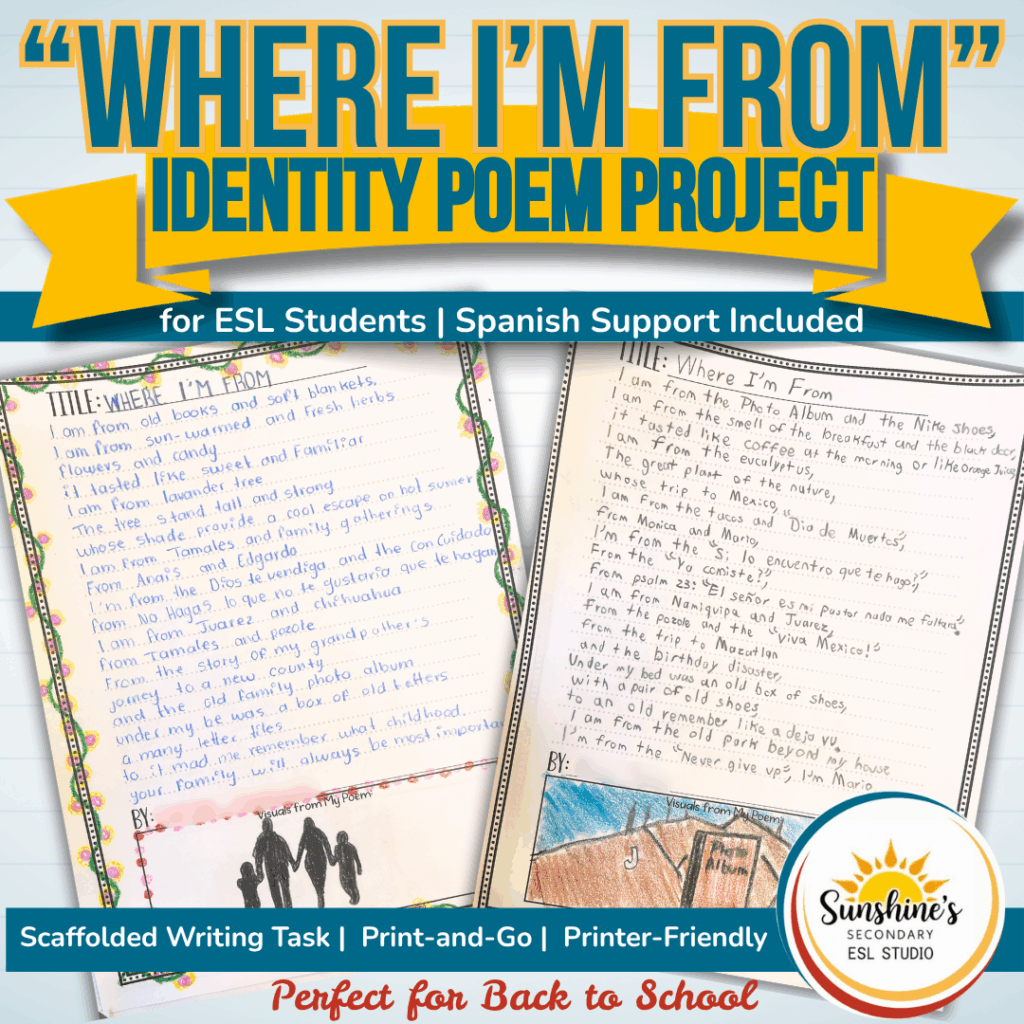
One of the most powerful writing projects I do each year is our “Where I’m From” poems. Inspired by the George Ella Lyon poem, this activity invites students to explore their identity through sensory language, memories, and cultural images.
I give students scaffolds like sentence starters and brainstorming sheets—but they take it from there. And the results? Goosebumps. Such projects embody teaching strategies for culturally responsive high school ESL education.
We hang the finished poems on our classroom walls (with permission), and suddenly our room becomes a collage of culture, language, and pride. Students stop and read each other’s poems. They smile. They say, “Hey, I do that too.” It’s the ultimate belonging builder.
Want to try it? My Where I’m From Poetry Resource includes everything you need—scaffolds, examples, templates, and reflection tools—to help your ESL students write powerful poems rooted in their own experiences. Incorporating these culturally responsive teaching strategies for high school ESL students can enhance their learning journey.
Listening: Honor Home Languages and Experiences
Listening doesn’t just have to be academic. It can be personal. During identity units, I’ve invited students to share music or short clips from their culture. We’ll listen, ask questions, and practice summarizing or responding in English in line with culturally responsive teaching strategies for high school ESL students.
Even if it’s a song in Arabic or a video in Vietnamese, we use it as a launchpad for meaningful listening work. One year, a student brought in a short clip from a Vietnamese New Year celebration. We played it for the class, then practiced describing the visuals in English, identifying sounds, and discussing the emotions in the music. Students were fascinated—and suddenly, ‘listening practice’ didn’t feel like a chore. It felt like an invitation to explore each other’s worlds. we build listening skills around it:
- “What is the mood?”
- “What do you notice about the instruments or sounds?”
- “Can you describe what’s happening, even if you can’t translate every word?”
This practice builds curiosity, respect, and engagement—all while strengthening listening skills in meaningful ways.
Speaking: Storytelling and Celebration
Oral language is often where students feel most vulnerable, especially if they’re self-conscious about pronunciation. But when they’re invited to tell their own stories, the fear fades a little. Culturally responsive speaking strategies engage high school ESL students effectively.
I’ve used structured storytelling prompts like:
- “A tradition in my family is…”
- “When I first came to the U.S., I felt…”
- “One thing I wish people knew about my country is…”
Pair students up for Think-Pair-Share, use sentence frames, and model your own stories too. Culturally responsive speaking tasks help students feel heard—and give them a purpose for using English that goes way beyond worksheets.
Another way I encourage speaking practice is through word games that are rooted in cultural traditions. One of my students’ favorites is Word Dash!—my ESL-friendly version of the popular Mexican game ¡Basta!. In this game, students race to fill categories with words that start with the same letter. It’s fast-paced, collaborative, and sparks so much laughter while reinforcing vocabulary and cultural connections. These kinds of activities remind students that speaking English doesn’t always have to feel like a test—it can be fun and rooted in traditions that feel familiar.

Final Thoughts: Belonging Fuels Growth
Your students don’t have to check their culture at the door to succeed in English class. In fact, bringing those identities into your lessons is what fuels real growth. When students write about home, read with empathy, listen with curiosity, and speak with confidence—it’s a game changer, thanks to culturally blended teaching strategies for ESL high school learners.
If you’re just starting out, pick one strategy. One connection. One resource that centers student identity.
Start there.
The rest will come.